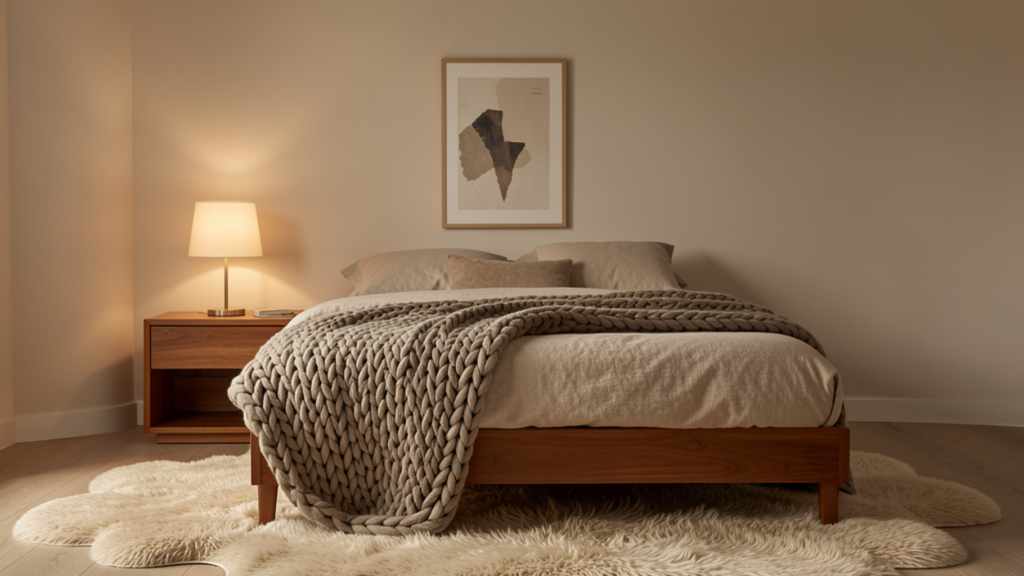
Discover the art of creating a serene and welcoming entryway through the Wabi Sabi design philosophy. This Japanese-inspired approach celebrates imperfection, simplicity, and natural beauty, transforming your home’s first impression into a tranquil and harmonious space. From minimalist designs to texturally rich environments, these 29 Wabi Sabi entryway styles offer innovative ways to create a peaceful transition from the outside world to the comfort of your home.
1. Grounded Serenity
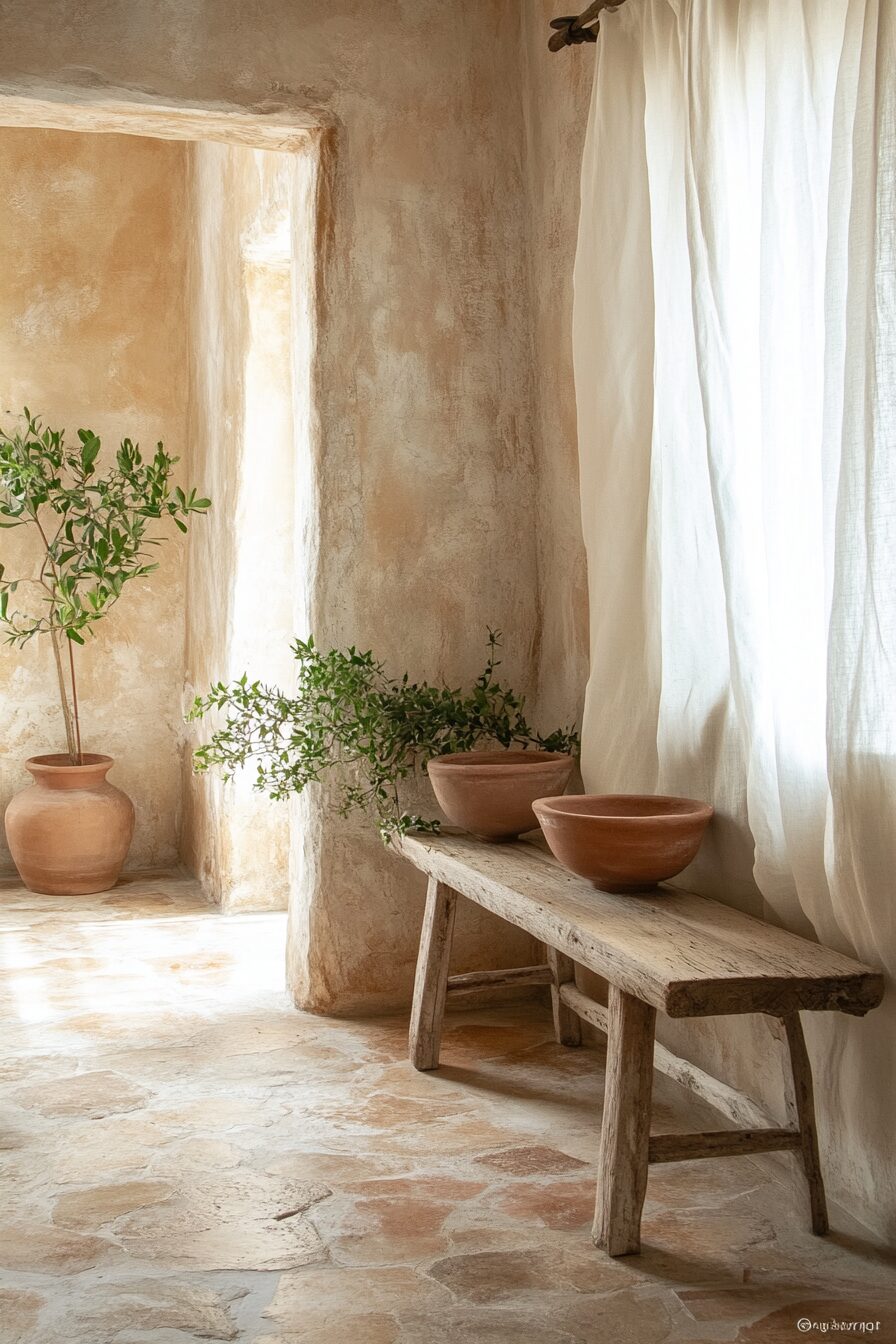
A Grounded Serenity Wabi Sabi entryway brings the calming essence of nature indoors with raw materials like stone, wood, and clay. The unpolished textures and earth-inspired tones create a soothing and welcoming atmosphere. This design embraces the imperfections of natural materials, allowing their authenticity to shine. By connecting your space to the outdoors, it fosters a serene and harmonious first impression.
🌟 Steal This Look
- Paint Color: Sherwin-Williams Natural Clay SW 7032
- Furniture: Low wooden bench with natural finish, raw wood console table with visible grain and knots
- Lighting: Minimalist pendant with unglazed ceramic or raw metal fixture
- Materials: Exposed stone accent wall or slate tile, natural wood flooring, clay pottery vessels, jute or linen rug
A grounded serenity entryway whispers rather than shouts—it welcomes visitors through understated, honest materials that feel lived-in from day one. This is the opposite of staged; it’s genuinely peaceful.
2. Mindful Threshold
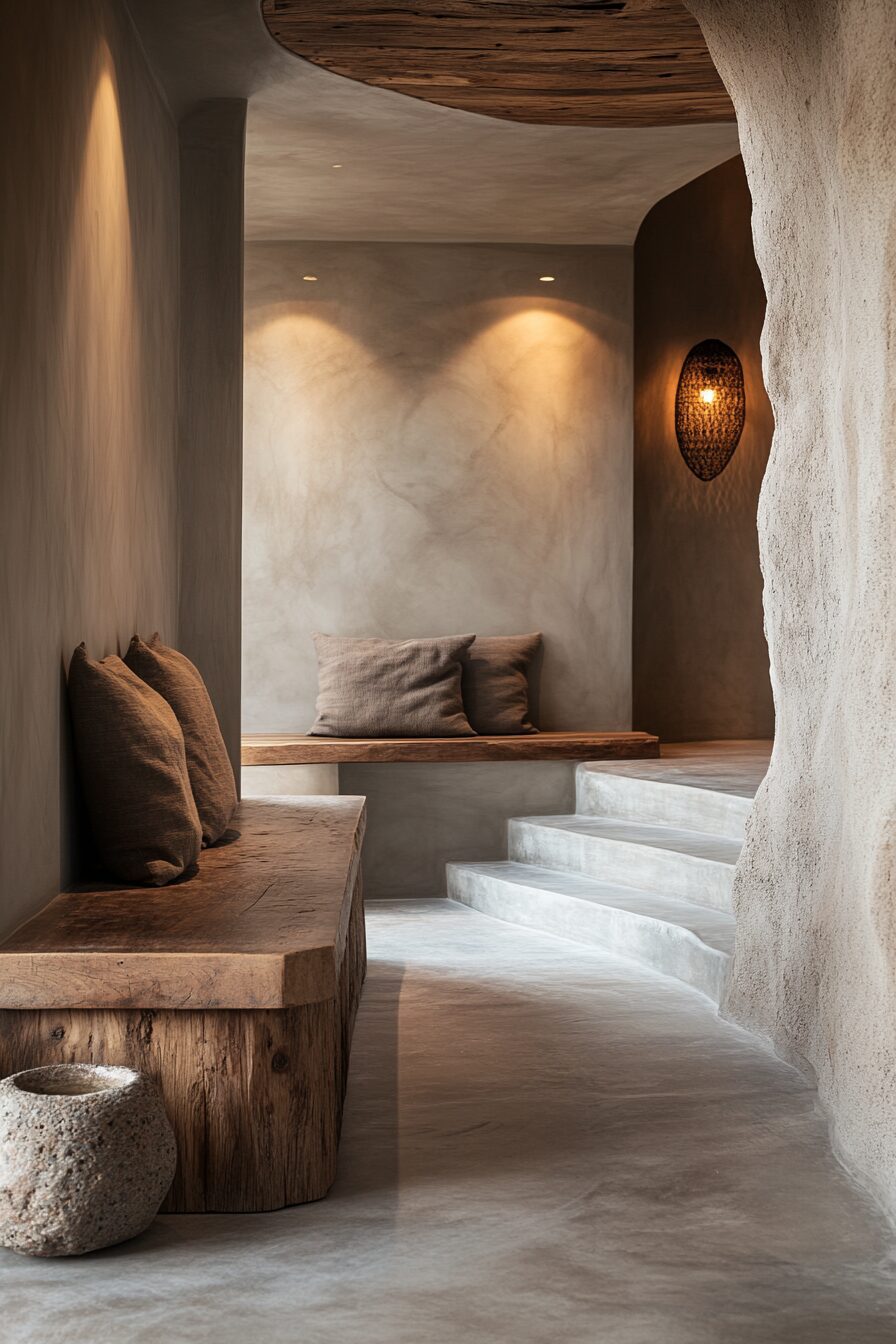
A Mindful Threshold Wabi Sabi entryway is crafted to promote calm and clarity as you step inside. Minimal furnishings, clean lines, and neutral tones create a space free of distractions. The thoughtful use of natural light adds depth, while a few carefully chosen decor elements bring balance. Plants or simple water features enhance the meditative quality of the entryway.
🏠 Steal This Look
- Paint Color: Benjamin Moore Accessible Beige HC-94
- Furniture: Low-profile wooden console table with clean lines, minimal entryway bench in natural wood or light oak
- Lighting: Soft recessed lighting or simple track fixtures to highlight natural light; avoid harsh overhead fixtures
- Materials: Natural wood, stone or concrete flooring, raw linen, unglazed ceramics, live plants in neutral pots
A mindful threshold honors the Japanese concept of *ma*—the power of emptiness. This entryway becomes a reset button, inviting you to shed the chaos of the outside world before stepping fully into your home.
3. Simplified Welcome
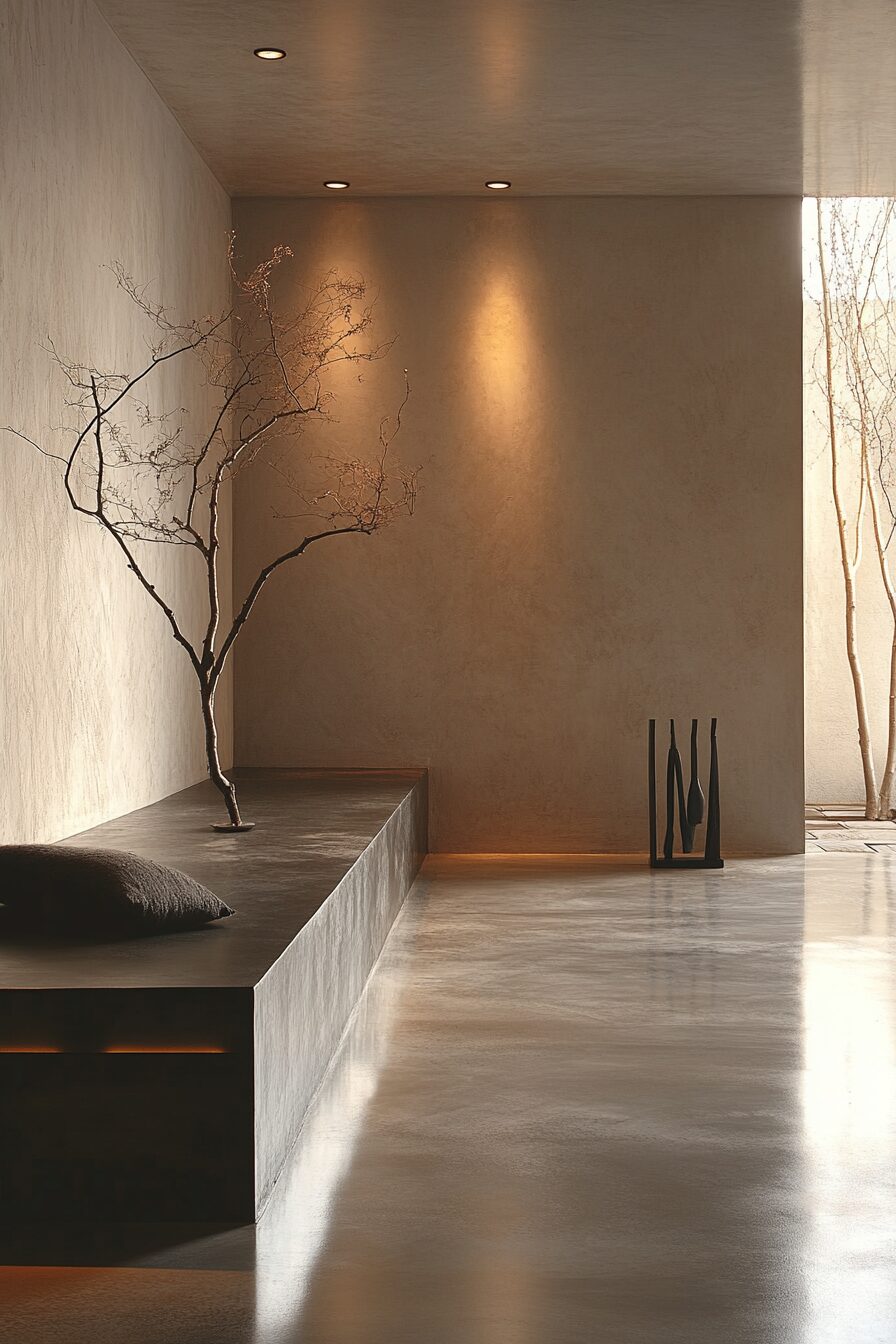
A Simplified Welcome Wabi Sabi entryway focuses on the essentials, leaving out unnecessary decor for a clutter-free look. Neutral hues and clean, straight lines keep the space feeling open and inviting. Each element is functional, from a sleek console table to a wall-mounted coat hook. This minimalist approach makes the entryway a peaceful transition from the outside world.
🖼 Steal This Look
- Paint Color: Farrow & Ball Shaded White 201
- Furniture: Minimalist wooden console table with clean lines, low-profile design in natural oak or walnut finish
- Lighting: Recessed ceiling lights or a single understated flush-mount fixture in matte black or brushed nickel
- Materials: Raw wood, unfinished plaster, natural stone or concrete flooring, brushed metal hardware
A simplified welcome acknowledges that true beauty lives in restraint. This is where visitors first feel your home’s calm energy—let silence and negative space do the work.
4. Tranquil Textures
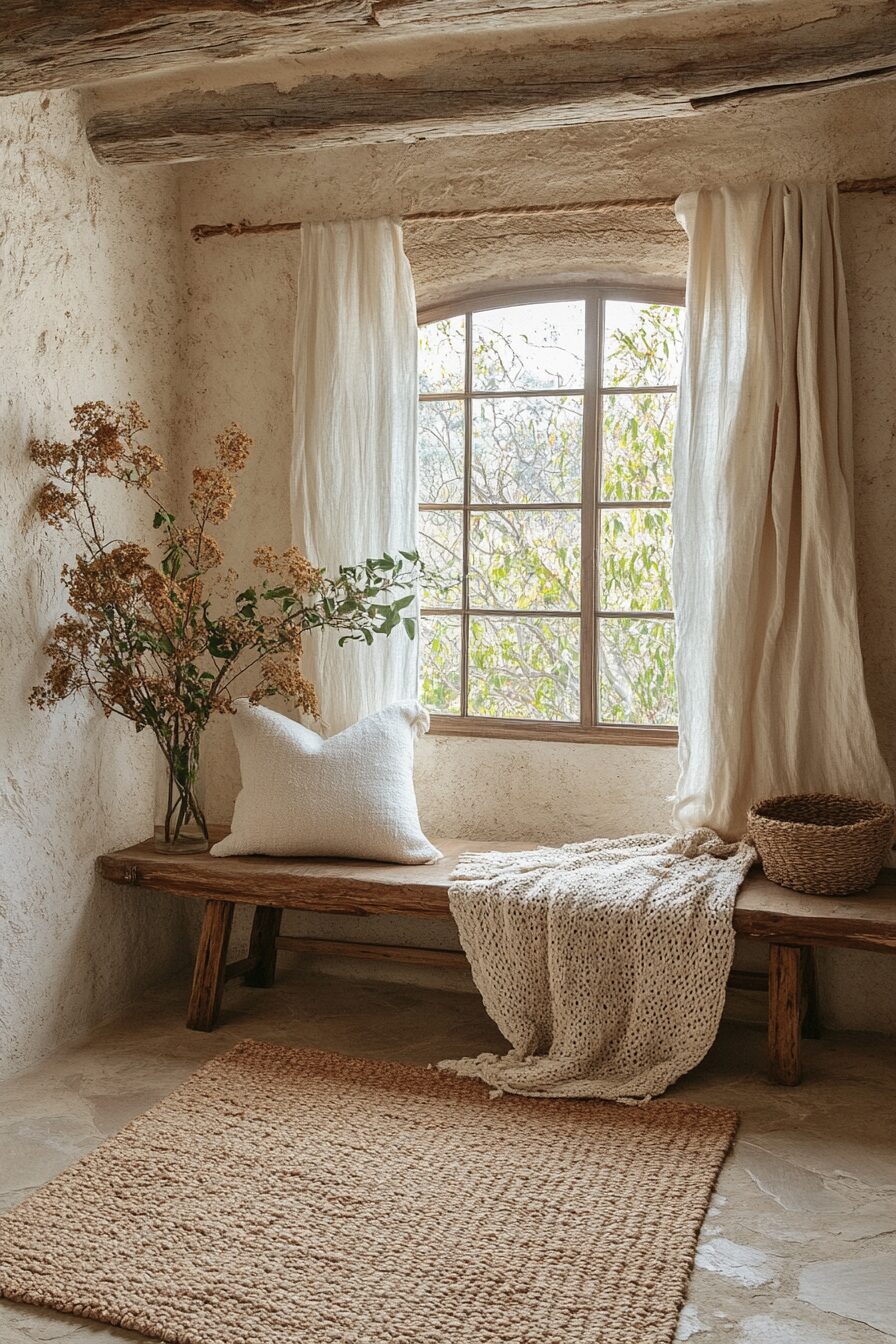
Tranquil Textures in a Wabi Sabi entryway combine natural materials like jute, linen, and unfinished wood to create a warm, tactile experience. The mix of textures adds depth without overwhelming the senses, creating a welcoming atmosphere. Soft lighting enhances the materials’ beauty, casting gentle shadows that bring the space to life. This design invites guests to pause and appreciate its understated elegance.
✎ Steal This Look
- Paint Color: Behr Wheat Bread ICC-93
- Furniture: Low-profile wooden console table with natural finish, woven seagrass or jute storage baskets, simple wooden bench with natural patina
- Lighting: Soft brass or matte black pendant with linen shade, or wall-mounted lantern sconce that diffuses warm light
- Materials: Raw linen, jute rope, unfinished oak or reclaimed wood, natural fiber textiles, aged brass accents
A wabi sabi entryway asks guests to slow down the moment they arrive. By welcoming them with honest materials and gentle light, you’re saying: this home values simplicity, nature, and the beauty in what’s real.
5. Rustic Approach
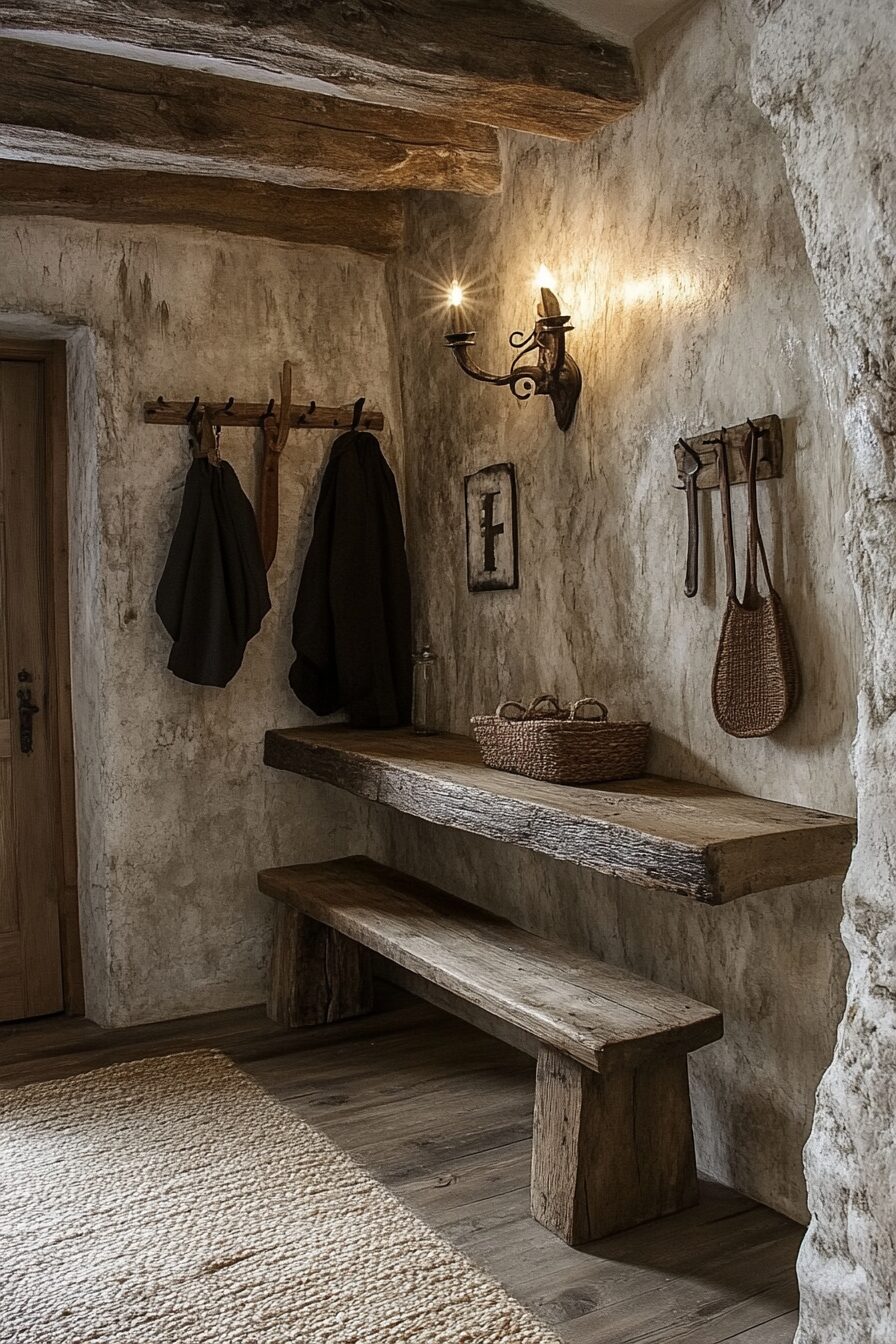
A Rustic Approach Wabi Sabi entryway embraces aged materials and organic designs to create a warm and inviting atmosphere. Reclaimed wood benches, stone flooring, and vintage accents add character and history to the space. Each piece tells a story, making the entryway feel both personal and timeless. The rustic charm is complemented by handmade decor, which adds a unique touch.
🎨 Steal This Look
- Paint Color: Valspar Woodrow Wilson Beige 3152-6C
- Furniture: Reclaimed wood bench with natural knots and weathered finish; vintage wrought iron coat rack; aged wooden console table
- Lighting: Vintage Edison bulb pendant or wrought iron lantern-style fixture with warm amber glow
- Materials: Reclaimed wood, natural stone flooring, aged metal hardware, linen textiles, unfinished wood finishes
A rustic wabi sabi entryway invites guests into a home that values history and handcraftsmanship. This approach transforms a simple entry into a curated gallery of meaningful, lived-in beauty.
6. Calming Entrance
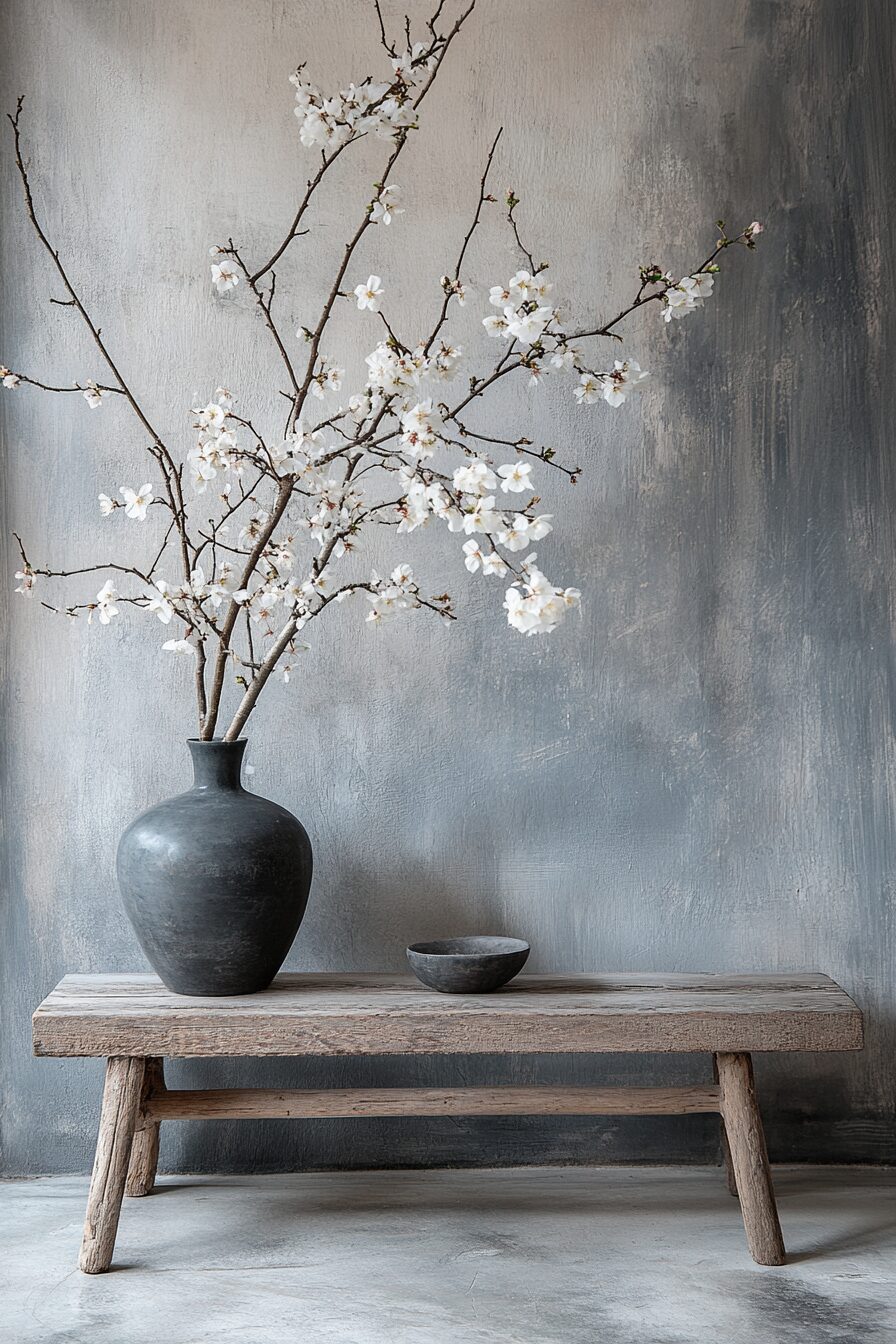
A Calming Entrance Wabi Sabi entryway focuses on soft hues, clean lines, and minimal decor to create a peaceful first impression. The space is designed to feel bright and airy, with natural light enhancing its simplicity. Subtle touches like a quiet water feature or a simple vase of flowers add to the tranquil ambiance. Every element is carefully chosen to promote a sense of calm and relaxation.
💡 Steal This Look
- Paint Color: PPG Accessible Beige PPG1088-2 – a soft, warm neutral that embodies wabi sabi’s understated elegance while reflecting natural light
- Furniture: Low-profile wooden console table with natural finish, simple wooden bench with clean lines, minimal storage with sliding doors to reduce visual clutter
- Lighting: Soft recessed lighting or a simple paper pendant fixture that diffuses light gently, avoiding harsh shadows and creating an airy feel
- Materials: Unfinished wood, natural linen, stone or concrete accents, weathered metal hardware, and natural fiber doormat
A wabi sabi entryway becomes your home’s quiet sanctuary, setting a peaceful tone the moment you or guests cross the threshold. This approach transforms an often-overlooked space into a restorative pause between the outside world and your interior.
7. Bare Beauty
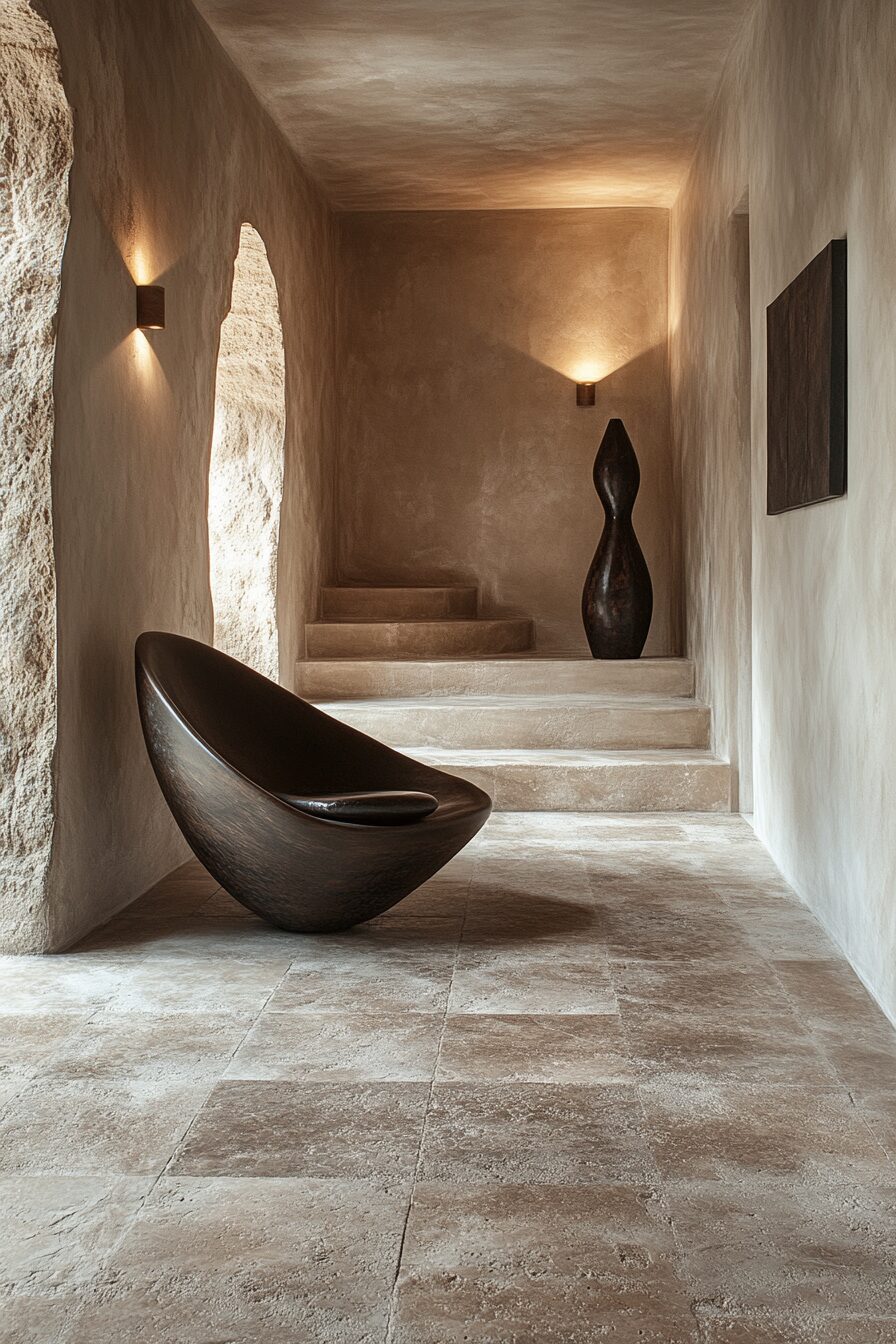
Bare Beauty in a Wabi Sabi entryway showcases the elegance of simplicity with minimal furnishings and natural textures. Polished concrete, raw wood, and stone accents form the foundation of this understated design. Neutral colors keep the focus on the materials, creating a clean and open space. This approach celebrates the beauty of restraint, proving that less truly is more.
🎨 Steal This Look
- Paint Color: Dunn-Edwards Naturalistic Tan DE 6150
- Furniture: Single low wooden bench with natural grain, minimal metal coat rack with clean lines
- Lighting: Recessed ceiling lights or single pendant with brushed metal finish to avoid visual clutter
- Materials: Polished concrete flooring, raw wood accents, unfinished stone or slate details, natural fiber doormat
Bare Beauty strips away the noise to reveal what genuinely matters: the honest texture of materials aging gracefully. This approach transforms an entryway into a meditative threshold that whispers rather than shouts, setting a calm, grounded tone the moment guests arrive.
8. Soft Accents
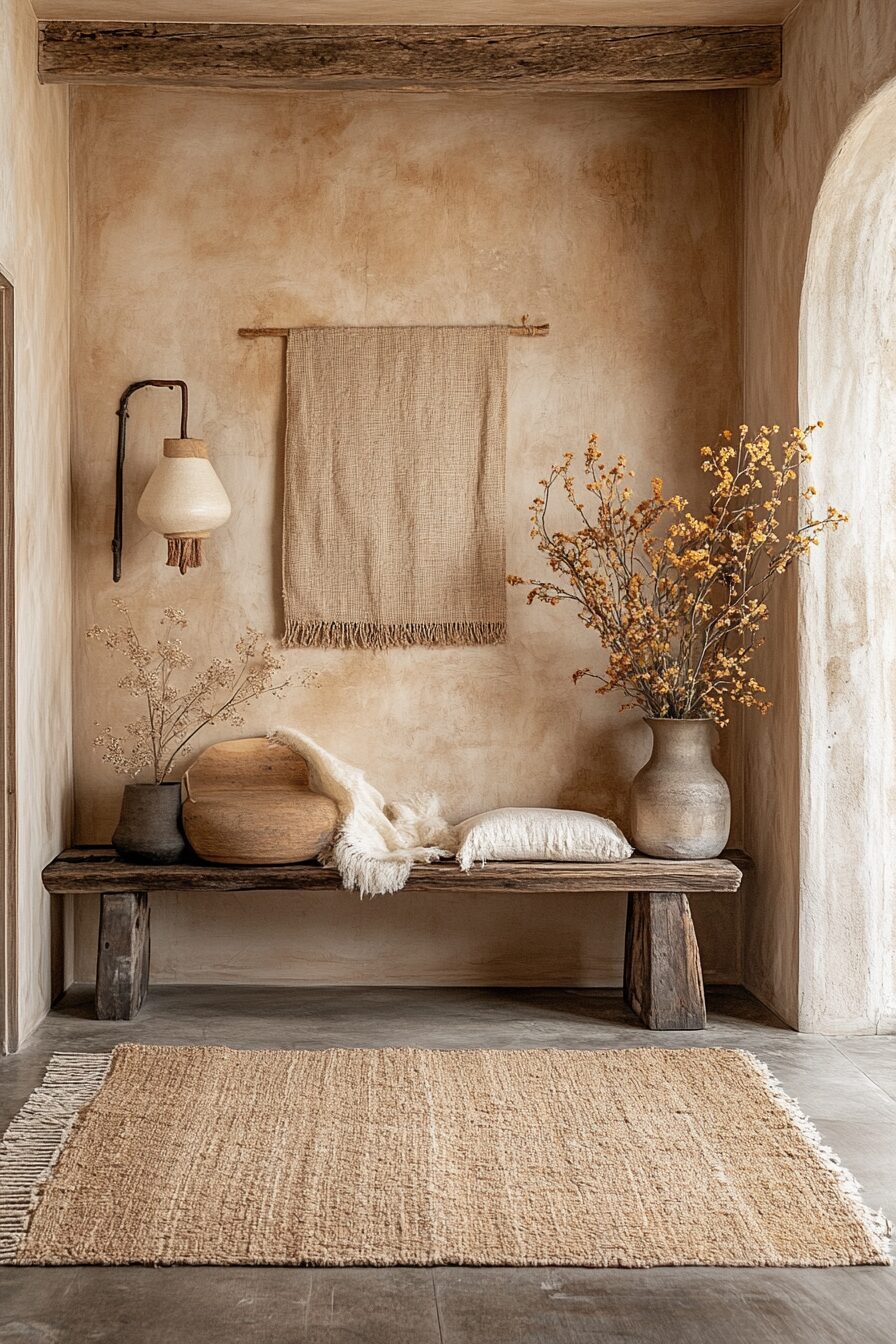
Soft Accents in a Wabi Sabi entryway focus on gentle details to create an inviting and understated space. A handwoven rug, soft lighting, and a simple ceramic vase can transform the entryway into a warm welcome. The design uses subtle textures and neutral tones to maintain a calm and cohesive look. Each element is thoughtfully selected to enhance the space without overwhelming it.
🎨 Steal This Look
- Paint Color: Clare Paint Limestone CODE – a warm, soft greige that provides a neutral backdrop for wabi sabi’s emphasis on subtle texture
- Furniture: Low-profile wooden console table with natural finish; simple wooden bench with clean lines
- Lighting: Soft brass or warm bronze pendant light with linen or rice paper shade; dimmable for gentle illumination
- Materials: Handwoven jute or wool area rug with natural fibers; unglazed ceramic vessels; raw wood; linen textiles
Wabi sabi entryways work because they honor the beauty in simple, imperfect things—a slightly uneven handwoven rug or a ceramic vase with visible brush marks becomes the soul of the space. Soft accents aren’t about luxury; they’re about intention and calm, turning your entry into a genuine refuge from the outside world.
9. Nature’s Welcome
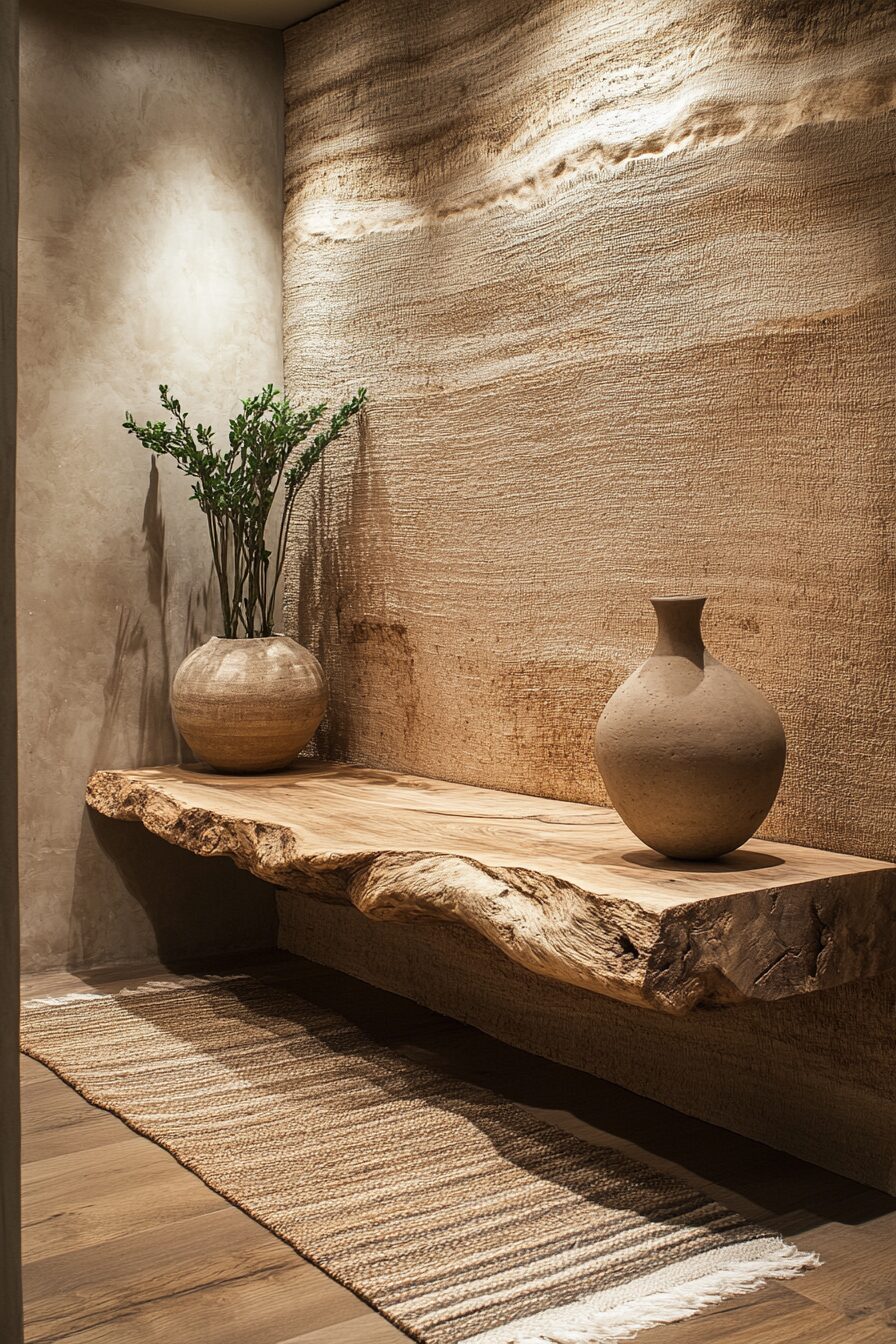
Nature’s Welcome in a Wabi Sabi entryway uses organic shapes and materials to create a harmonious first impression. Wooden benches, stone sculptures, and natural fiber rugs bring the outdoors in, celebrating the beauty of simplicity. This design avoids synthetic materials, opting instead for earthy, renewable options. The layout encourages flow and connection, making the entryway a seamless transition into your home.
🏠 Steal This Look
- Paint Color: Fine Paints of Europe Taupe MT-12 or Fine Paints of Europe Greige MT-08
- Furniture: Solid wood bench with natural finish, raw wood floating shelf, organic-shaped wooden stool
- Lighting: Minimalist pendant with natural linen shade or simple wrought iron lantern with warm Edison bulb
- Materials: Jute or sisal area rug, raw stone or slate accents, untreated wood, natural fibers, clay or ceramic vessels
A wabi sabi entryway becomes a quiet meditation space before you enter your home—the first moment of calm. When you choose wood with grain and patina, stone with texture, and fibers that age beautifully, you’re inviting impermanence and simplicity to greet every visitor.
10. Neutral Sanctuary
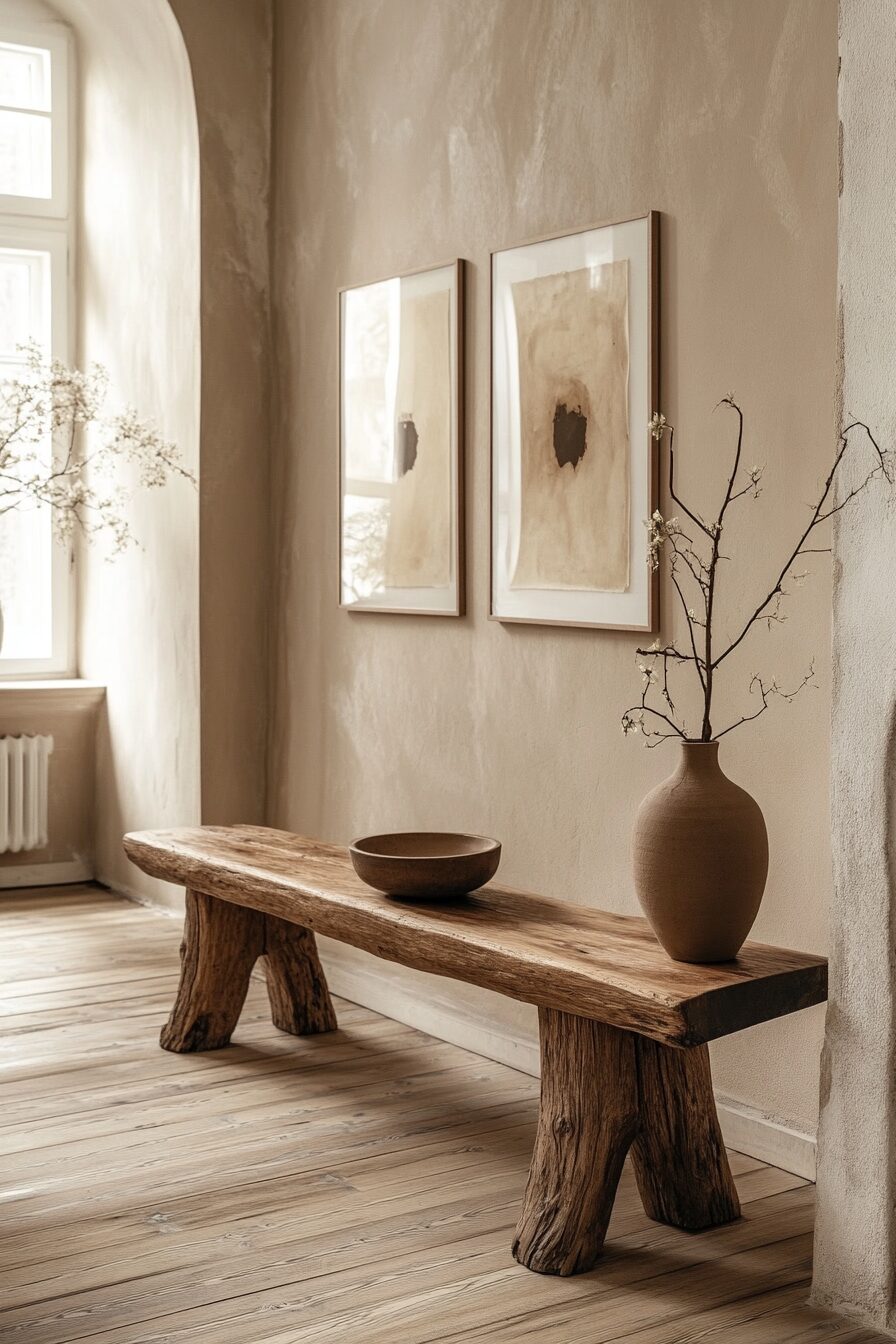
A Neutral Sanctuary Wabi Sabi entryway uses a palette of soft, earthy tones to create a calming and spacious feel. Beige, gray, and off-white hues blend harmoniously, promoting a serene atmosphere. Subtle textures in materials like wood and linen add depth without disrupting the tranquility. The minimalist decor ensures the space feels open and uncluttered.
🎨 Steal This Look
- Paint Color: Backdrop Warm Beige BG-100
- Furniture: Low-profile wooden console table with natural finish, linen upholstered bench seat, minimalist wooden coat rack
- Lighting: Soft brass or natural wood pendant with frosted linen shade
- Materials: Natural wood, raw linen, unfinished plaster, soft jute rug, weathered ceramic accents
A neutral sanctuary entryway is about creating an exhale moment the second someone steps inside. Those soft, earthy tones become a visual reset before the chaos of daily life, while honest materials whisper rather than shout.
11. Relaxed Pathway
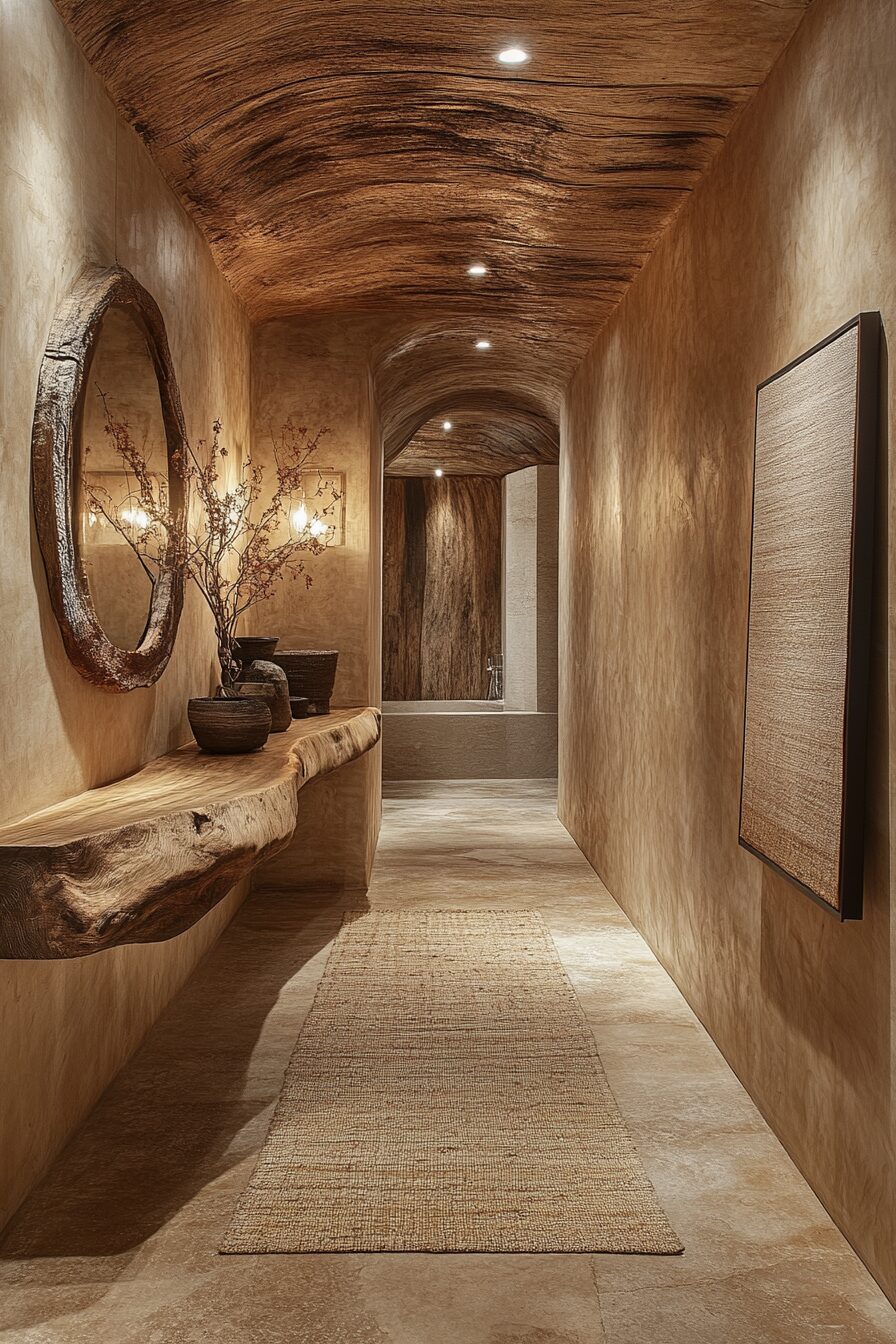
A Relaxed Pathway Wabi Sabi entryway prioritizes flow and functionality, combining streamlined furniture with soothing colors. The space is designed to be open and welcoming, with carefully placed elements like a sleek bench or a simple coat rack. Soft lighting and natural materials create a stress-free environment for those entering or leaving. This design ensures your entryway is both practical and beautiful.
🖼 Steal This Look
- Paint Color: Sherwin-Williams Accessible Beige SW 7036
- Furniture: Low-profile wooden bench with natural finish, minimalist coat rack in blackened metal or light wood, simple console table with clean lines
- Lighting: Soft pendant light with linen or paper shade, or wall-mounted brass sconce with warm diffused glow
- Materials: Natural wood, linen, stone, unglazed ceramics, raw metal accents
A relaxed pathway entryway becomes your home’s gentle introduction—guests should feel the ease the moment they cross the threshold. This approach honors the Japanese principle of *ma* (meaningful emptiness) while keeping your everyday life organized.
12. Simple Beginnings
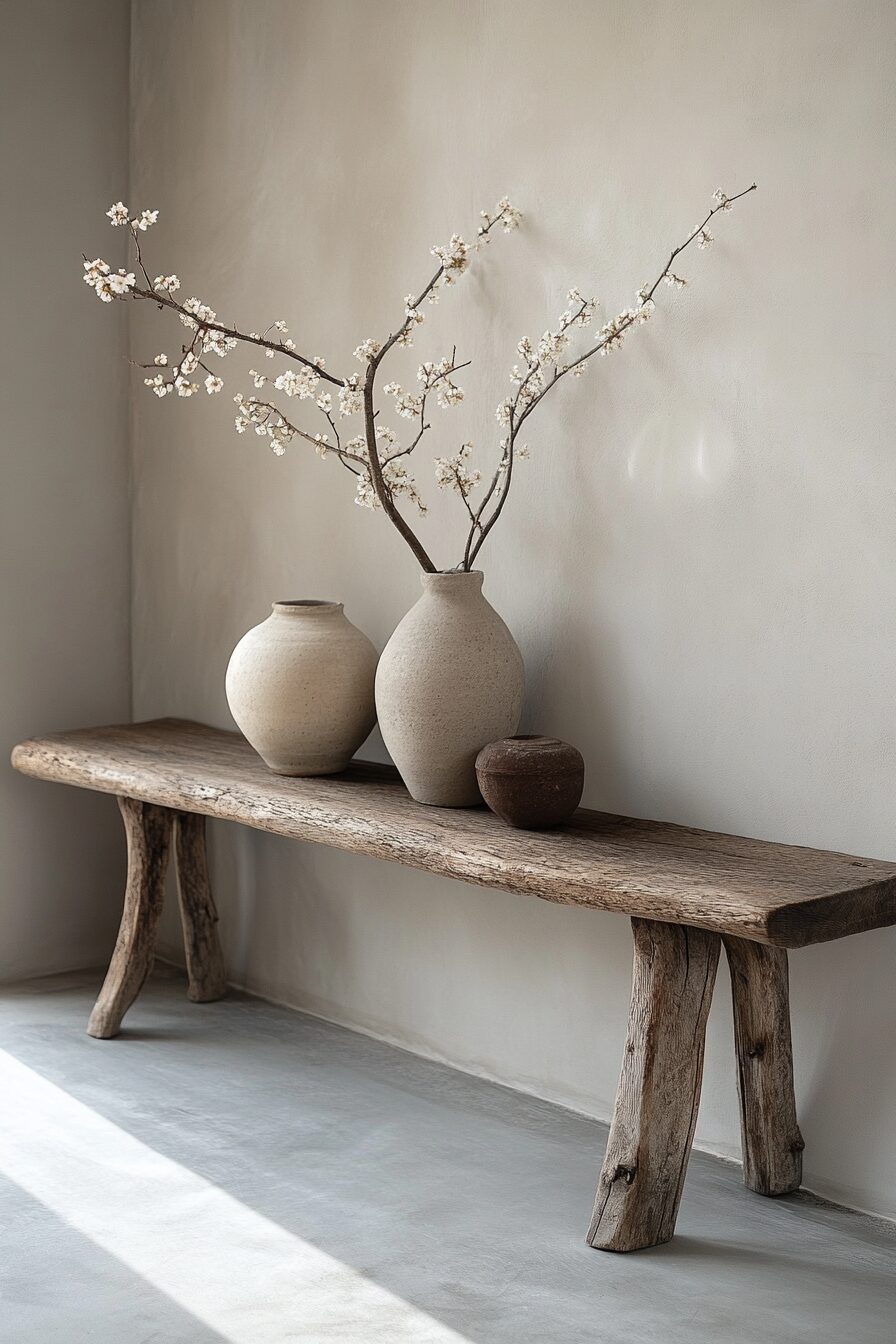
Simple Beginnings in a Wabi Sabi entryway focus on essential elements arranged with care. A minimalist console table, a clean-lined mirror, and a simple coat hook are all that’s needed to create a functional yet elegant space. The design eliminates clutter, allowing the quality and beauty of each piece to shine. Neutral colors and natural textures ensure a harmonious and inviting entryway.
★ Steal This Look
- Paint Color: Benjamin Moore Hale Navy HC-80
- Furniture: Minimalist console table in natural wood or concrete; simple frameless mirror with natural wood or metal edge; single wall-mounted wooden coat hook
- Lighting: Pendant light with paper or linen shade in warm white tone; or wall sconce with matte brass fixture
- Materials: Raw wood, natural stone, linen, matte metals, unfinished concrete, woven fiber accents
A simple entryway whispers welcome rather than demands attention—it’s the design equivalent of a warm handshake. This approach transforms an often-overlooked threshold into a calm transition between the outside world and your peaceful home.
13. Raw Elegance
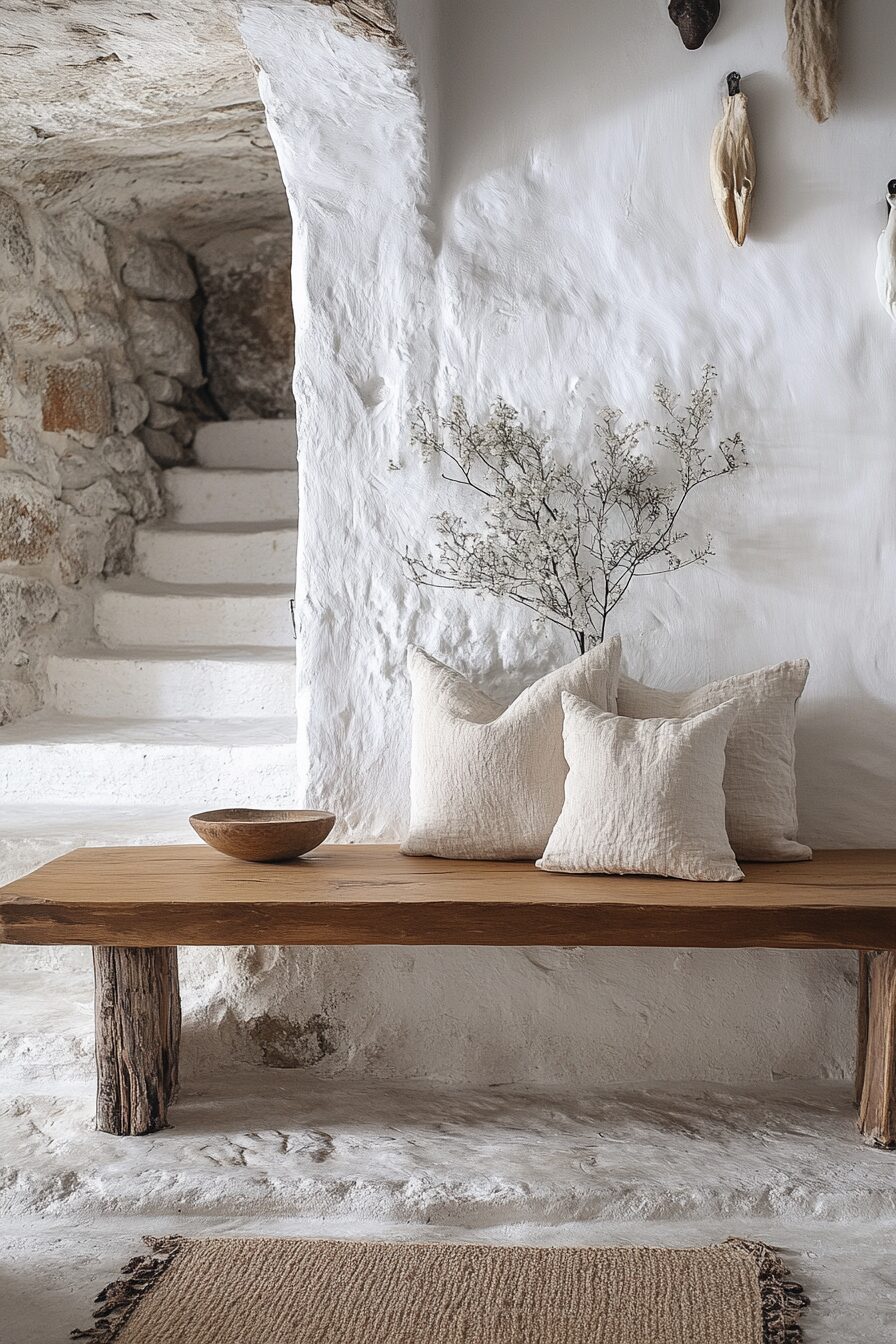
Raw Elegance in a Wabi Sabi entryway highlights unpolished materials like rough stone, raw wood, and unfinished metal. These elements celebrate their natural imperfections, creating a space that feels authentic and grounded. Soft lighting enhances the textures, casting shadows that bring depth and warmth. This design proves that raw beauty can be both functional and stunning.
🖼 Steal This Look
- Paint Color: Farrow & Ball Hardwick White 315
- Furniture: Reclaimed wood console table with natural edge, unfinished wooden bench with visible grain and knots
- Lighting: Industrial pendant with exposed Edison bulb or soft brass sconce casting directional light to highlight stone and wood textures
- Materials: Rough-hewn stone accent wall or stone flooring, raw wood with bark edges, unfinished blackened metal hardware and frames, natural linen or burlap textiles
Raw elegance in an entryway signals you’re comfortable with imperfection—it’s the first impression that says ‘we live authentically here,’ not for show. This approach transforms natural wear into sophisticated storytelling.
14. Peaceful Crossing
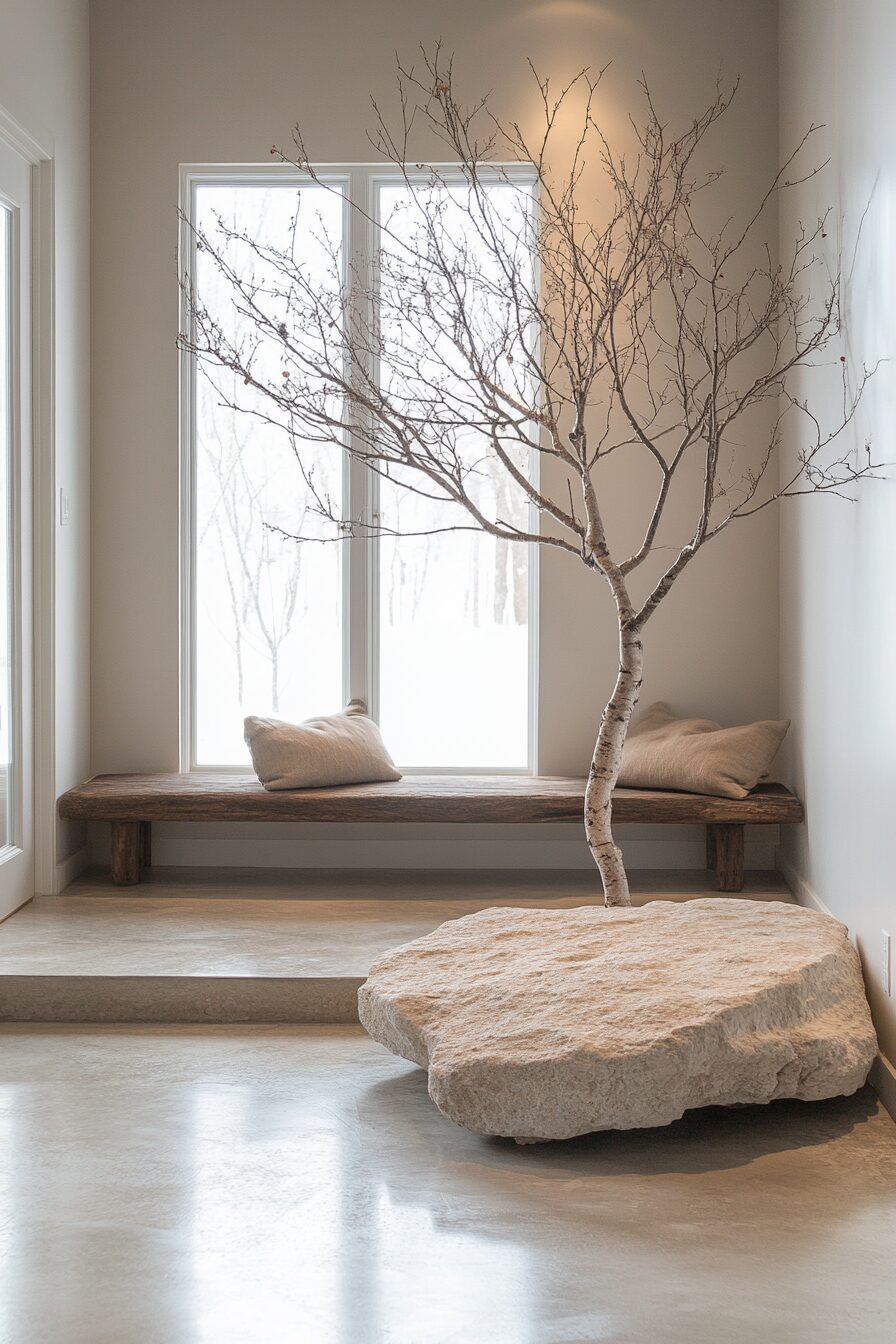
Peaceful Crossing in a Wabi Sabi entryway combines calming elements like soft textiles, warm lighting, and soothing colors to create a tranquil transition. A comfortable bench or a gently flowing water feature adds to the serenity of the space. The design focuses on simplicity and intentionality, offering a moment of calm as you step inside.
🖼 Steal This Look
- Paint Color: Behr Accessible Beige N310-2
- Furniture: Low wooden bench with natural finish and woven textile seat cushion
- Lighting: Warm brass or bronze wall sconce with frosted glass diffuser
- Materials: Raw wood, linen, natural stone, soft wool felt
A peaceful entryway acts as your home’s breathing room—that first 5 seconds matter. By anchoring the space with a simple bench and warm, layered light, you transform a functional passageway into a ritual of arrival.
15. Hushed Entrance
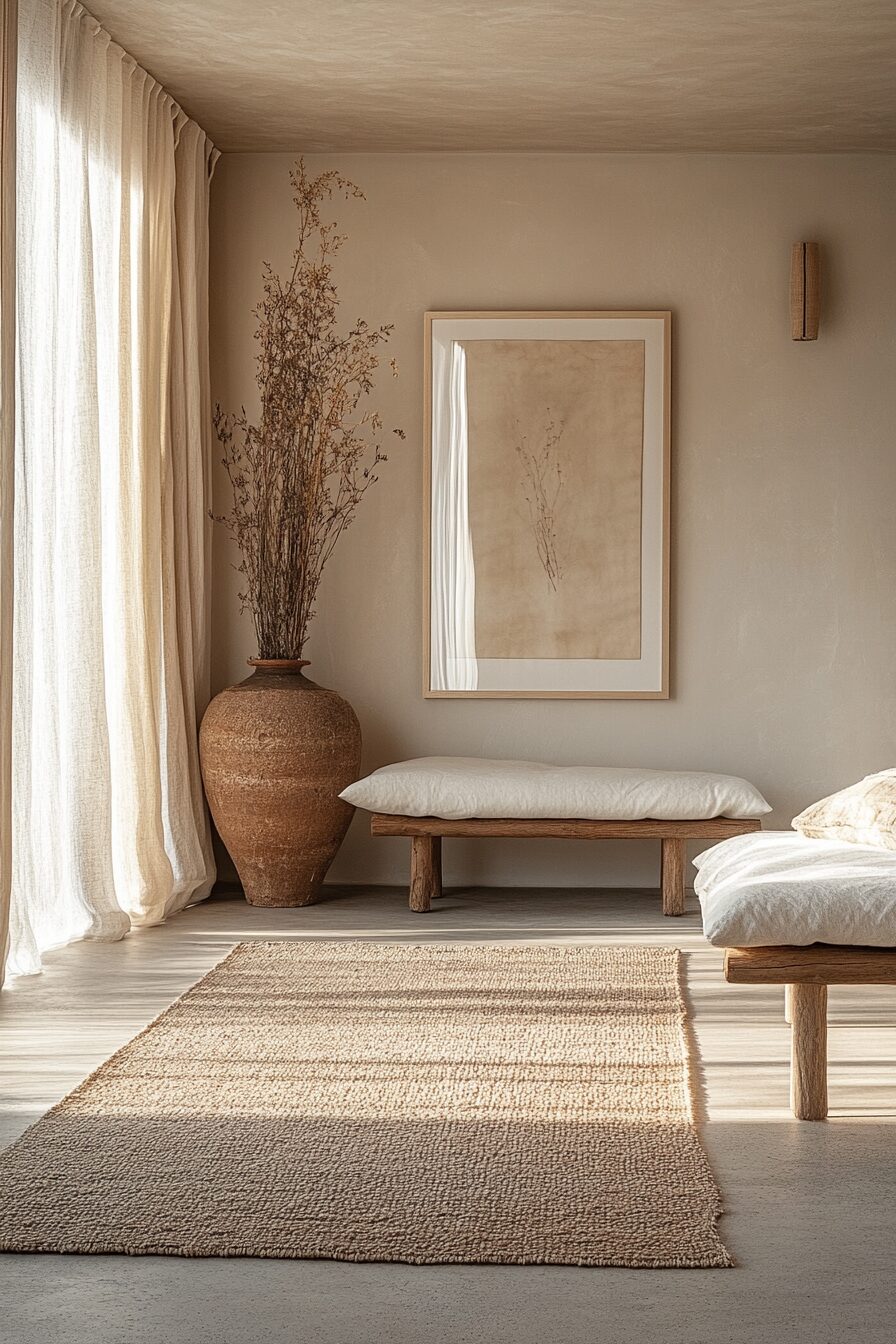
A Hushed Entrance Wabi Sabi entryway is designed to create a quiet and tranquil atmosphere. Sound-absorbing rugs and soft furnishings help to minimize noise, while understated decor keeps the space feeling calm. Neutral tones and simple lines enhance the peaceful vibe, making the entryway a gentle introduction to your home.
🎨 Steal This Look
- Paint Color: Valspar Woodrow Wilson Beige HC-24
- Furniture: Low-profile wooden console table with simple joinery, woven storage bench in natural fibers, minimal coat rack in blackened wood
- Lighting: Soft recessed downlighting or a single paper pendant light in warm white (2700K) to maintain tranquility
- Materials: Natural jute or wool area rug, unfinished or light-stained wood, linen or cotton textiles, clay or stone accents
A hushed entryway becomes a sanctuary—the first moment guests experience your home’s intentional calm. Wabi sabi principles embrace imperfection and simplicity here, making this threshold feel like an honest, unrushed welcome.
16. Welcoming Warmth
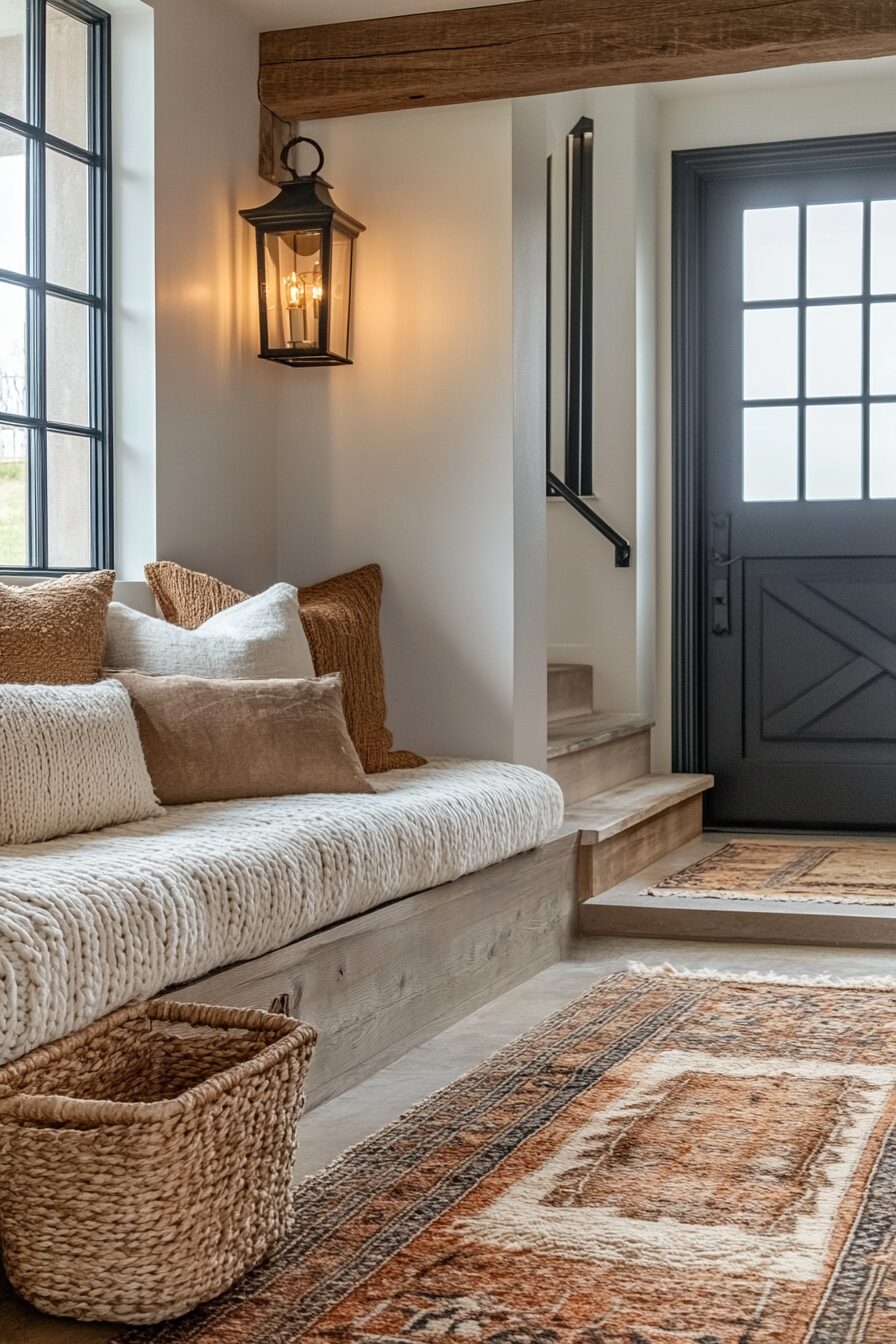
Welcoming Warmth in a Wabi Sabi entryway creates a cozy and inviting atmosphere using textured rugs, soft lighting, and warm-toned decor. Plush seating and natural materials like wool or wood add comfort and charm. The muted color palette promotes relaxation, making the entryway a comforting transition into the home. This design ensures that every guest feels embraced by the warmth of the space.
💡 Steal This Look
- Paint Color: PPG Accessible Beige PPG1088-3 – a warm, muted neutral that embodies wabi sabi’s understated elegance
- Furniture: Low-profile wooden console table with natural grain; simple wooden bench with linen upholstery for layered seating
- Lighting: Warm Edison bulb wall sconces or a simple paper pendant with soft diffusion to create gentle ambient light
- Materials: Thick wool area rug in cream or soft gray; natural wood surfaces; raw linen; unglazed ceramic or stoneware accents
A wabi sabi entryway doesn’t scream luxury; it whispers comfort. The moment guests step inside, worn wood, soft textures, and warm tones signal that beauty lives in impermanence and imperfection—creating an immediate sense of belonging.
17. Harmonious Entry
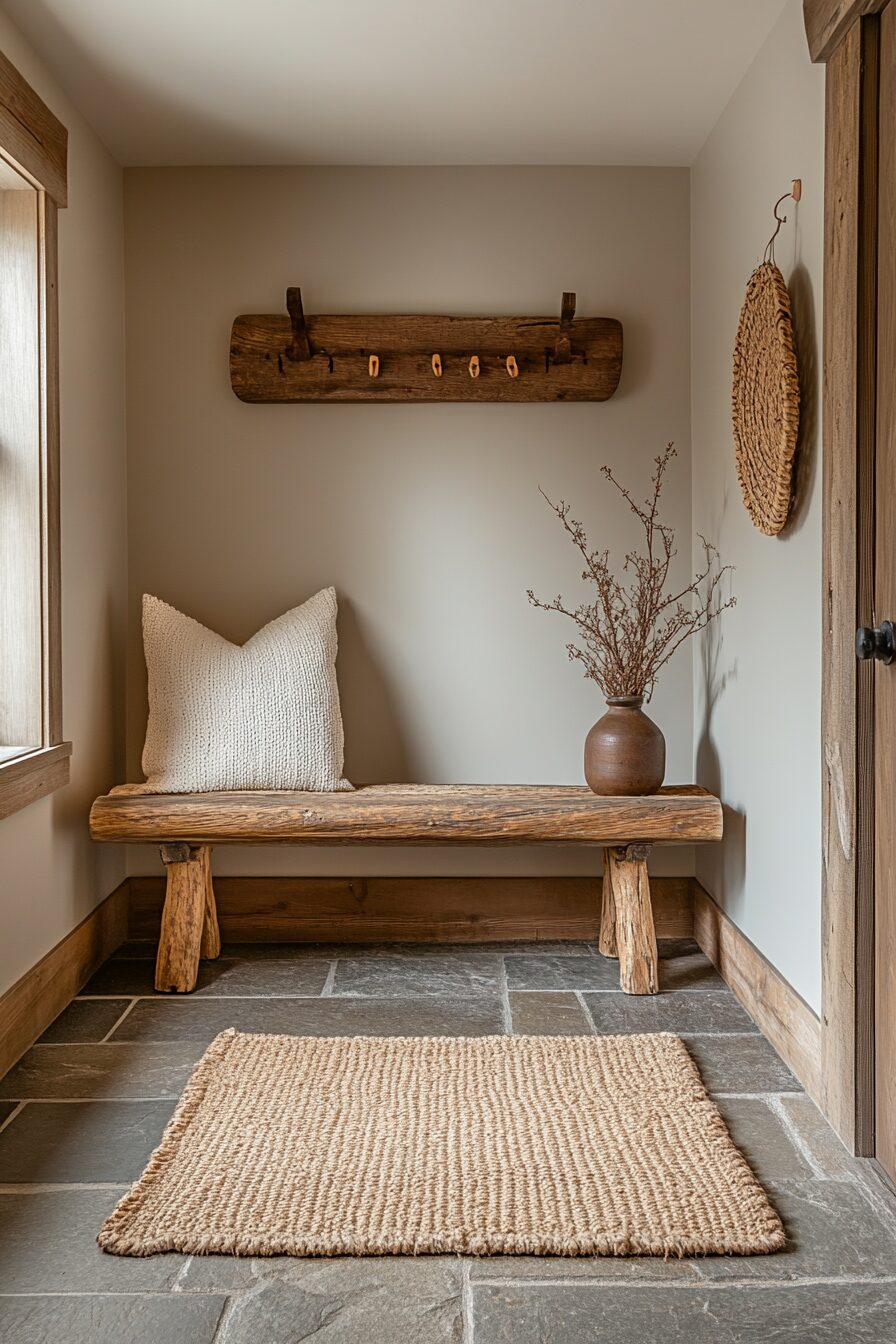
A Harmonious Entry Wabi Sabi entryway emphasizes balance and cohesion by combining natural materials and thoughtful design. Features like a bamboo shoe rack, a wooden bench, and a woven rug create a space that feels both functional and beautiful. The layout promotes flow and connection, enhancing the sense of tranquility. Each element is carefully chosen to reflect harmony with nature.
🏠 Steal This Look
- Paint Color: Dunn-Edwards Natural Almond DE 6129
- Furniture: Low-profile wooden bench with natural finish, bamboo shoe rack with open shelving, wooden coat hooks on accent wall
- Lighting: Warm brass or bronze lantern-style fixture with frosted glass, or paper pendant light with soft warm glow
- Materials: Woven jute or sisal rug, raw wood with visible grain, bamboo, natural linen textiles, unfinished ceramic or stone accents
A wabi sabi entryway is the first breath of calm your guests experience—it sets the tone for a home that values simplicity and authenticity over trends. When every piece feels honest and functional, the space becomes a genuine sanctuary, not just a showcase.
18. Whispered Threshold
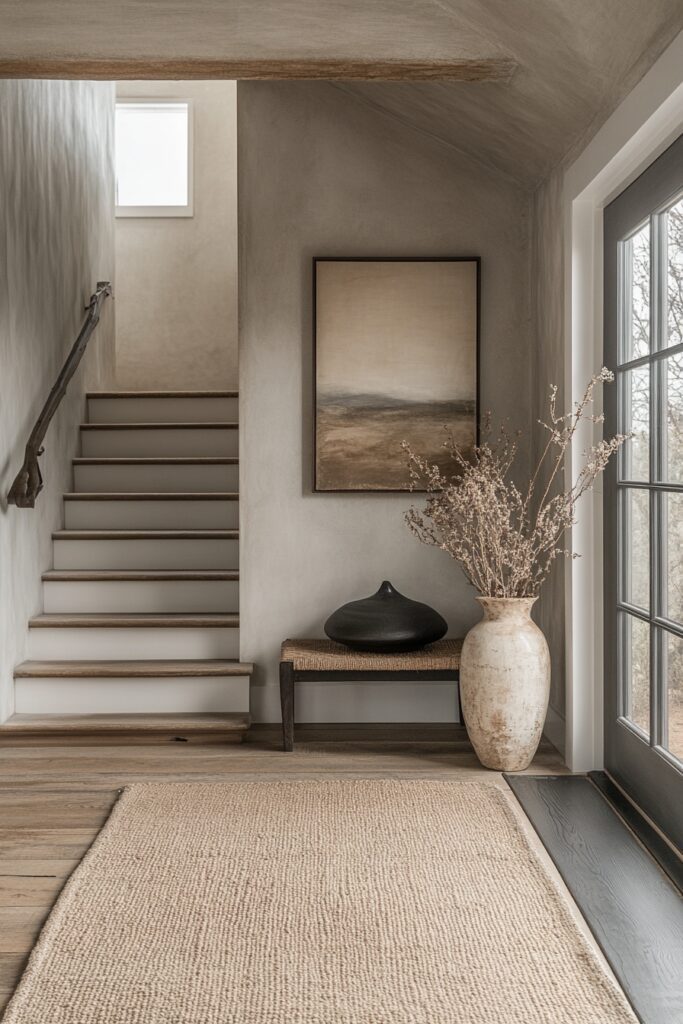
Whispered Threshold in a Wabi Sabi entryway focuses on subtle elegance with muted tones and delicate details. A soft wool rug, an artisan vase, or understated wall art adds just enough character without overwhelming the space. The design uses soft lighting and clean lines to enhance the quiet beauty of the entryway. This understated approach welcomes guests with a sense of calm and serenity.
🎨 Steal This Look
- Paint Color: Clare Paint Linen Light CL 228
- Furniture: Low wooden console table with natural grain, simple and unfinished; floating shelves in light ash wood
- Lighting: Soft linen drum pendant or frosted glass sconce with warm 2700K bulbs
- Materials: Natural wool rug in cream/beige, raw wood, unglazed ceramic vase, linen wall hanging
A whispered entryway invites guests to pause and breathe before entering your home. This restrained beauty—one artisan vase, soft lighting, a touchable rug—says more than a gallery wall ever could.
19. Balanced Beginnings
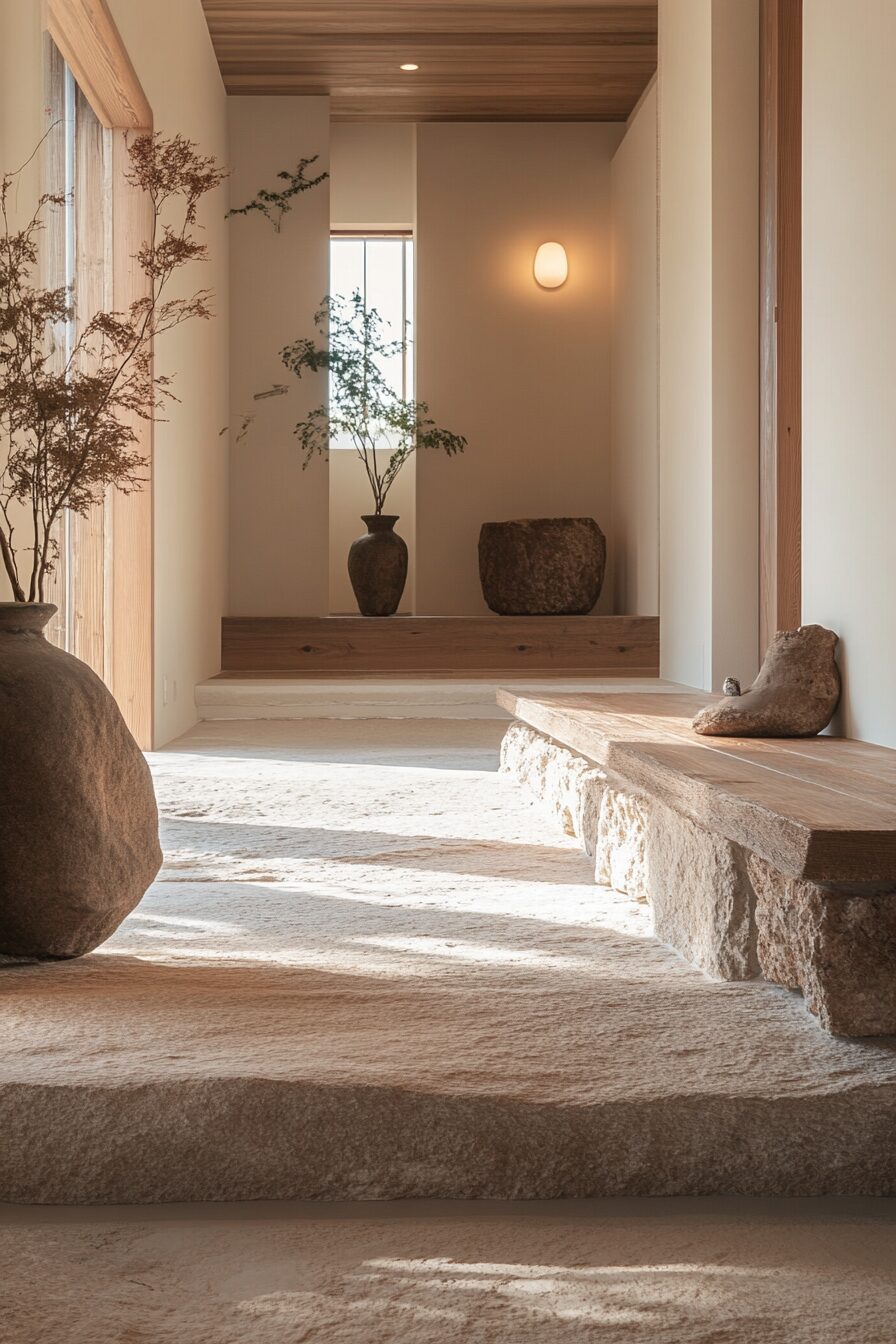
Balanced Beginnings in a Wabi Sabi entryway achieve harmony through thoughtful design and simple arrangements. Neutral colors, paired with natural materials like stone and wood, create a cohesive and tranquil environment. Furniture and decor are arranged to promote balance and flow, setting the tone for the rest of the home. This design approach ensures a warm and welcoming entryway.
🌟 Steal This Look
- Paint Color: Fine Paints of Europe Calke Brown 267 – warm, earthy neutral that grounds wabi sabi spaces
- Furniture: Low wooden console table with natural grain variation, paired with a simple wooden bench in warm honey tones
- Lighting: Pendant light with natural paper or linen shade in warm white, suspended at 72 inches above floor
- Materials: Raw stone entryway tile, untreated wood furniture with visible knots, linen textile accents, weathered concrete or plaster wall finish
A balanced wabi sabi entryway whispers rather than shouts, greeting visitors with quiet confidence. This is the space where less becomes powerful, where every object earns its place through authenticity and purpose.
20. Timeless Welcome
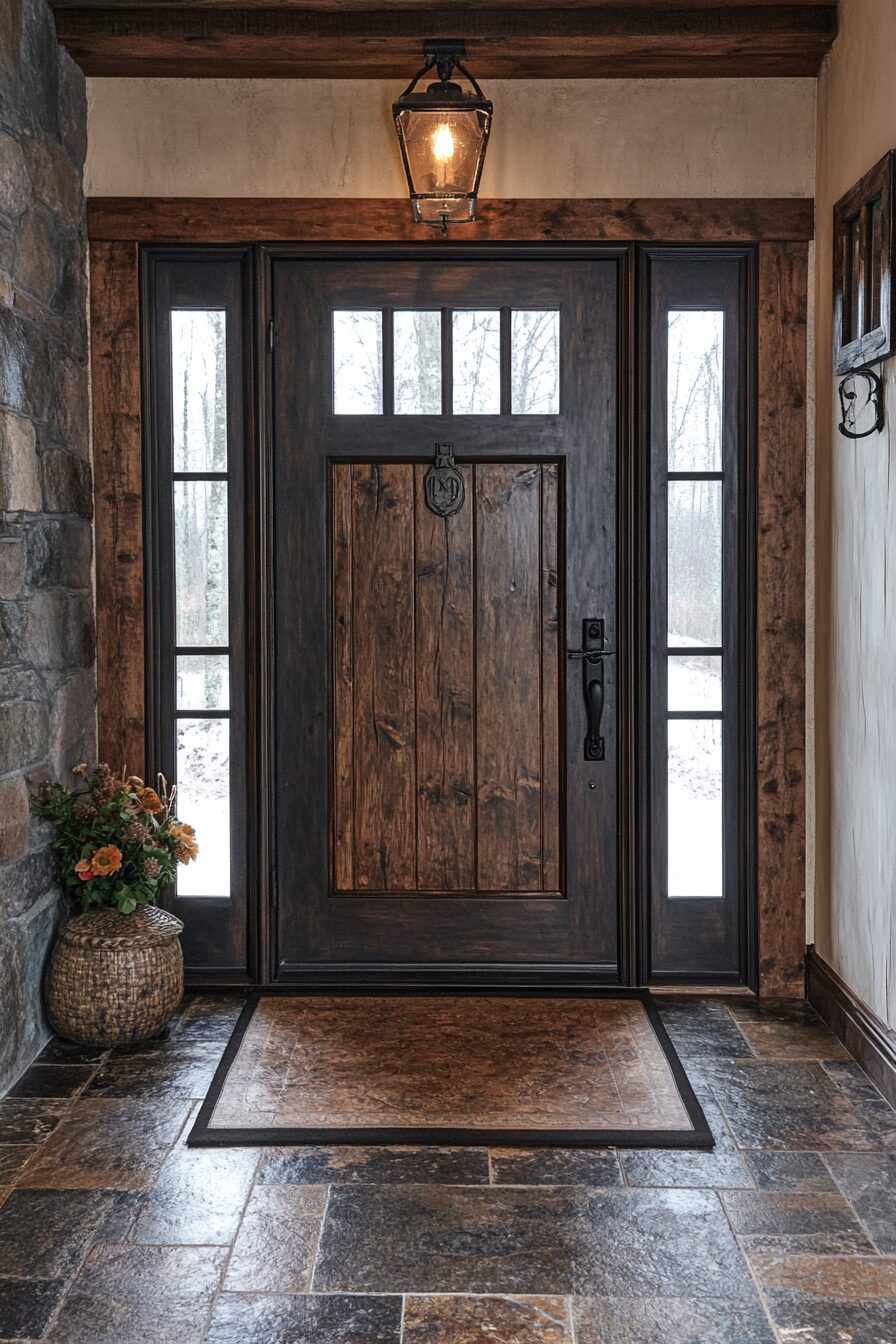
A Timeless Welcome Wabi Sabi entryway blends classic design with natural materials to create a serene and enduring space. Features like a weathered wooden bench, a simple mirror, and soft textiles ensure the entryway remains stylish for years. Neutral tones and understated decor make the space feel grounded and calming. This design celebrates longevity and tranquility.
★ Steal This Look
- Paint Color: Backdrop Natural Canvas BC 1012
- Furniture: Weathered reclaimed wood entryway bench with simple turned legs; floating wooden shelf or console in natural finish
- Lighting: Simple black metal pendant or wall-mounted brass sconce with frosted glass diffuser
- Materials: Raw wood with natural grain visible, linen textiles, unglazed ceramic or stoneware accents, aged brass hardware, natural fiber doormat
A wabi sabi entryway whispers rather than shouts, inviting guests into a home that values peace over impression. This is where you set the tone for calm the moment someone crosses your threshold.
21. Curved Harmony
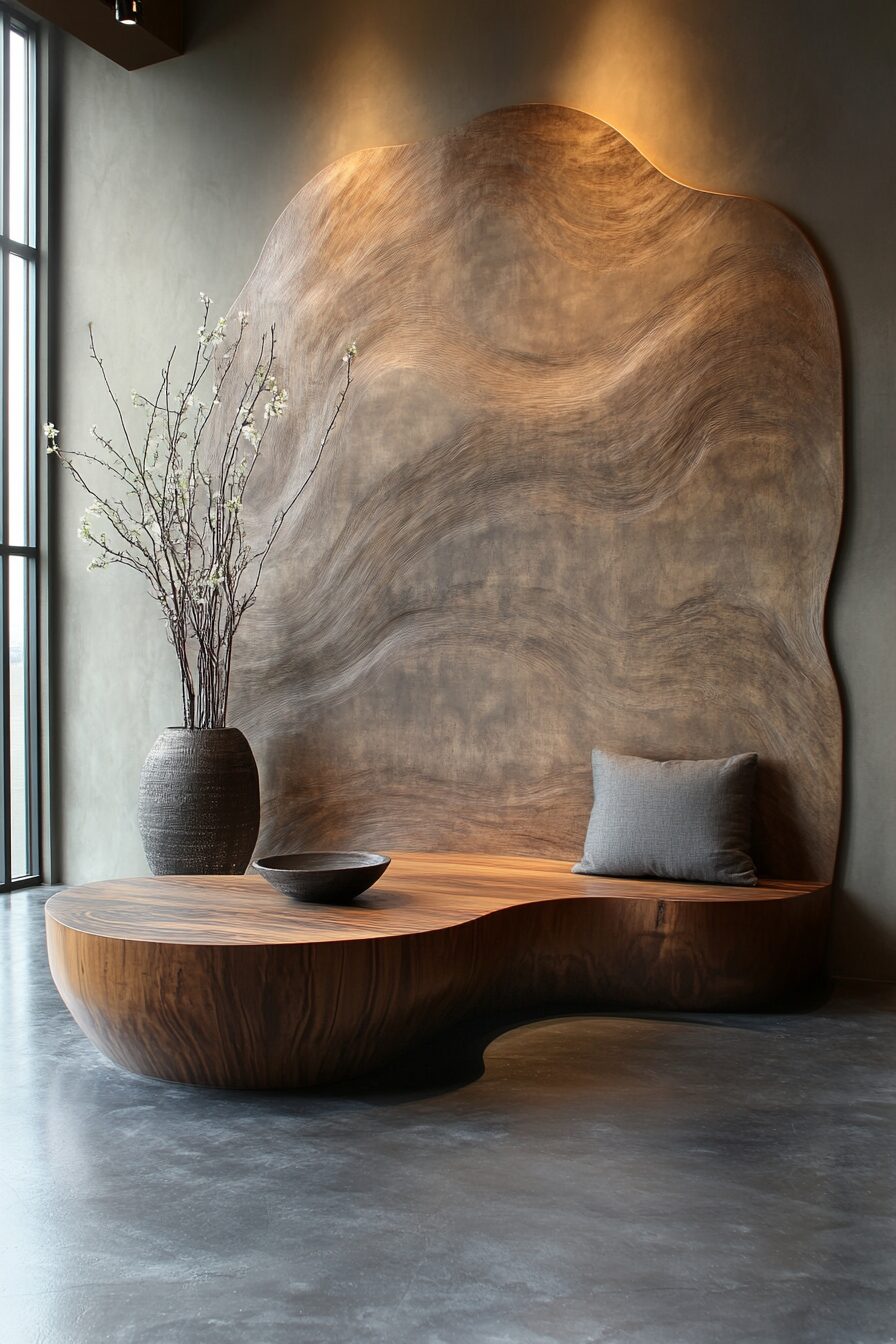
Curved Harmony in a Wabi Sabi entryway uses rounded shapes and flowing lines to soften the space. A curved bench, round mirror, or organic-shaped decor pieces create a welcoming and gentle atmosphere. This design avoids harsh angles, promoting a sense of ease and relaxation. The layout ensures a natural flow, enhancing the space’s functionality and beauty.
💡 Steal This Look
- Paint Color: Sherwin-Williams Accessible Beige SW 7036
- Furniture: Low-profile curved wooden bench with natural finish, round or oval wall mirror with organic frame, curved console table in light wood or natural materials
- Lighting: Soft pendant light with rounded frosted glass or organic ceramic shade, positioned low for ambient warmth
- Materials: Natural wood with visible grain, stone or concrete elements, linen, unglazed ceramics, woven natural fibers
Curved shapes in an entryway naturally slow visitors down and signal calm before they step into the home. This softness is the essence of wabi sabi—imperfection and flowing movement create a sanctuary from angular, modern life.
22. Elemental Welcome
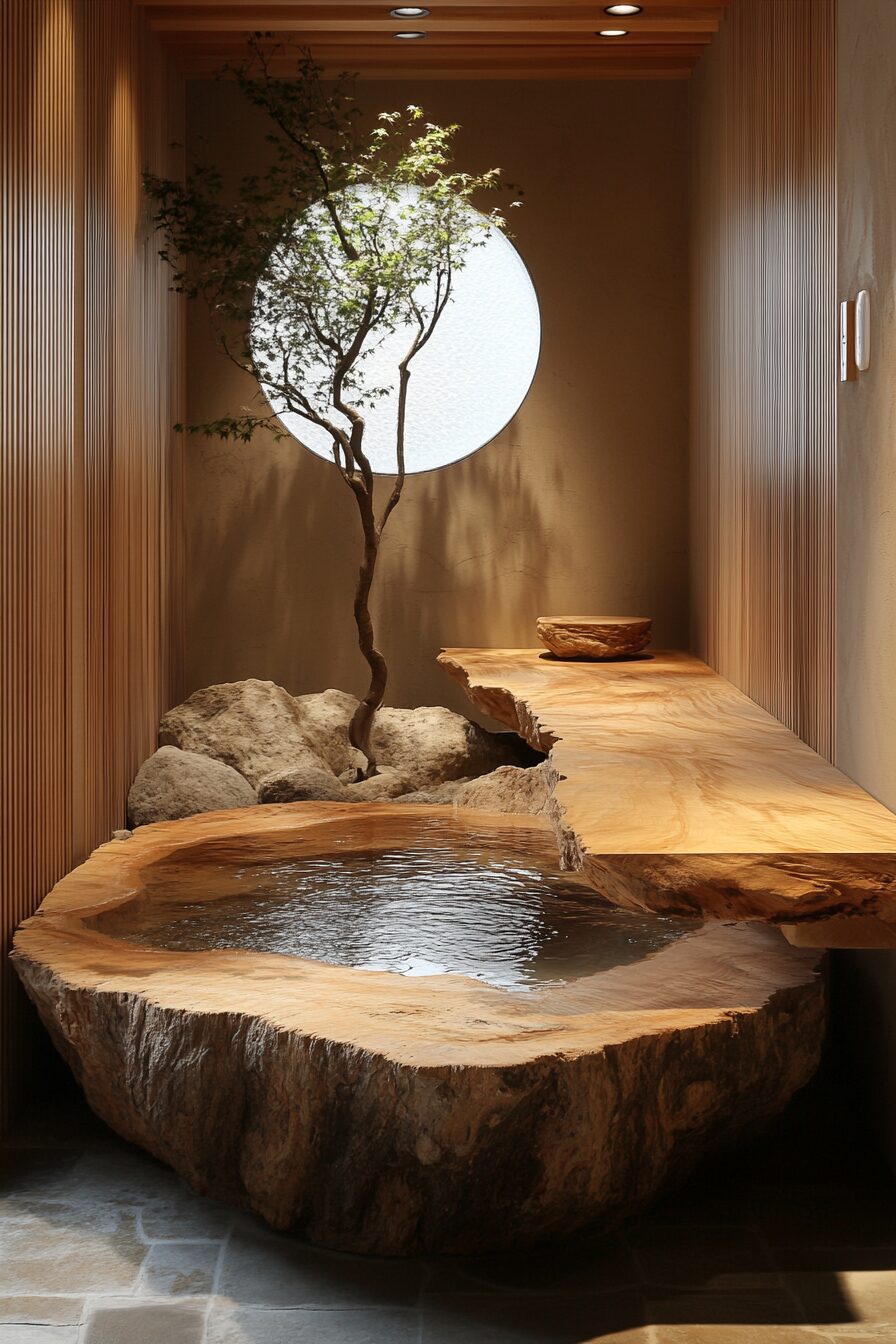
Elemental Welcome in a Wabi Sabi entryway incorporates basic elements like stone, water, and wood to connect the indoors with nature. Raw materials are used in their most natural form, creating a grounding and peaceful atmosphere. Features like a stone planter or a wooden shoe rack celebrate the beauty of imperfection. Lighting highlights the textures, enhancing the organic feel of the space.
🌟 Steal This Look
- Paint Color: Benjamin Moore Hale Navy HC-80
- Furniture: Raw wooden shoe rack with visible grain and knots, natural stone or concrete planter for entryway greenery, low wooden bench with organic edges
- Lighting: Warm Edison bulb pendant or wall sconce with aged brass or blackened metal fixture to highlight surface textures
- Materials: Unfinished wood, natural stone, concrete, raw linen, weathered metals, river rocks
An elemental entryway feels like stepping into a calm forest clearing. This approach transforms your first impression from ‘decorated’ to ‘grounded,’ inviting guests into a home that honors imperfection and natural beauty.
23. Soft Hues Entryway
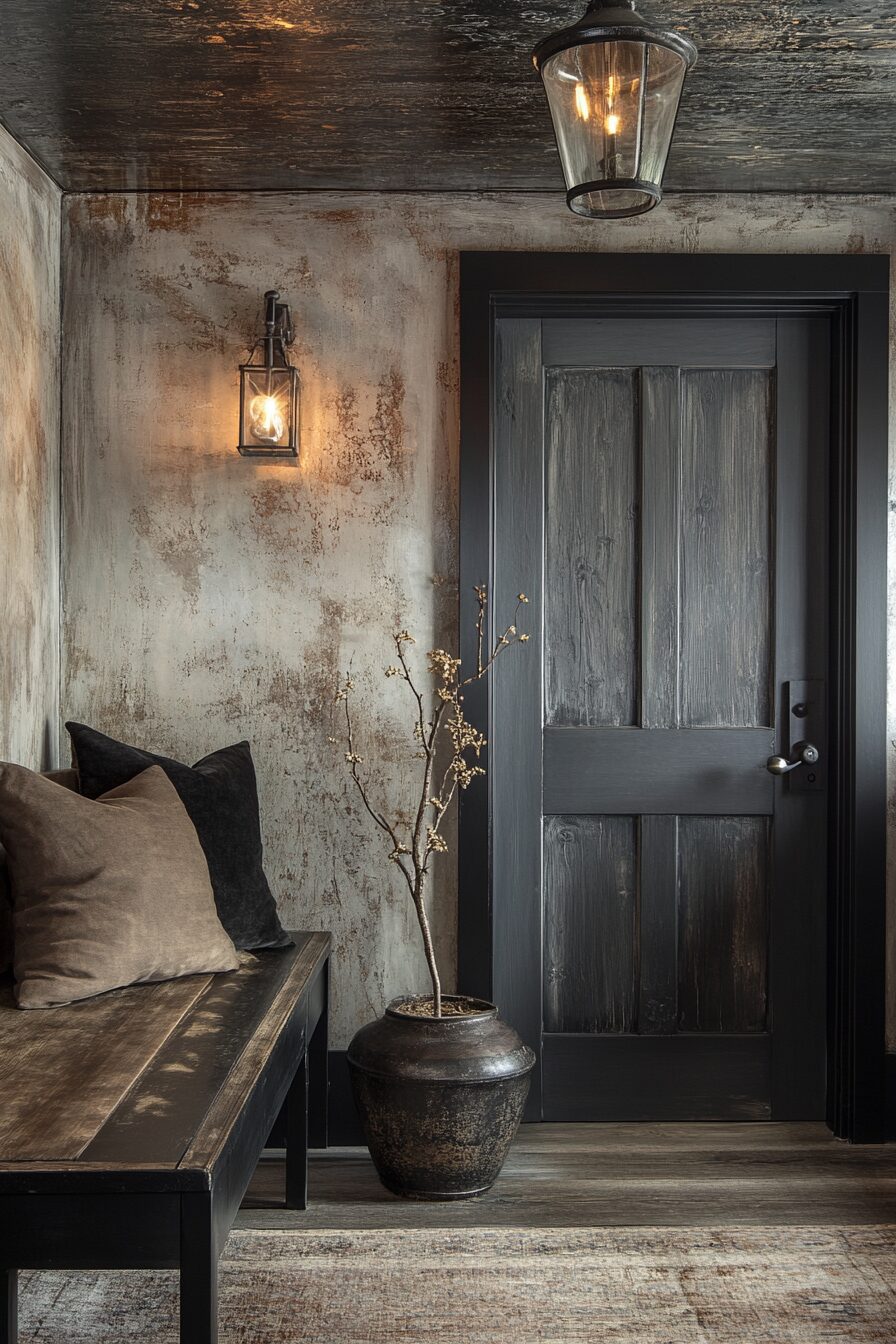
Soft Hues Entryway in a Wabi Sabi design uses a muted color palette to create a calming and cohesive space. Shades of beige, gray, and pastel tones blend harmoniously, enhancing the tranquility of the entryway. Subtle textures and natural materials add depth without overwhelming the design. This approach ensures the entryway feels inviting and serene.
★ Steal This Look
- Paint Color: Farrow & Ball Pointing PE 387
- Furniture: Low-profile wooden bench with natural finish, woven storage baskets, simple wooden coat rack
- Lighting: Soft brass or matte black pendant with frosted glass diffuser, warm 2700K temperature
- Materials: Natural wood, linen, jute, soft wool, unglazed ceramic, raw plaster texture
Soft hues in an entryway don’t whisper timidity—they whisper intention. This palette says you’ve chosen calm as your first impression, inviting guests into a slower, more thoughtful space.
24. Authentic Welcome
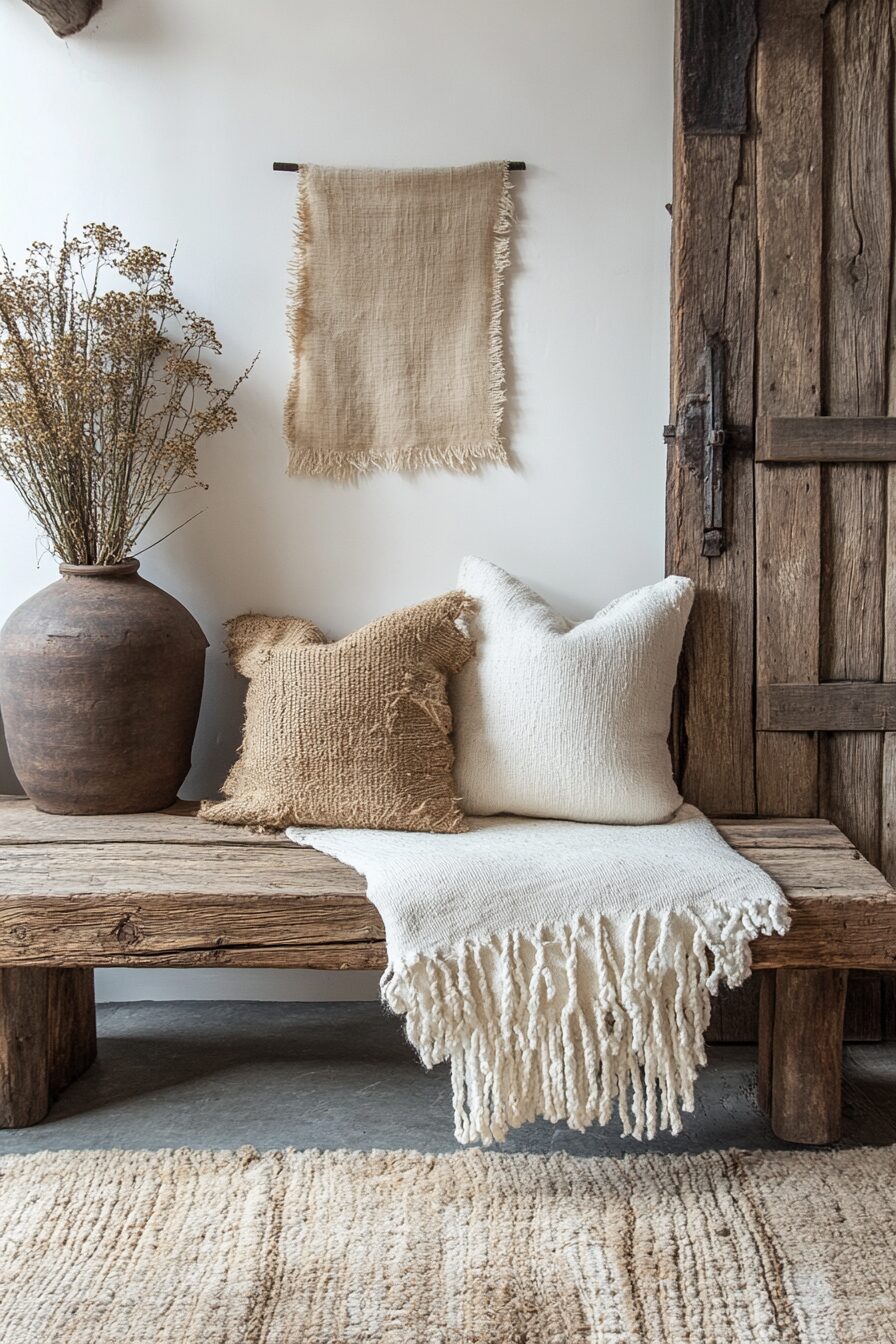
Authentic Welcome in a Wabi Sabi entryway highlights handcrafted and natural elements that add character and depth. A raw wood bench, artisan ceramics, and woven textiles contribute to an unpretentious and heartfelt space. The design embraces imperfections, celebrating the stories behind each piece. This approach creates a genuine and inviting atmosphere.
🌟 Steal This Look
- Paint Color: Behr Aged White BXC-1904
- Furniture: Raw wood entryway bench with live edges, low-profile and minimalist design
- Lighting: Pendant light with handmade ceramic shade or paper lantern diffuser for soft, diffused light
- Materials: Unfinished wood, artisan ceramics with visible glaze variations, natural linen and jute woven textiles, raw metal hardware
An authentic entryway tells the story of your home the moment guests step inside. Handcrafted pieces and natural materials create warmth that mass-produced decor simply cannot match.
25. Artisan Entry

Artisan Entry in a Wabi Sabi entryway showcases handcrafted decor, such as carved wooden mirrors or hand-thrown pottery. Each piece is unique, celebrating the imperfections and individuality of craftsmanship. The design highlights these elements with soft lighting and neutral tones, creating a welcoming and artistic space. This approach honors tradition and creativity, setting a thoughtful tone for the home.
🏠 Steal This Look
- Paint Color: Valspar Woodrow Taupe 1018-2 – a warm, earthy neutral that complements handcrafted wood and pottery without competing for attention
- Furniture: Simple wooden console table with visible grain and natural finish; low wooden bench with organic edges; handcrafted wooden coat rack with sculptural details
- Lighting: Soft brass or warm black pendant light with linen or paper shade; wall-mounted brass sconce with matte finish to highlight artwork without harsh shadows
- Materials: Raw wood with natural patina, hand-thrown ceramic vessels, unfinished plaster accent, woven jute or linen textiles, aged brass hardware
An artisan entryway whispers rather than shouts—it’s the first impression that says you value intention and human skill over perfection. This approach transforms a functional space into a gallery celebrating the maker’s hand.
26. Cozy Transition
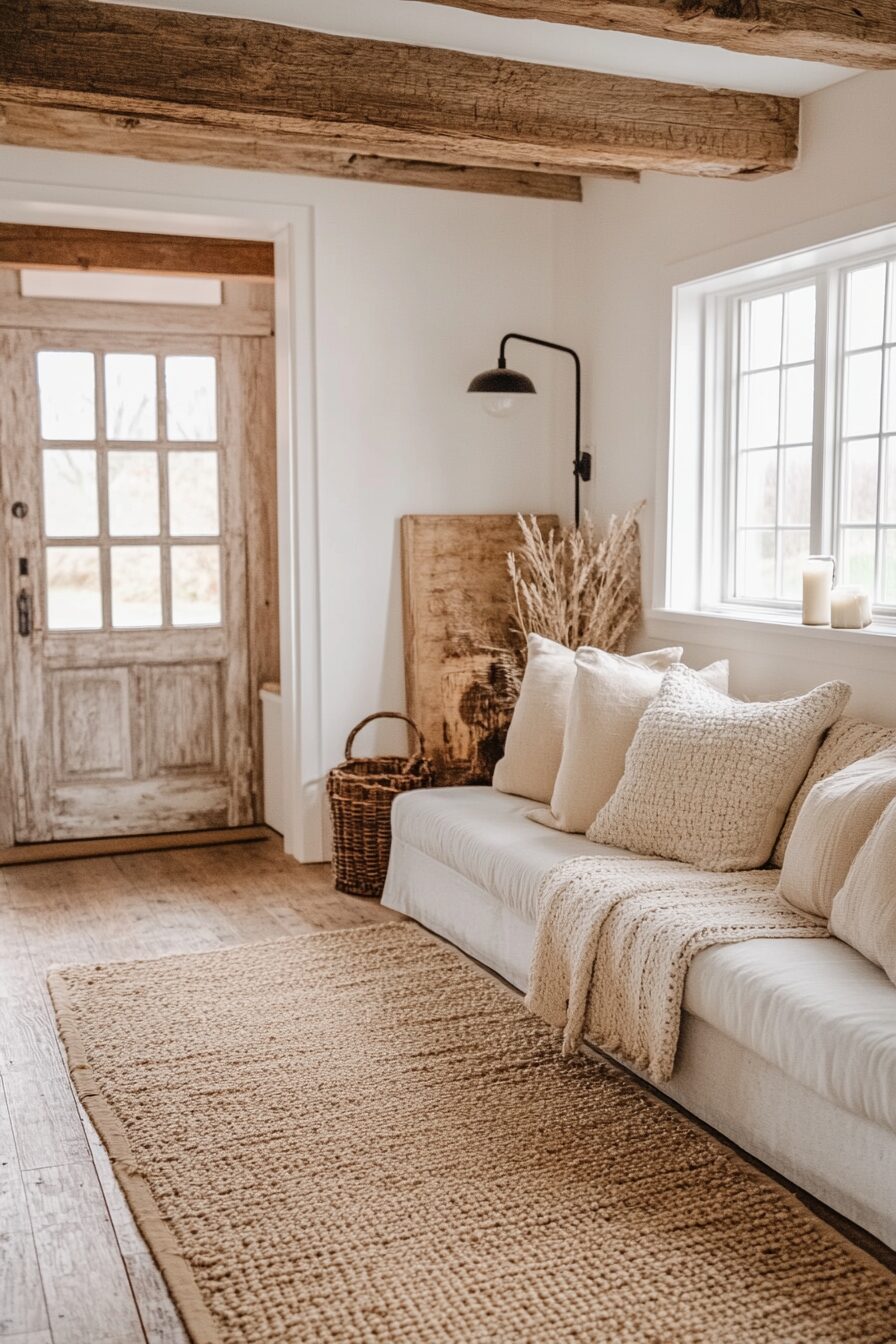
Cozy Transition in a Wabi Sabi entryway focuses on comfort and warmth with soft textures and inviting decor. A plush rug, warm lighting, and cozy seating create a space that feels like a gentle embrace. Natural materials like wool, wood, and cotton enhance the tactile experience. This design ensures a smooth and pleasant transition from the outside world to the comfort of home.
★ Steal This Look
- Paint Color: PPG Accessible Beige PPG1088-2 – a warm, soft neutral that creates the gentle, embracing foundation wabi sabi entryways require
- Furniture: Low wooden bench with natural grain finish; simple wooden coat rack with organic branch-like form; minimal console table in raw wood
- Lighting: Warm brass or bronze pendant light with frosted glass or linen shade casting soft, diffused light; dimmable to create intimate transition space
- Materials: Natural wool runner rug in cream or soft taupe; unfinished wood surfaces; raw linen or cotton upholstery; woven rattan or wicker accents; natural stone or cork underfoot
A wabi sabi entryway isn’t just a place to shed shoes—it’s a deliberate pause between two worlds. Cozy transition design honors that threshold with materials and warmth that say ‘slow down, you’re home now.’
27. Elegant Simplicity
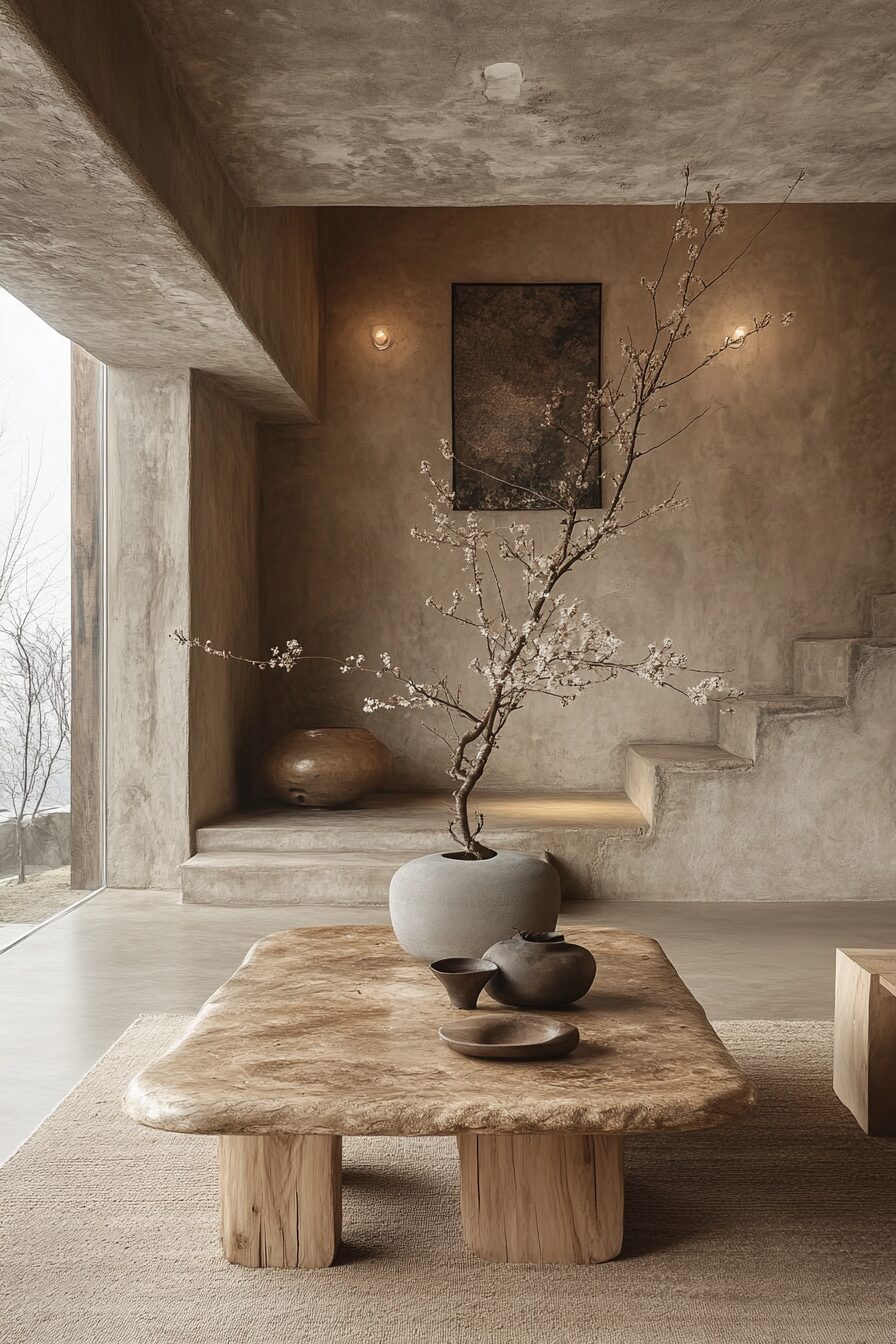
Elegant Simplicity in a Wabi Sabi entryway focuses on achieving beauty through minimalism. Clean lines, neutral colors, and high-quality materials create a serene and uncluttered space. Each element serves a purpose, ensuring functionality without sacrificing style. This approach highlights the elegance of restraint, creating an effortlessly sophisticated entryway.
🌟 Steal This Look
- Paint Color: Dunn-Edwards Accessible Beige DE6129
- Furniture: Low-profile wooden bench with clean lines, natural wood finish, minimal legs
- Lighting: Single pendant light with soft linen shade or frosted glass, warm white temperature
- Materials: Natural wood, linen, raw plaster, unfinished concrete, woven jute
Elegant simplicity in an entryway whispers rather than shouts, making guests feel calm the moment they step inside. This is sophistication without strain—a space that proves less truly is more.
✓ Get The Look
28. Raw Refinement
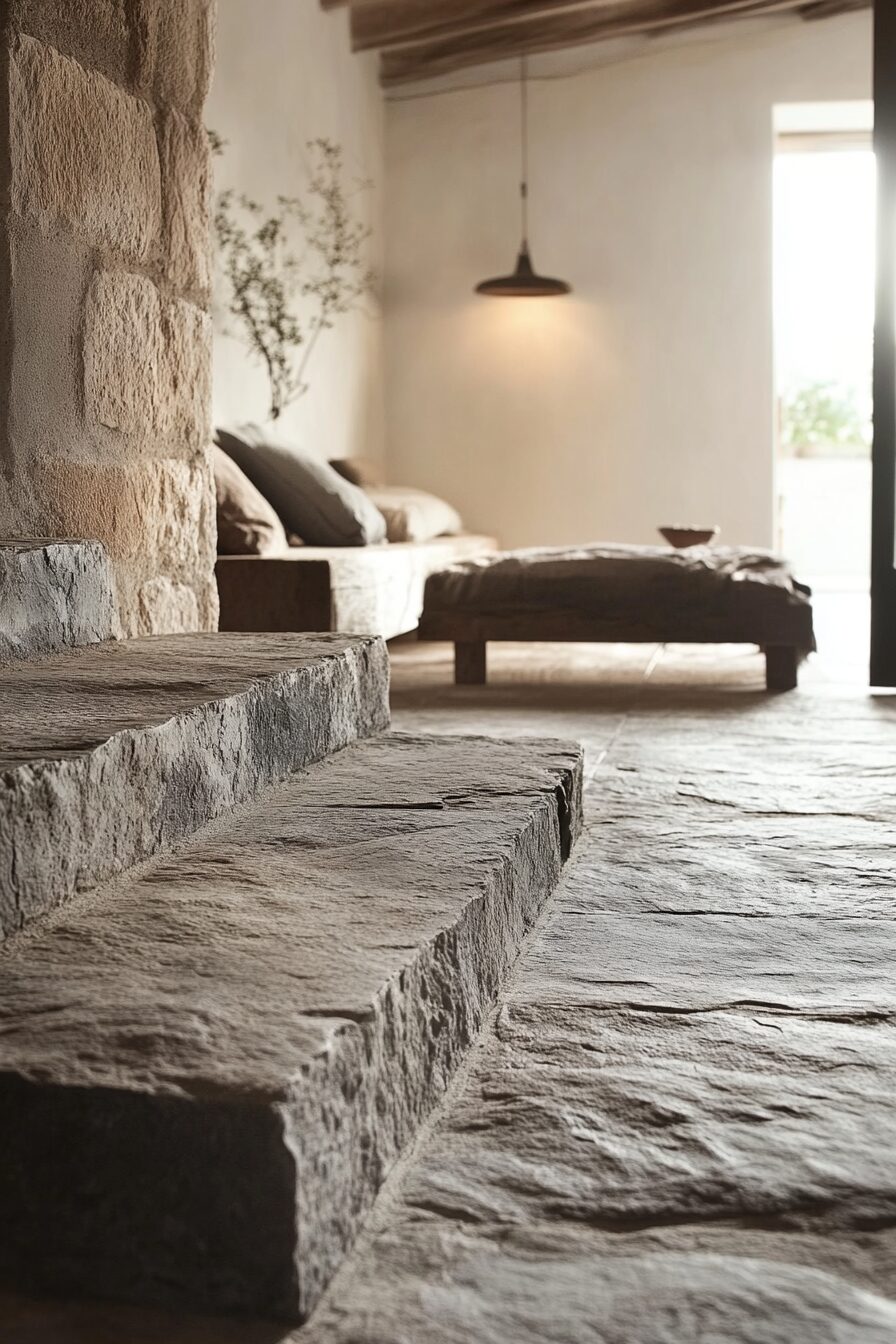
Raw Refinement in a Wabi Sabi entryway combines rugged materials with polished design elements to create a balanced and inviting space. A rough stone planter paired with a sleek wooden bench exemplifies this blend. The design highlights the contrast between textures, creating visual interest and depth. Soft lighting and natural colors complete the look, ensuring a warm welcome.
🖼 Steal This Look
- Paint Color: Clare Paint Limestone CODE
- Furniture: low-profile wooden bench with natural finish; raw stone or concrete planters; simple wooden console table with visible grain
- Lighting: warm brass or bronze wall sconce with frosted glass diffuser; or paper pendant with warm 2700K bulbs
- Materials: raw stone, concrete, unfinished wood, linen, natural fiber textiles, matte metals
Raw Refinement celebrates the beauty in imperfect, natural materials while introducing just enough design sophistication to make your entryway feel curated rather than rustic. It’s about honoring what things are, not what they could become.
29. Whispered Elegance
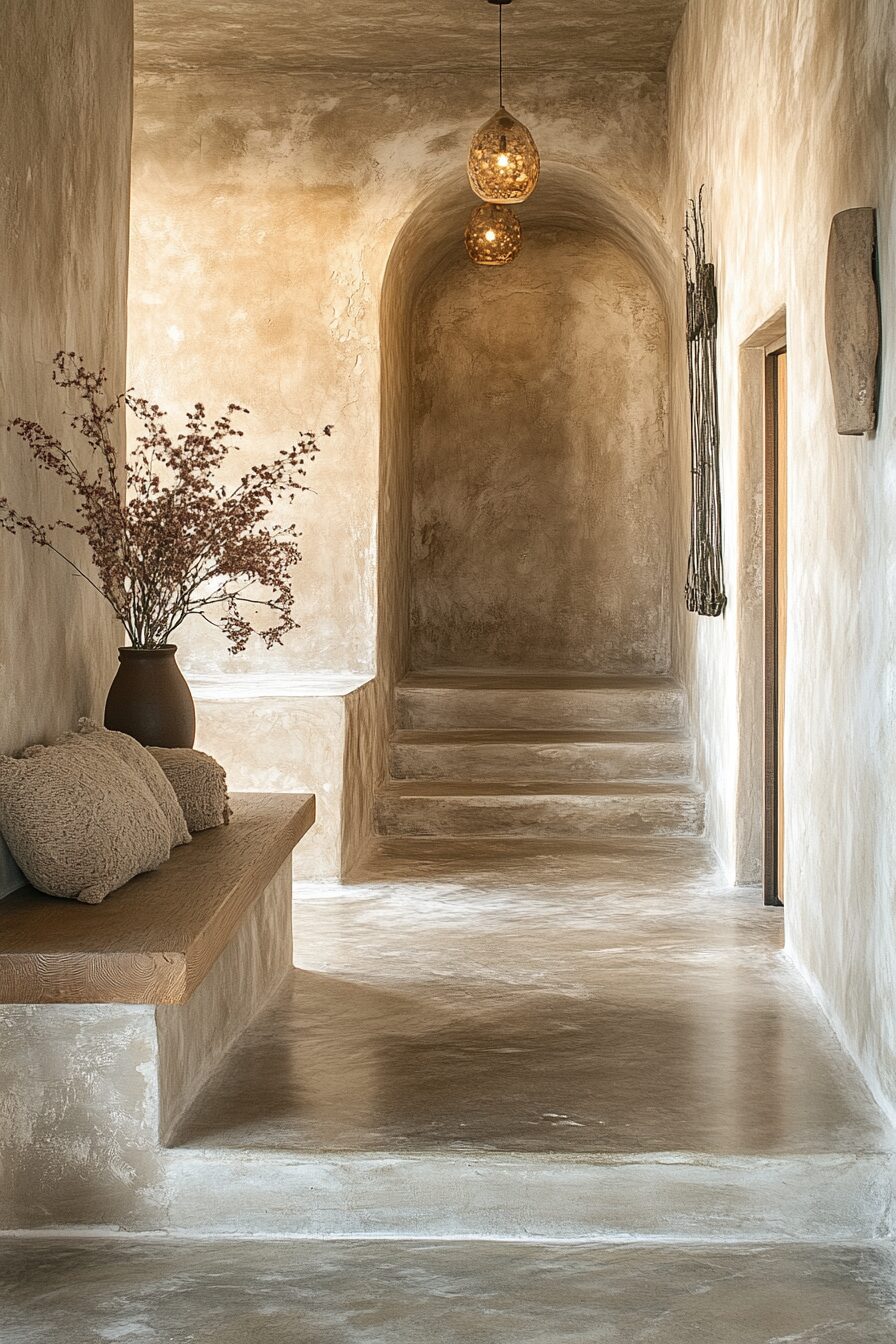
Whispered Elegance in a Wabi Sabi entryway creates a subtle yet striking impression with carefully chosen decor and soft lighting. The design uses muted tones and understated materials to evoke a sense of quiet sophistication. Handcrafted elements, such as a ceramic vase or a woven rug, add personality without overwhelming the space. This understated approach ensures the entryway is both inviting and refined.
💡 Steal This Look
- Paint Color: Fine Paints of Europe Cashmere 2152 (soft greige with warm undertone)
- Furniture: Low wooden bench with natural finish, minimal carved details; simple wooden coat rack with organic edges
- Lighting: Soft pendant with frosted glass or linen shade; warm 2700K bulb for gentle glow
- Materials: Raw wood, handthrown ceramics, natural fiber rug (jute or sisal), unglazed pottery, linen textiles
Whispered elegance whispers back—it’s an entryway that doesn’t need to announce itself. The beauty lives in the imperfect glaze of a handmade vase, the weathered grain of reclaimed wood, and the quiet confidence of less.
Conclusion
These 29 wabi sabi entryway ideas offer the perfect inspiration for creating a timeless and authentic first impression in your home. By focusing on simplicity, natural materials, and the beauty of imperfection, a wabi sabi entryway can set the tone for a calm and welcoming atmosphere. Whether you incorporate rustic wooden elements, understated decor, or functional yet elegant storage solutions, these ideas celebrate the harmony between functionality and aesthetic charm. Let your entryway reflect the essence of wabi sabi, creating a space that feels warm, grounded, and uniquely yours.