
Discover the profound beauty of Wabi Sabi garden design, a philosophy that celebrates imperfection, impermanence, and the raw, natural aesthetic. This comprehensive guide explores 29 unique garden styles that embrace the Japanese concept of finding grace in simplicity and authenticity. From rustic pathways to moss-covered retreats, these garden designs invite you to reimagine your outdoor space as a tranquil, ever-evolving sanctuary that honors the inherent beauty of nature’s subtle transformations.
1. Rustic Refuge
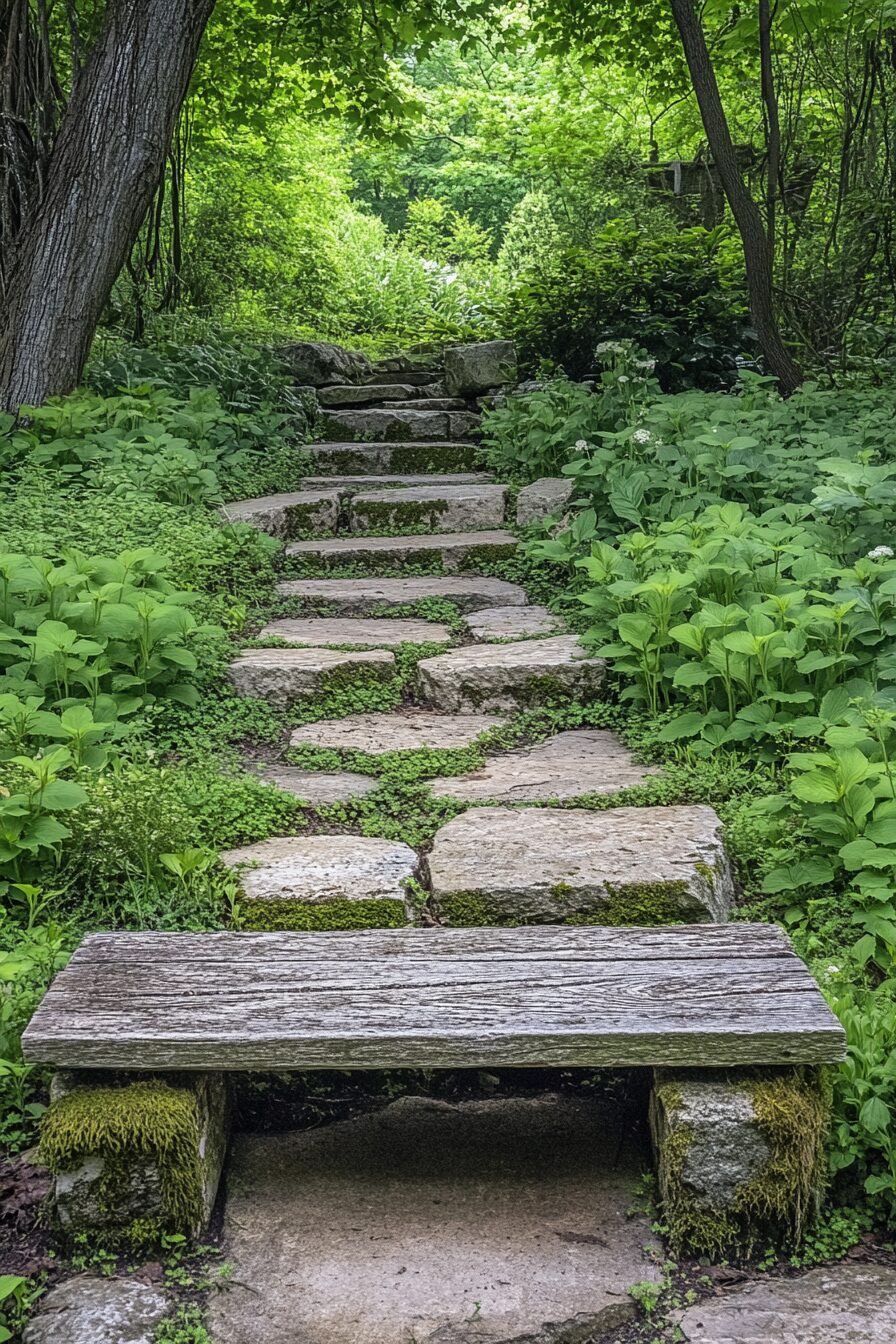
A Rustic Refuge Wabi Sabi garden celebrates the raw beauty of nature with unpolished stone paths and untamed wildflowers. Aged wooden benches and weathered pots add to the peaceful, natural charm. This garden embodies Wabi Sabi’s appreciation for imperfection and impermanence.
🏠 Steal This Look
- Paint Color: Sherwin-Williams Garden Sage SW 7736
- Furniture: Aged teak garden bench with visible grain and natural patina, reclaimed barn wood potting table
- Lighting: Solar-powered copper pathway lights with weathered finish, hand-forged iron lantern for evening ambiance
- Materials: Unpolished flagstone, raw terracotta with moss accumulation, untreated cedar, wild meadow grasses, crushed gravel
There’s something deeply grounding about sitting on wood that’s been softened by decades of rain—this garden asks you to slow down and notice the beauty in decay.
2. Mossy Magic
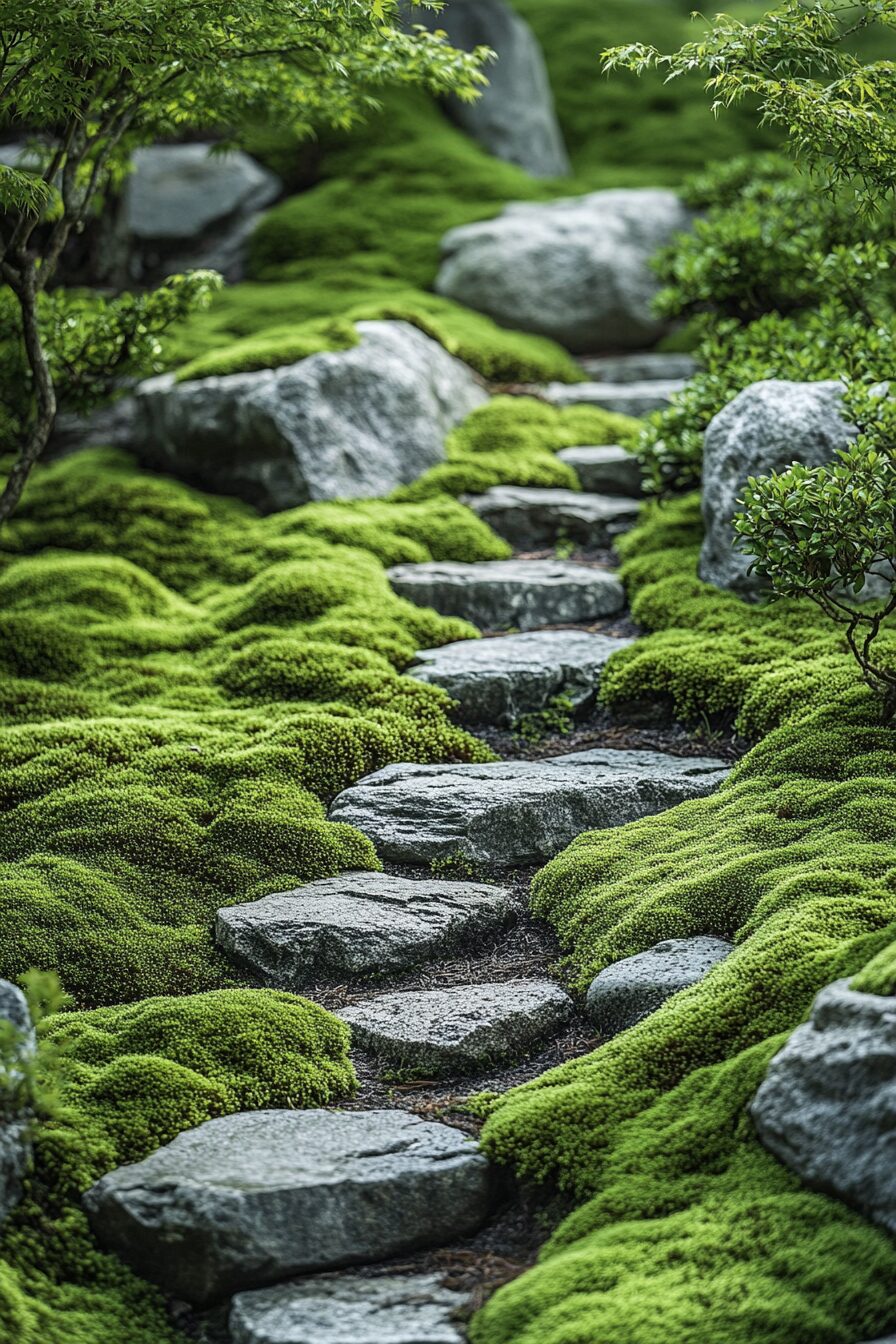
Mossy Magic in a Wabi Sabi garden highlights the velvety texture and serene appearance of moss. Perfect for shaded areas, moss brings an ancient and tranquil feel to the garden. Paired with natural stones, this lush greenery thrives in a minimally maintained, peaceful setting.
🖼 Steal This Look
- Paint Color: Benjamin Moore Backwoods 469
- Furniture: weathered teak garden bench with organic curves, raw stone side table
- Lighting: solar-powered paper lantern string lights, low-voltage landscape uplighting for stone features
- Materials: living moss carpet, uncut fieldstone, untreated cedar mulch, volcanic rock gravel
There’s something deeply meditative about a moss garden that refuses to be perfect—the way it softens every hard edge and asks only for patience, not precision.
3. Balanced Imperfections
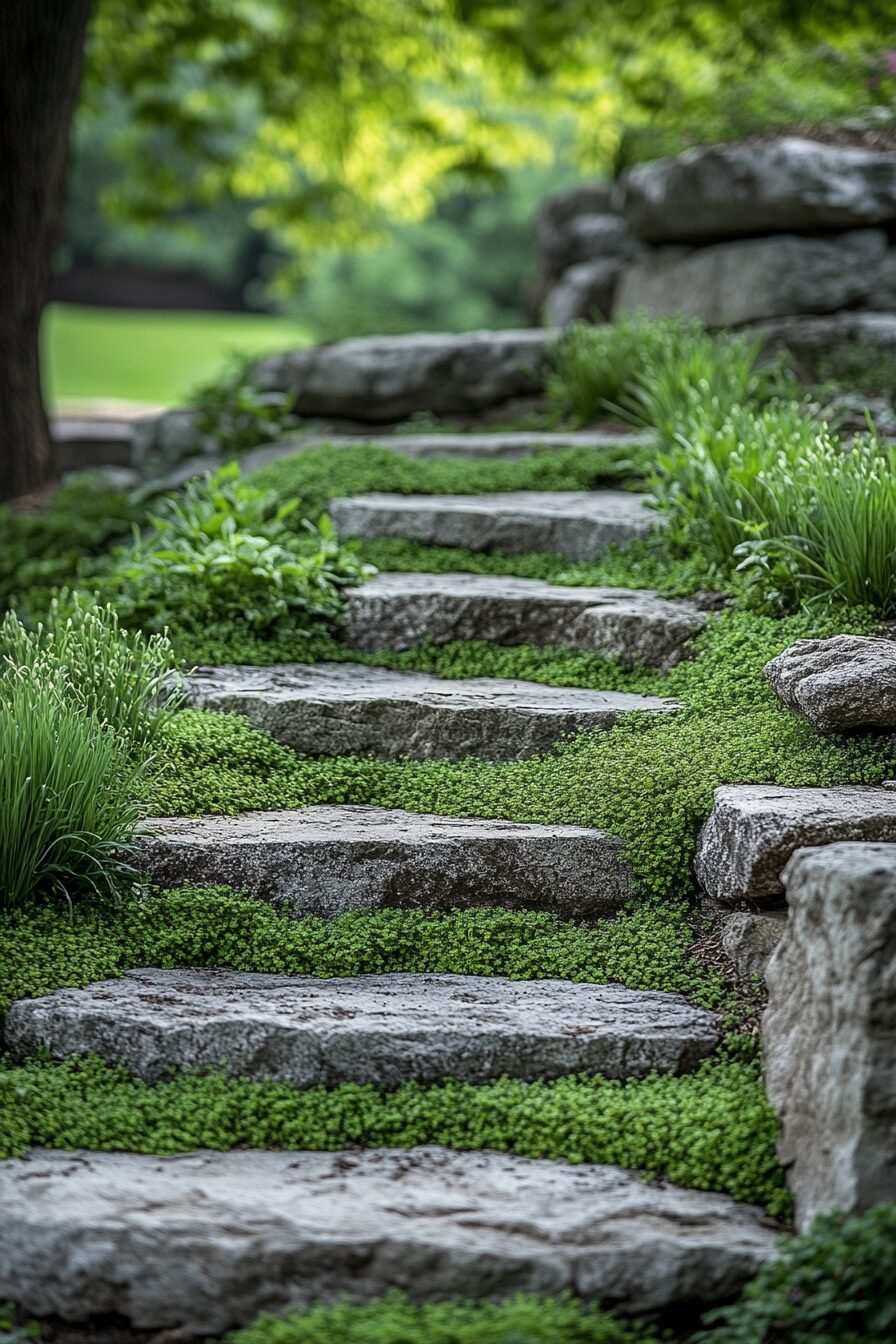
Balanced Imperfections in a Wabi Sabi garden embrace irregular shapes and asymmetry to create harmony. Uneven pathways, scattered stones, and wild plants reflect Wabi Sabi’s beauty in flaws. This design is naturally balanced without striving for perfection.
🌟 Steal This Look
- Paint Color: Farrow & Ball Green Smoke 47
- Furniture: weathered teak garden bench with visible grain and knots, reclaimed wood side table with live edge
- Lighting: oversized paper lantern pendant with visible fiber texture, solar-powered rattan pathway lights
- Materials: unpolished river stone, raw concrete, aged brass, hand-thrown ceramic, untreated cedar
I once spent hours rearranging ‘perfect’ stepping stones until I stepped back, kicked one crooked, and finally exhaled. That’s the moment this garden philosophy clicked.
4. Playful Nature
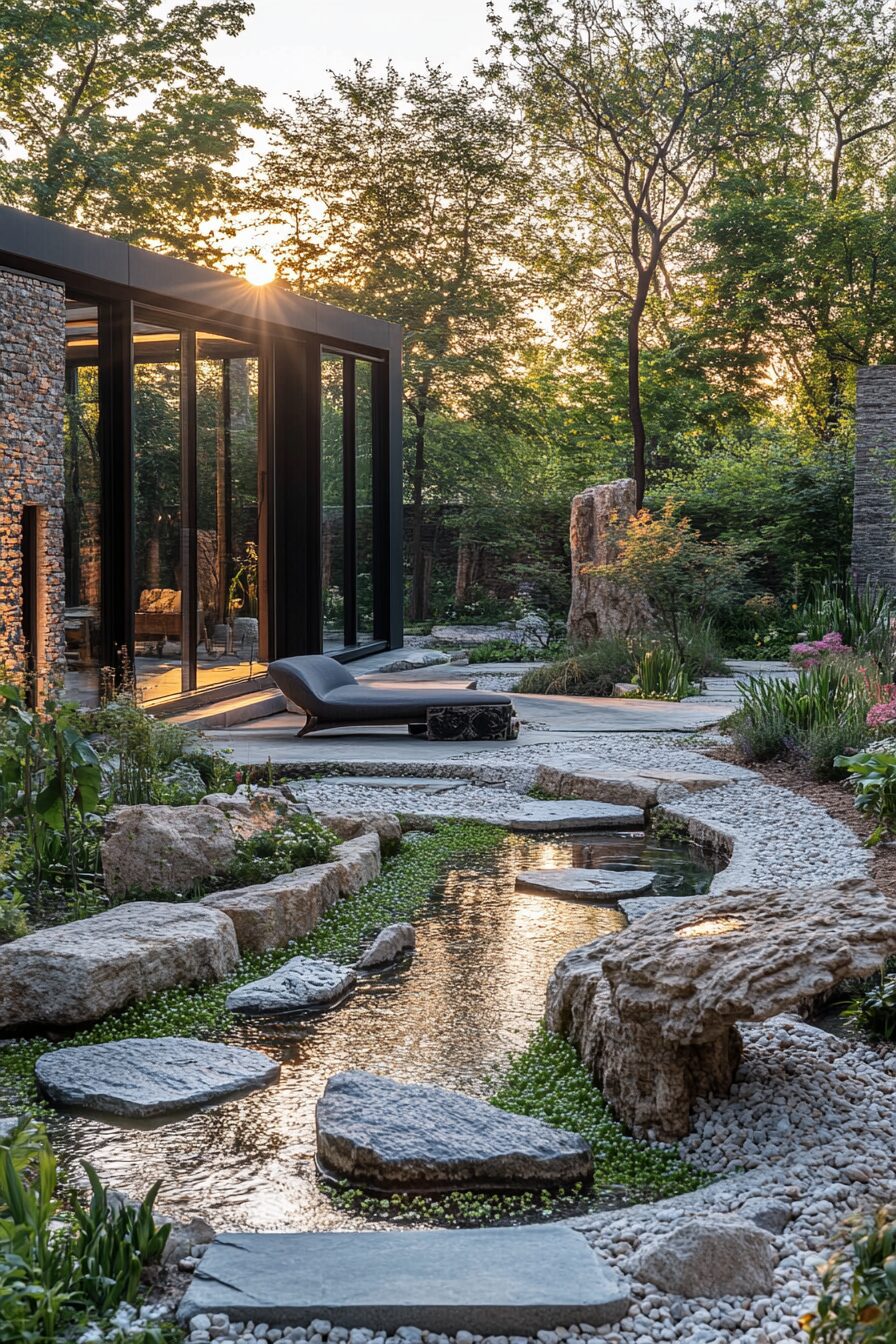
Playful Nature in a Wabi Sabi garden celebrates whimsy with winding ivy, unexpected sculptures, and quirky plant arrangements. Water features and spontaneous design elements encourage joy and surprise. It’s a playful take on Wabi Sabi principles, bringing wonder and curiosity into the garden.
🌟 Steal This Look
- Paint Color: Behr Ivy Wreath M390-4
- Furniture: weathered teak bench with organic curves, stone garden stool with moss patina
- Lighting: solar-powered copper string lights woven through ivy, hand-forged iron lantern on shepherd’s hook
- Materials: aged limestone, rusted corten steel sculptures, hand-thrown ceramic planters, untreated cedar
I once tucked a cracked ceramic fox my grandmother gave me into a tangle of clematis—now it’s half-swallowed by vines and looks like it grew there, which is exactly the point.
5. Earth’s Palette
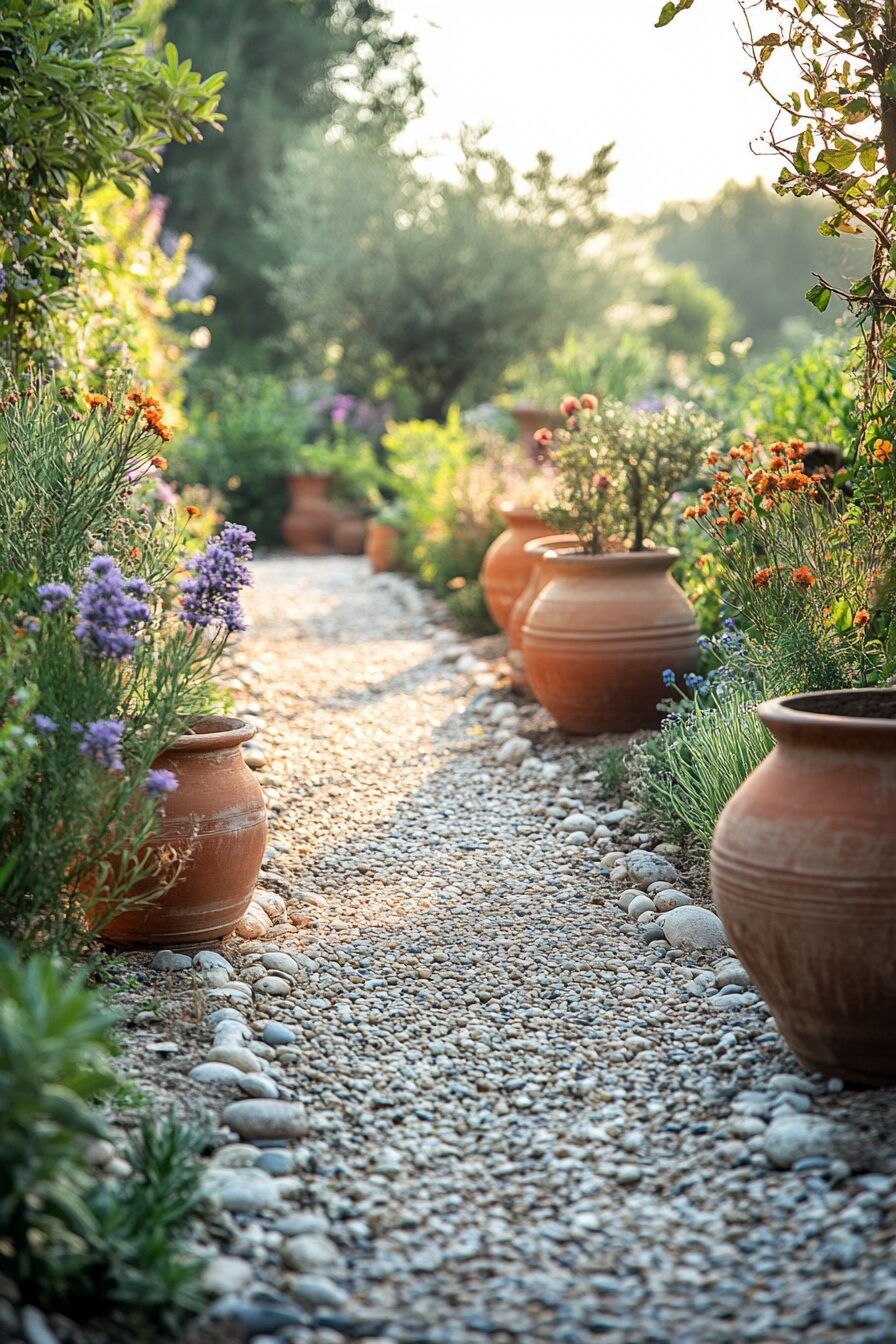
Earth’s Palette Wabi Sabi garden features clay pots, gravel paths, and terracotta accents for a grounded atmosphere. Natural tones and textures create a serene space that’s simple yet visually rich. Plants are chosen for their resilience and easy growth, requiring minimal intervention.
🌟 Steal This Look
- Paint Color: Valspar Terracotta Blush 2008-3B
- Furniture: weathered teak garden bench, low-slung stone side table, reclaimed wood potting bench
- Lighting: oversized rattan pendant, solar-powered pathway stake lights with amber glow
- Materials: unglazed terracotta, crushed limestone gravel, raw cedar, hand-thrown ceramics, moss
There’s something deeply grounding about running your fingers over a sun-warmed terracotta rim that’s started to flake—this garden asks you to slow down and notice.
6. Aged Forest Retreat
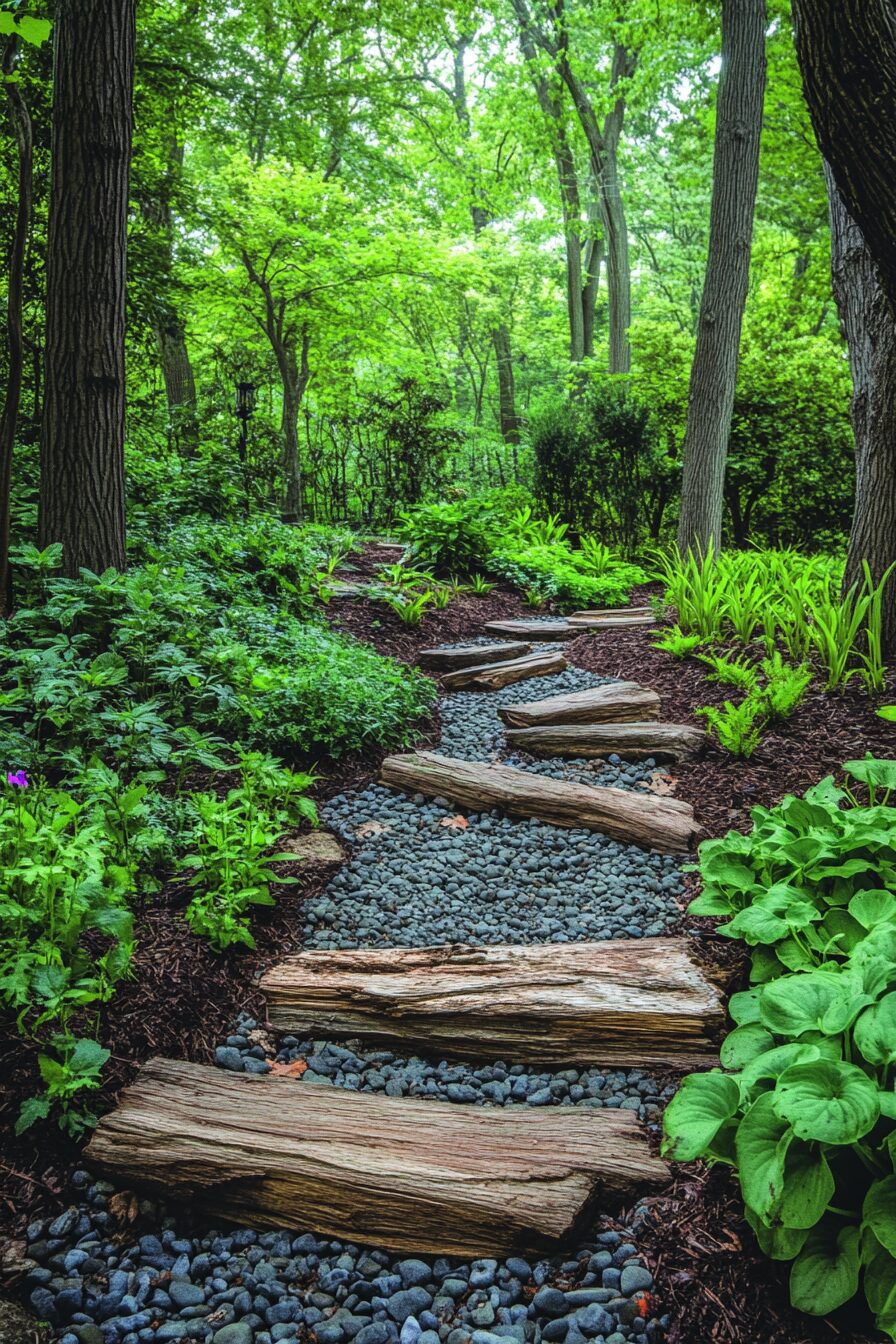
Aged Forest Retreat Wabi Sabi garden mimics the feel of a mature forest with fallen logs, shaded nooks, and native plants. Weathered wood enhances biodiversity and fosters a peaceful habitat for wildlife. This garden exudes timeless beauty and history.
🌟 Steal This Look
- Paint Color: PPG Stonehenge Greige PPG1024-4
- Furniture: reclaimed teak bench with live edge, weathered cedar adirondack chairs, moss-covered stone side table
- Lighting: solar-powered rattan globe path lights, aged brass candle lanterns
- Materials: unfinished cedar shingles, river rock, untreated pine logs, hand-thrown terracotta, raw linen cushions
There’s something deeply grounding about sitting on wood that’s already lived a century; it reminds you that beauty doesn’t require perfection, just patience.
7. Flowing Asymmetry
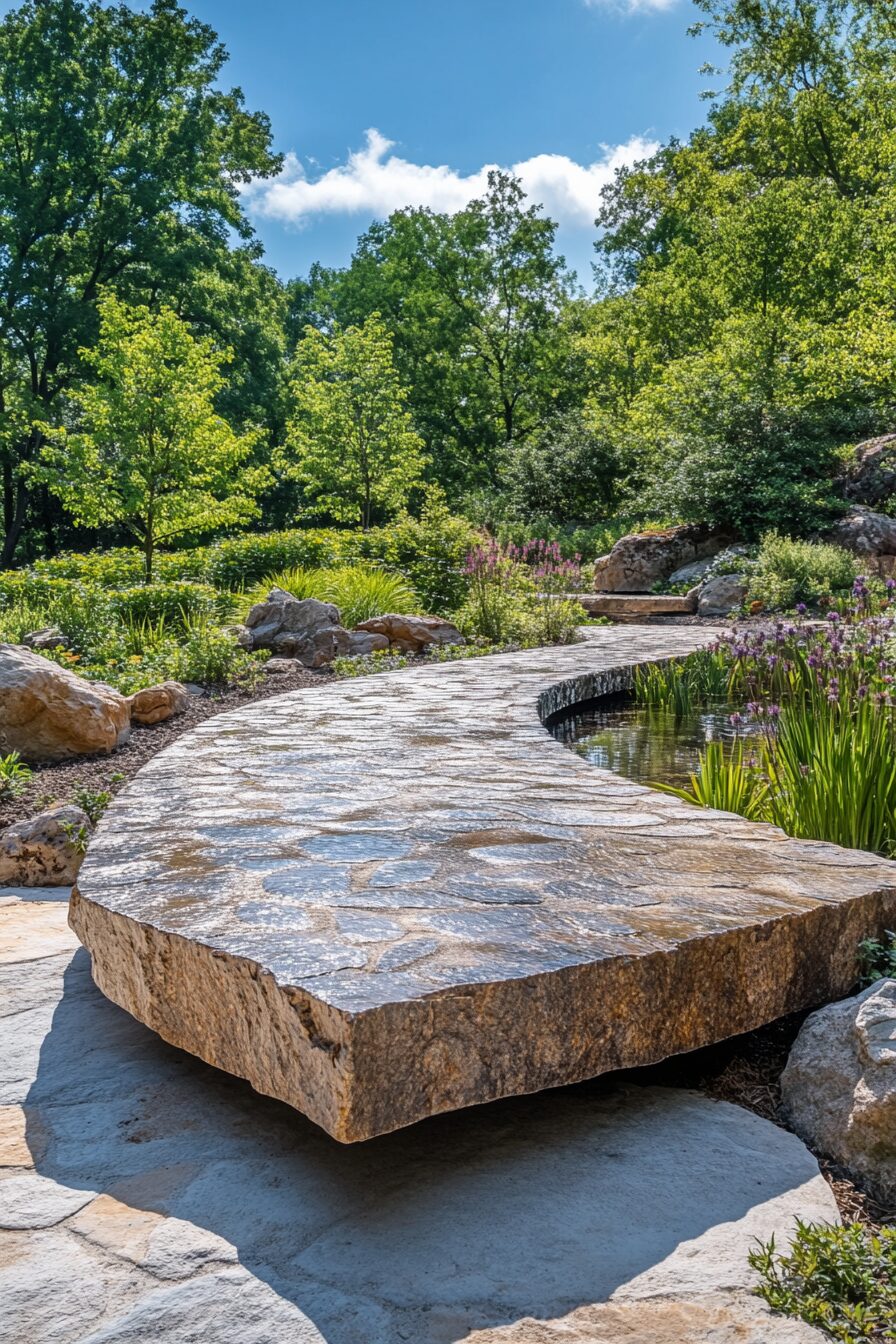
Flowing Asymmetry Wabi Sabi garden rejects strict symmetry for a natural, organic layout. Curving paths and freely growing plants create an oasis of visual movement and serenity. Water features and rocks complement the flowing design.
💡 Steal This Look
- Paint Color: Dunn-Edwards Weathered Stone DE6210
- Furniture: low-profile teak garden bench with live-edge seat, irregular boulder side tables
- Lighting: paper lantern string lights draped loosely between branches
- Materials: unpolished river rock, raw cedar mulch, hand-thrown ceramic planters with crackle glaze, untreated hemp rope
There’s something deeply calming about a garden that refuses to be perfect—I’ve found the most peaceful corners are the ones where a stone path meanders just because it felt right underfoot.
8. Layered Textures
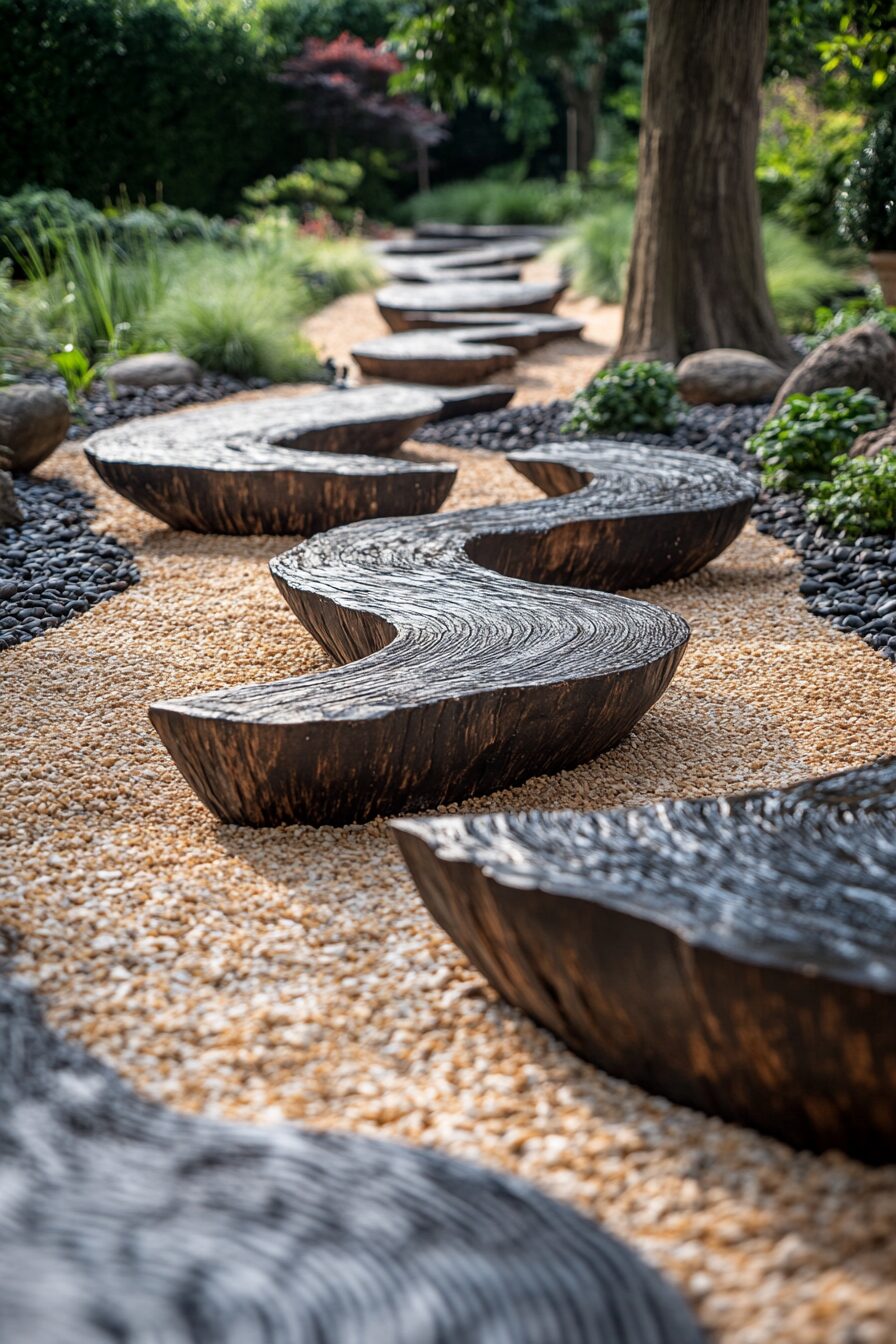
Layered Textures in a Wabi Sabi garden use sand, bark, pebbles, and foliage to create depth. The tactile variety encourages visitors to engage with the environment. This layered approach reflects the richness of detail central to Wabi Sabi philosophy.
🏠 Steal This Look
- Paint Color: Clare Paint Current Mood CW-12
- Furniture: low-profile wooden meditation bench, weathered stone garden stool, reclaimed teak outdoor daybed with linen cushion
- Lighting: paper lantern string lights, solar-powered rattan path lights
- Materials: rough-hewn cedar, unpolished river stone, raw linen, coarse sand, aged terracotta, moss
There’s something deeply grounding about running your fingers over cool stone after touching warm bark—this sensory journey is what transforms a pretty garden into a healing space you’ll actually want to linger in.
9. Stone Stillness
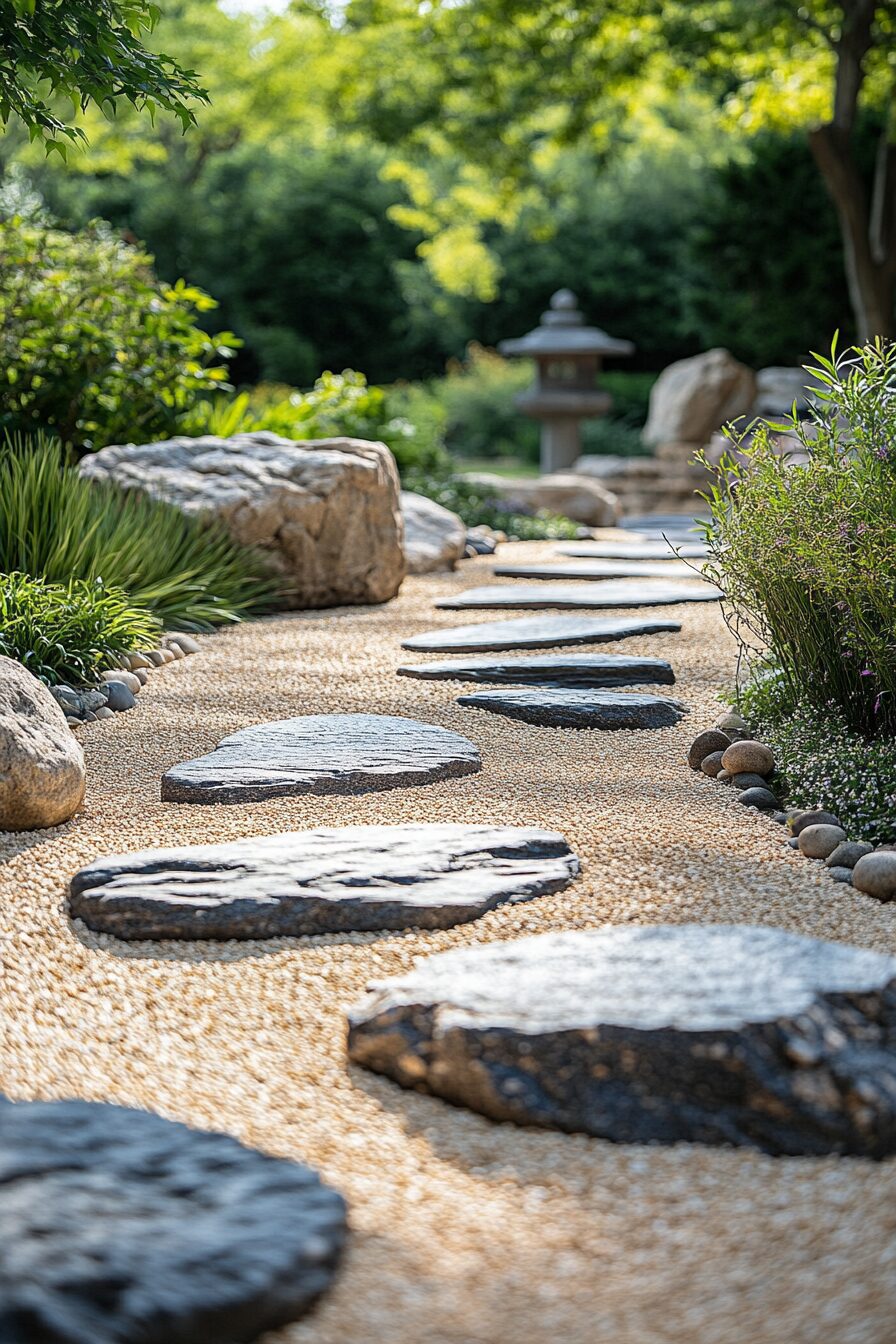
Stone Stillness in a Wabi Sabi garden places natural stones as focal points to inspire calm. The arrangement follows the land’s contours, promoting peace and reflection. Ideal for meditative spaces, this garden exudes the quiet strength of Wabi Sabi aesthetics.
✎ Steal This Look
- Paint Color: Fine Paints of Europe Slingblade 4008 (warm greige with stone undertones)
- Furniture: low-profile stone meditation bench or reclaimed wood garden seat
- Lighting: solar-powered stone pathway lights or brass rain-proof tea lanterns
- Materials: unpolished river rock, moss, raw granite, weathered teak, raked gravel
There’s something grounding about sitting with stones that have witnessed centuries; this garden asks nothing of you but presence.
10. Untamed Garden
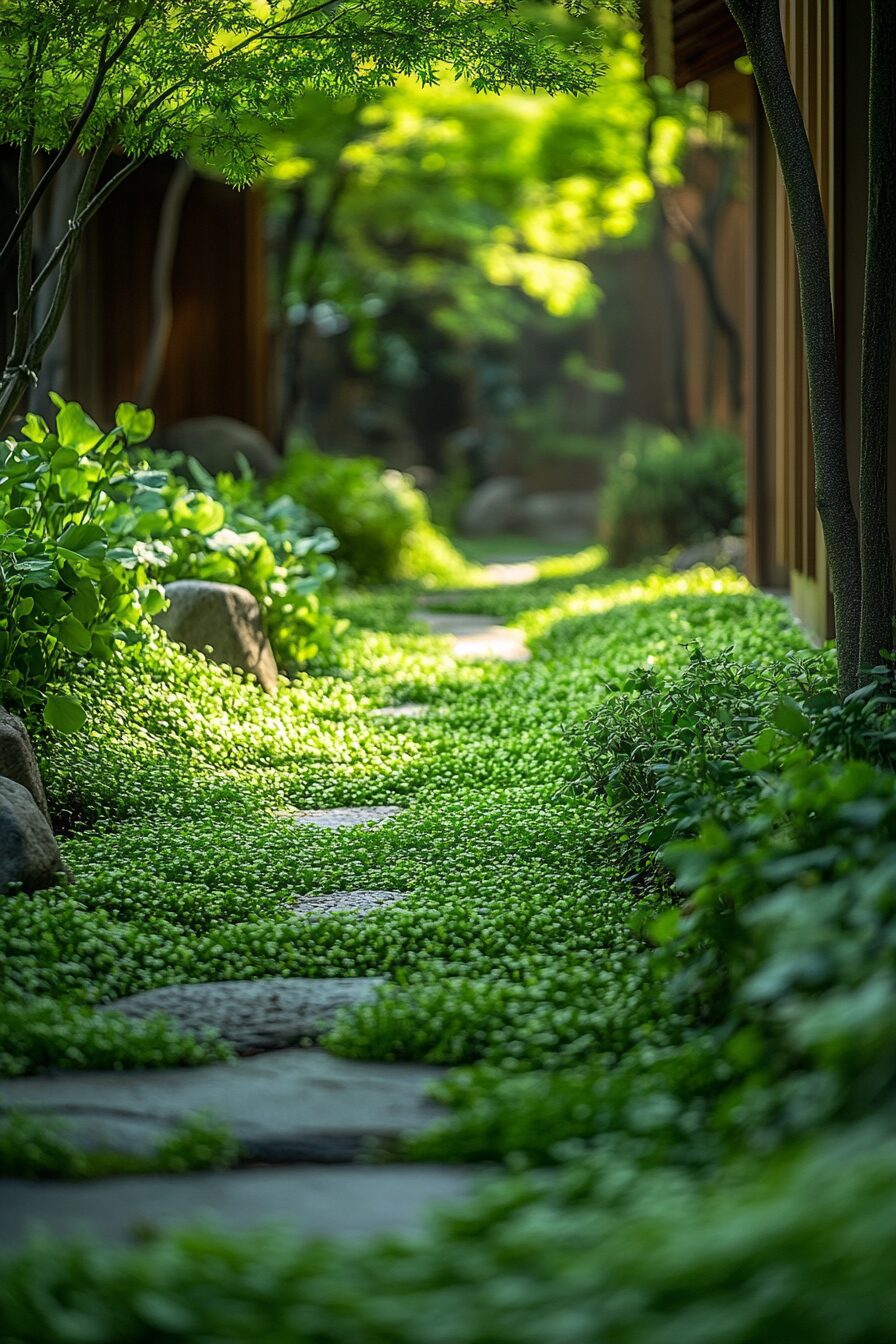
Untamed Garden in a Wabi Sabi style celebrates natural growth with wildflowers, shrubs, and grasses. Native plants thrive without rigid maintenance, creating a dynamic landscape. This ever-changing haven honors the life cycle of nature.
🌟 Steal This Look
- Paint Color: Backdrop Palermo 33-04
- Furniture: weathered teak garden bench with visible grain, reclaimed wood potting table
- Lighting: solar-powered rattan lanterns with warm amber glow
- Materials: unpolished river stone pathways, raw clay terracotta planters, untreated cedar raised beds, wild meadow grasses
There’s something deeply calming about a garden that refuses perfection—watching native grasses bend in wind and self-seeded poppies claim unexpected corners connects you to time itself.
11. Quiet Corners
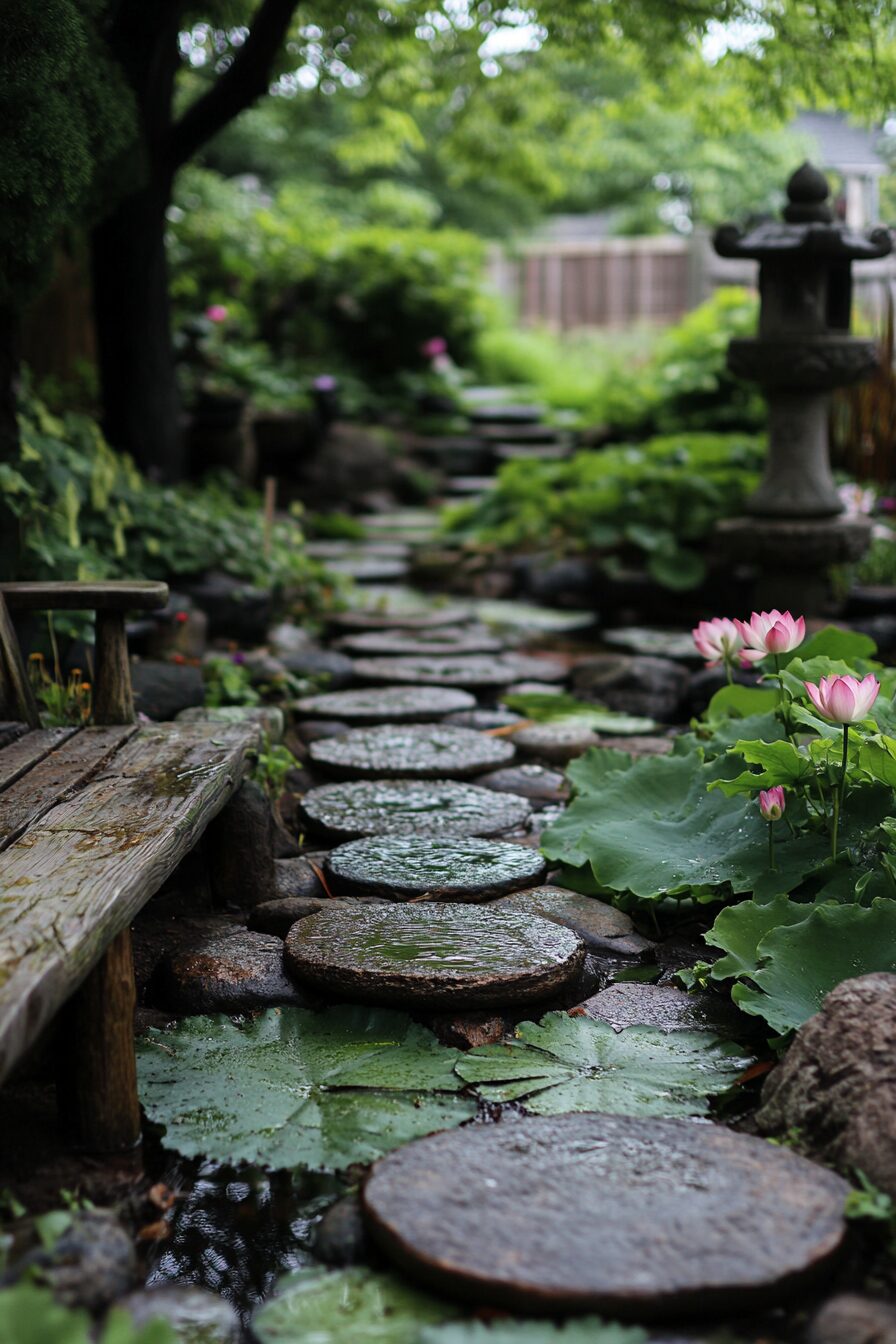
Quiet Corners in a Wabi Sabi garden are serene spaces designed for contemplation. Featuring moss, a single tree, or a modest bench, these intimate areas focus on simplicity. They invite moments of reflection and mindfulness.
🎨 Steal This Look
- Paint Color: Sherwin-Williams Ripe Olive SW 6209
- Furniture: weathered teak meditation bench, low-profile stone garden seat, reclaimed wood side table
- Lighting: paper lantern string lights, solar-powered path lighting
- Materials: living moss, rough-hewn stone, untreated cedar, aged terracotta, hand-thrown ceramic
There’s something almost sacred about a corner so pared back that you notice the moss growing between stones—this is where wabi-sabi stops being a style and becomes a practice.
12. Curved Grace
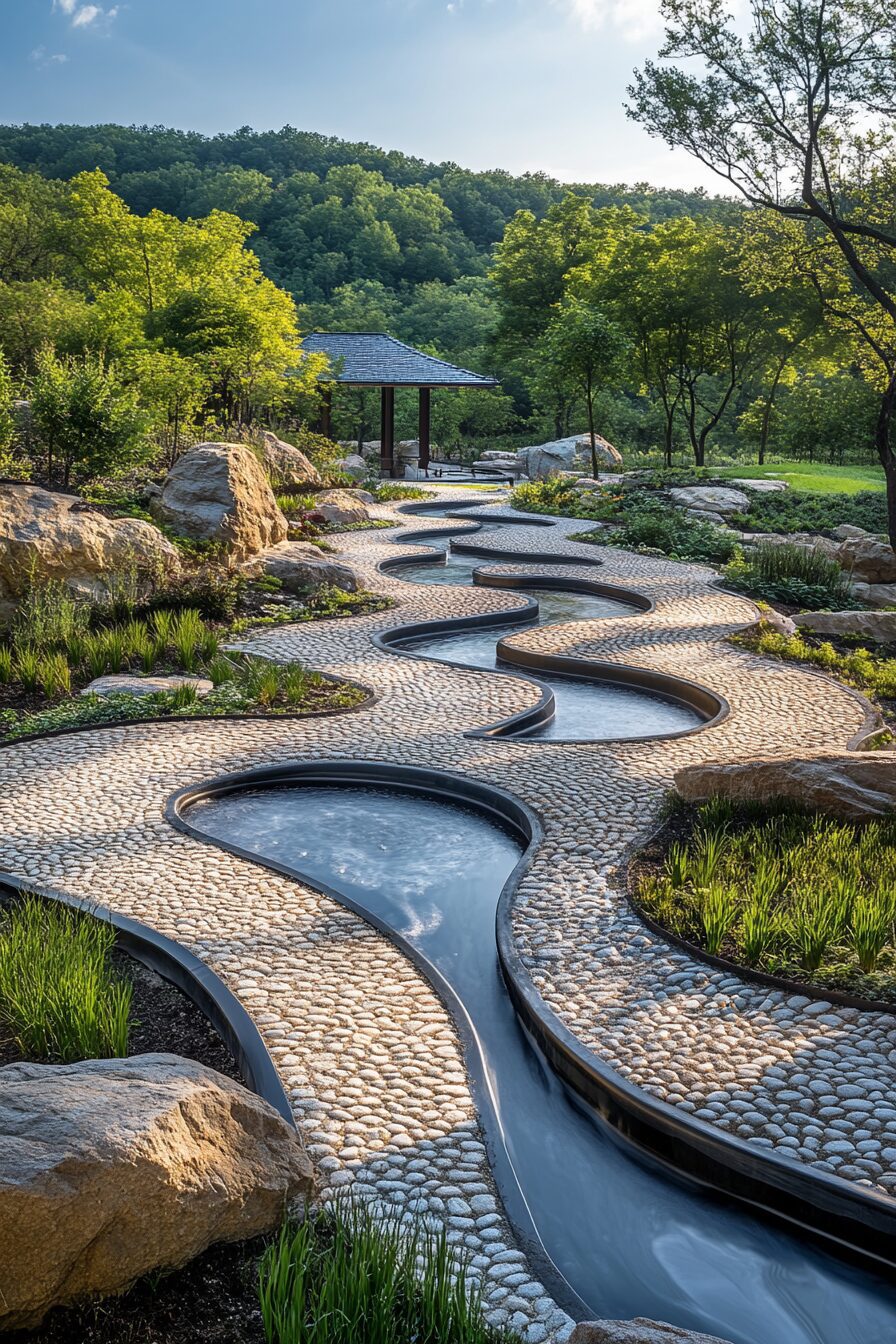
Curved Grace in a Wabi Sabi garden uses flowing pathways and organic lines to create harmony. This design mimics natural patterns, integrating the garden seamlessly with its surroundings. Plants and paths guide visitors through a gentle, fluid experience.
🌟 Steal This Look
- Paint Color: Benjamin Moore Kendall Charcoal HC-166
- Furniture: low-profile stone garden bench with weathered teak slats, irregular flagstone stepping stones in varying sizes
- Lighting: low-voltage LED path lights with bronze patina finish, paper lantern string lights for evening ambiance
- Materials: unpolished river rock, aged cedar mulch, hand-thrown ceramic planters with crackle glaze, untreated hemp rope edging
There’s something deeply calming about a path that refuses to rush you—I’ve found curved gardens slow time in a way straight lines never could.
13. Pebble Serenity
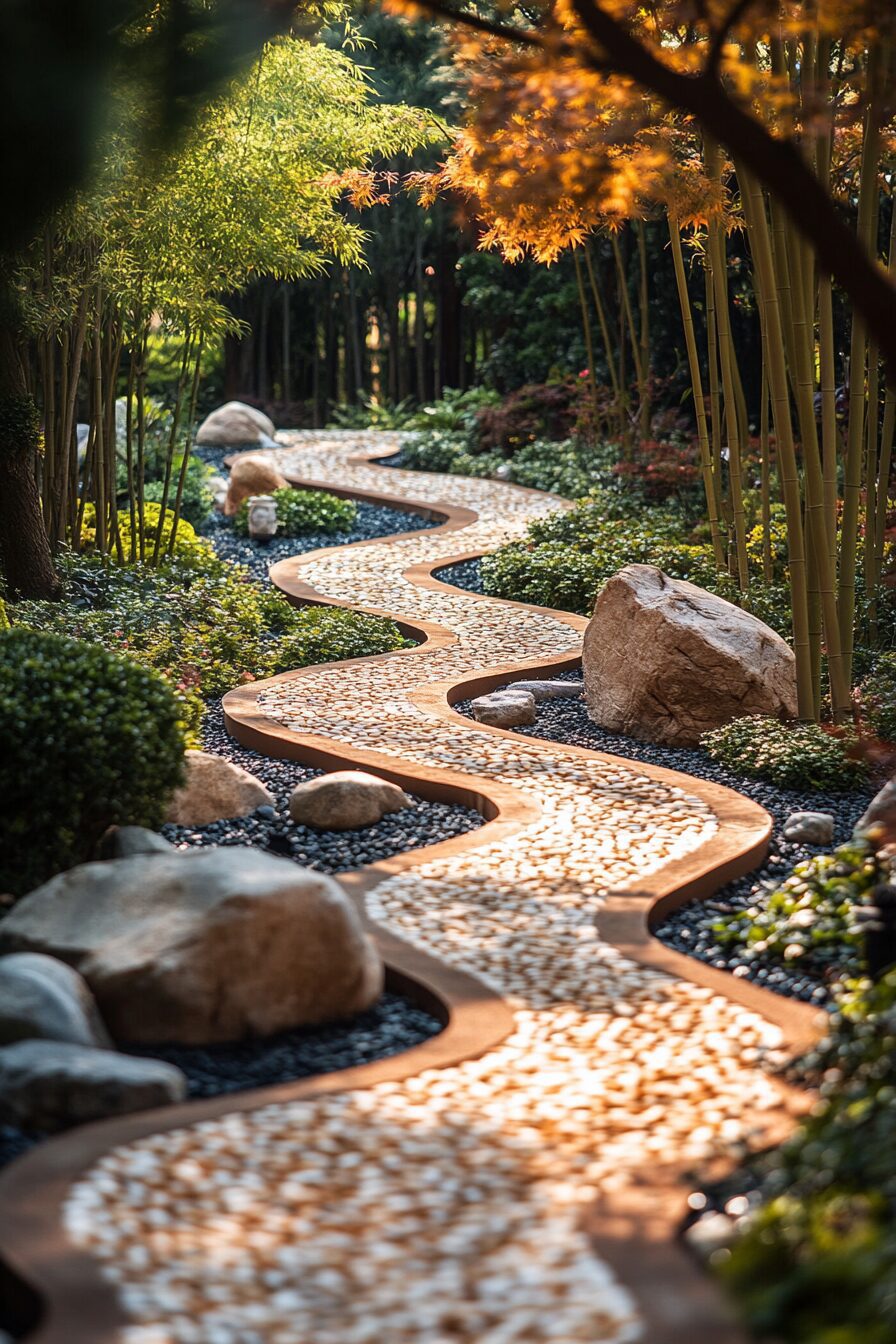
Pebble Serenity in a Wabi Sabi garden features smooth stone paths that encourage slow, meditative walks. These paths lead to tranquil spots, enhancing the Zen-like atmosphere. It’s a tactile and calming addition to any garden.
🎨 Steal This Look
- Paint Color: Farrow & Ball French Gray 18
- Furniture: weathered teak garden bench with visible grain knots, low stone meditation stool
- Lighting: solar-powered paper lantern string lights, copper pathway stake lights
- Materials: river-worn pebbles, untreated cedar mulch, moss between stones, raw concrete stepping pads
There’s something almost sacred about the sound of pebbles shifting underfoot—it forces you to slow down and actually arrive in the moment rather than rushing through your garden.
14. Raw Retreat
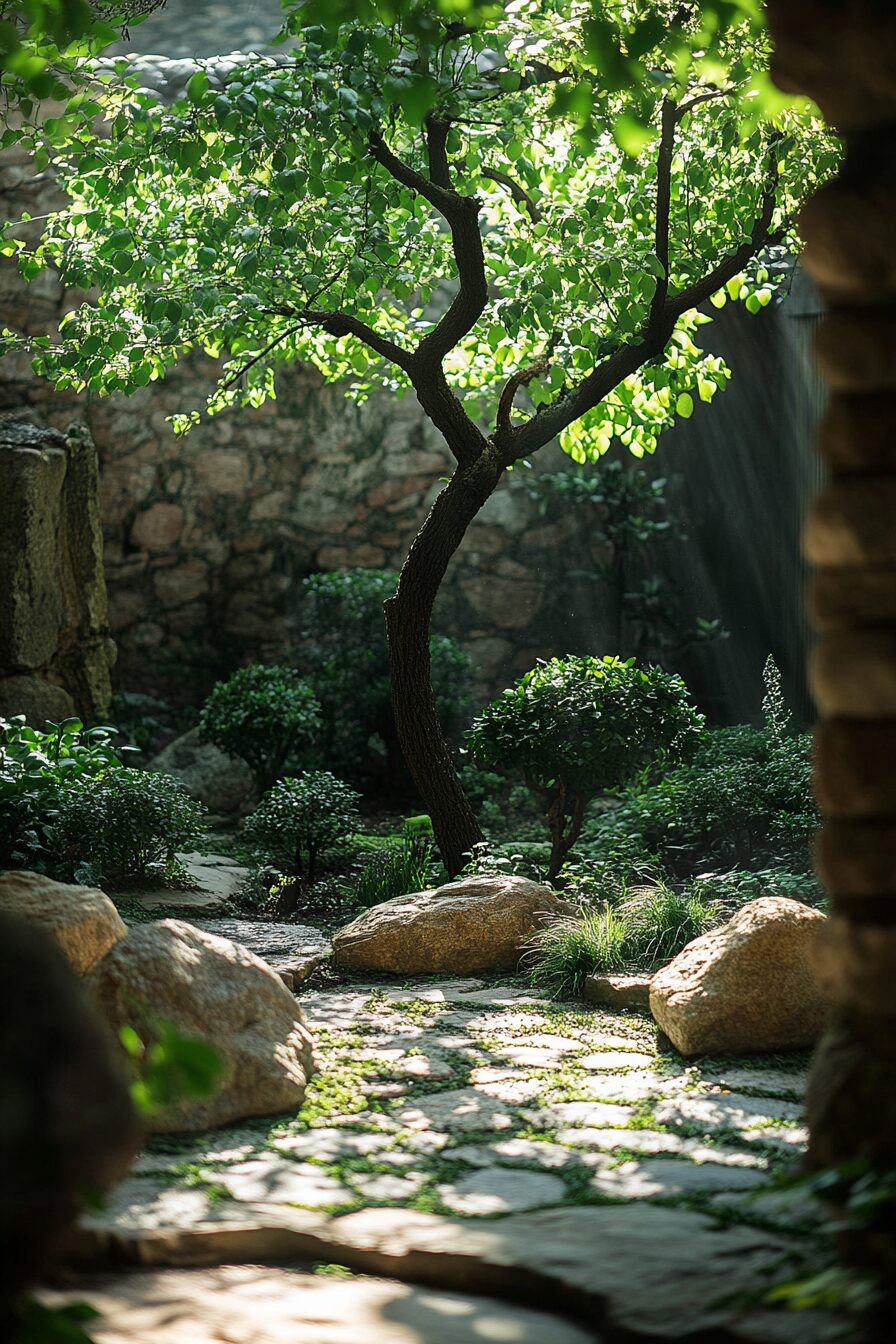
Raw Retreat in a Wabi Sabi garden emphasizes unrefined materials like rugged stones and untreated wood. Wild native plants add to the raw, natural aesthetic. This space is a sanctuary that respects nature in its purest form.
★ Steal This Look
- Paint Color: Behr Weathered Moss N350-3
- Furniture: reclaimed teak bench with live edge, untreated cedar stump side tables
- Lighting: solar-powered rattan lanterns with warm amber glow
- Materials: unpolished river rock, raw hemp rope, unfinished cedar, moss-covered boulders, wild meadow grasses
There’s something quietly radical about building a space that celebrates impermanence—watching your cedar bench gray and split while wildflowers claim the cracks feels like collaborating with time itself.
15. Gentle Flow
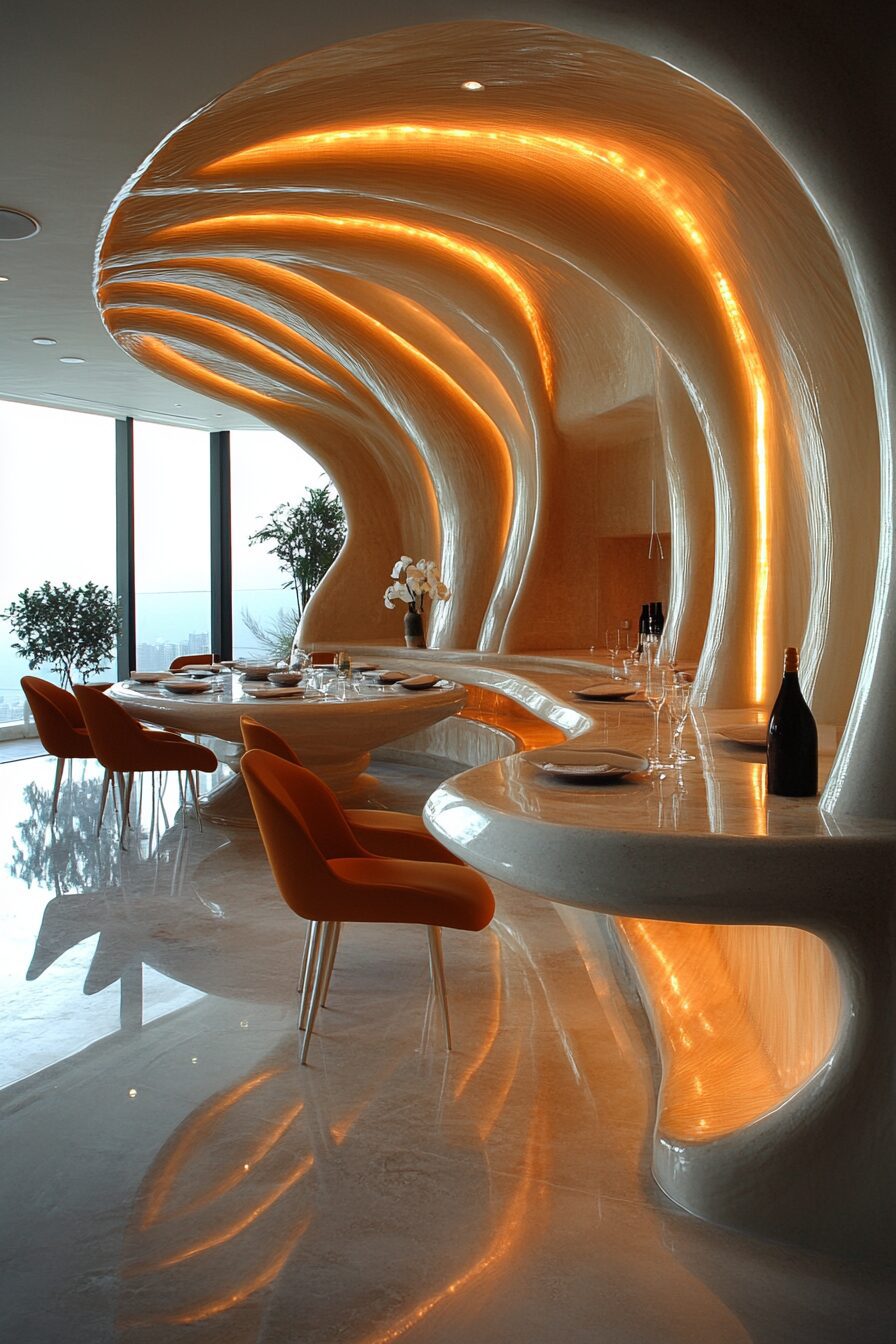
Gentle Flow Wabi Sabi garden incorporates soft shapes, rounded stones, and water features like babbling brooks. This design enhances the sense of movement and tranquility, perfect for a soothing outdoor space.
🎨 Steal This Look
- Paint Color: Valspar Garden Stone 5003-3C
- Furniture: low-profile wooden garden bench with raw, unfinished edges; natural stone side table
- Lighting: submerged pond lights with warm amber glow; paper lantern string lights overhead
- Materials: river rock, unpolished granite, untreated cedar, moss, copper basin for water collection
There’s something deeply meditative about watching water find its own path around stone—the imperfection is the whole point, and this garden celebrates that quiet rebellion against control.
16. Aged Patios
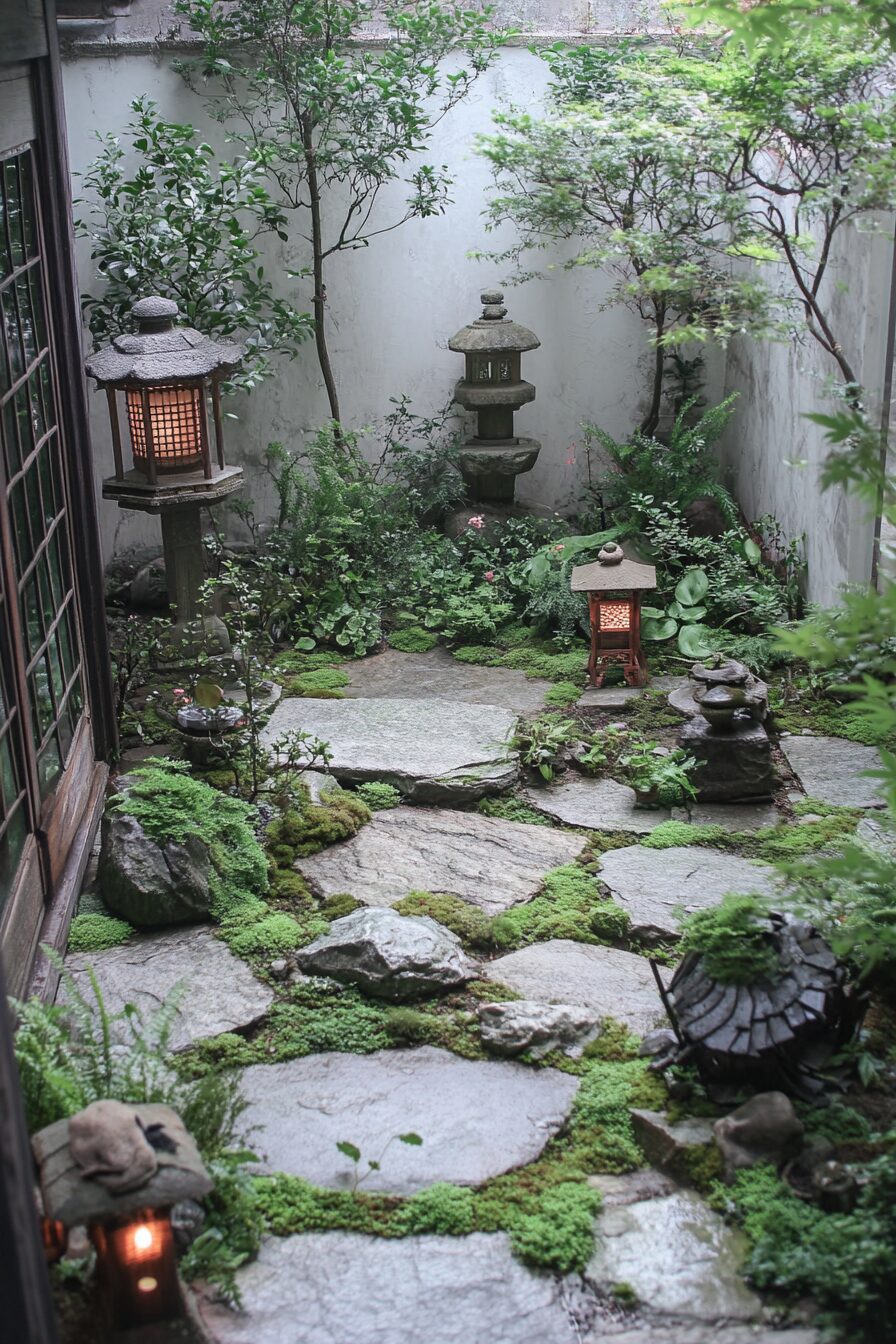
Aged Patios in a Wabi Sabi garden use weathered stone and mossy brick to create rustic charm. The materials improve with age, telling stories of time’s passage. These patios provide a solid yet timeless foundation for any garden.
🎨 Steal This Look
- Paint Color: PPG Stonehenge Greige PPG1002-3
- Furniture: reclaimed teak garden bench with visible grain and natural oil finish, weathered concrete side table with organic edge
- Lighting: solar-powered brass pathway lights with aged patina finish
- Materials: reclaimed limestone pavers, moss-covered clay brick, untreated cedar decking, crushed granite aggregate
There’s something grounding about walking barefoot on stone that has witnessed decades of weather—each crack and lichen patch feels like a conversation with time itself.
17. Natural Perfection
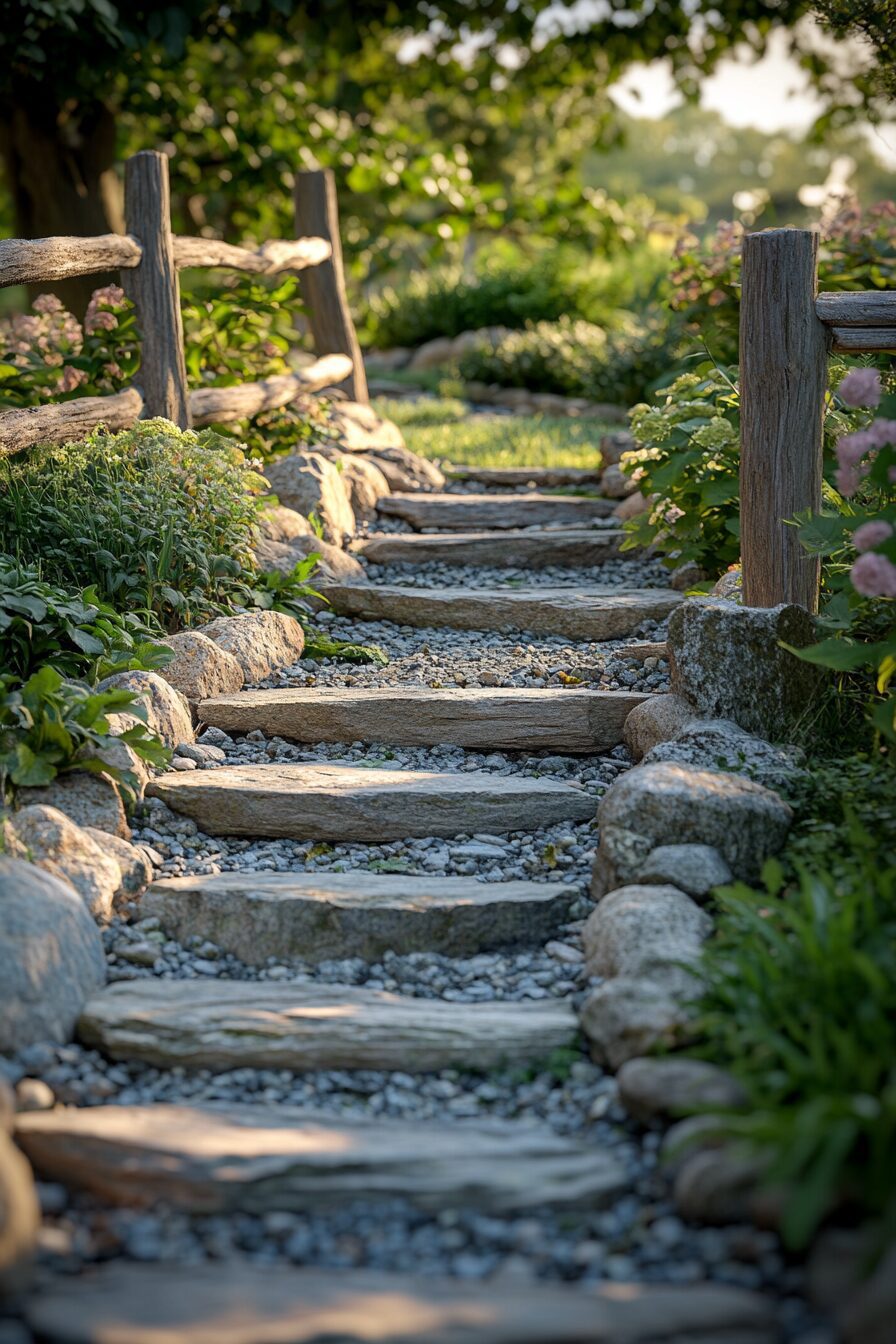
Natural Perfection Wabi Sabi garden highlights rough, uncut materials and untamed plants. This rugged approach celebrates the transient beauty of nature. It’s perfect for those who find charm in raw, unpolished aesthetics.
✎ Steal This Look
- Paint Color: Dunn-Edwards Weathered Stone DET 644
- Furniture: reclaimed teak garden bench with live-edge finish, hand-forged iron side table
- Lighting: weathered brass solar path lights with seeded glass
- Materials: unpolished river stone, raw corten steel planters, untreated cedar decking, moss-covered boulders, wild meadow grasses
There’s something quietly radical about letting your garden grow wild—I’ve found the most memorable outdoor moments happen in corners where nature, not humans, holds the final say.
18. Nature’s Sculpture
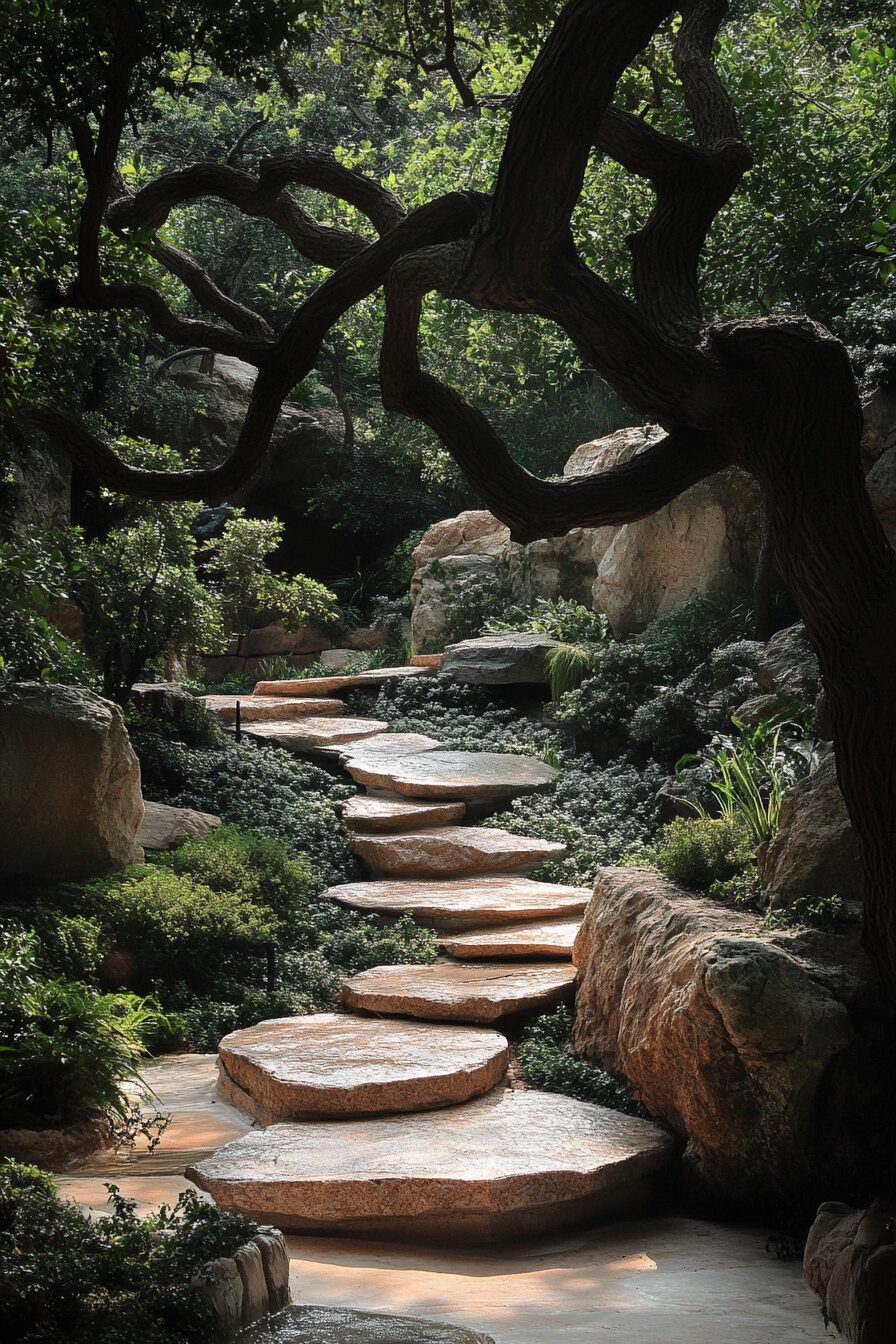
Nature’s Sculpture in a Wabi Sabi garden features wind-shaped trees and eroded stones. The design highlights natural artistry, subtly incorporating man-made elements. It’s a celebration of the forces that shape our world.
🎨 Steal This Look
- Paint Color: Clare Paint Current Mood CW-02
- Furniture: weathered teak garden bench with live-edge details, low stone meditation stool carved from river rock
- Lighting: solar-powered paper lanterns with irregular hand-formed shapes, copper pathway lights with verdigris patina
- Materials: unpolished granite, aged cedar, raw linen, volcanic rock, moss-covered clay
This is the garden that stops you mid-step—you’ll find yourself touching the pitted surface of a stone, tracing how wind and water wrote their slow story across it.
19. Grass Murmurs
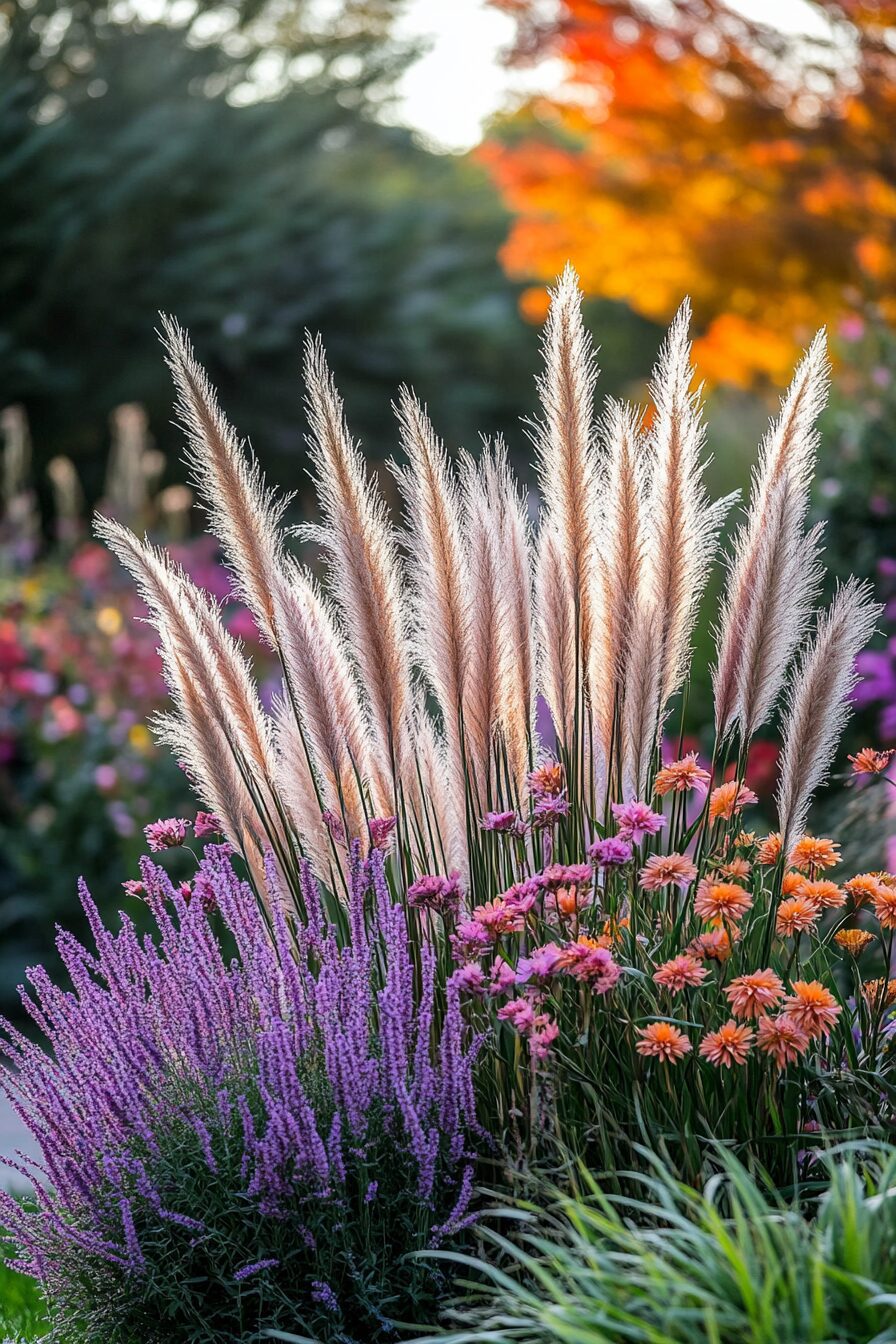
Grass Murmurs in a Wabi Sabi garden showcase ornamental grasses swaying gently in the wind. This dynamic yet peaceful element enhances the sensory experience. Perfect for reflective spaces, it adds subtle movement and sound.
🏠 Steal This Look
- Paint Color: Fine Paints of Europe S 1502-Y50R warm stone beige
- Furniture: low-slung teak meditation bench, weathered concrete garden stool, raw cedar side table
- Lighting: solar-powered rattan garden lantern with warm amber glow
- Materials: untreated teak, hand-thrown terracotta, unpolished river stone, dried pampas grass, raw linen
There’s something deeply meditative about grasses catching evening light—the way they shift from gold to silver feels like watching time itself move slowly.
20. Green Echoes
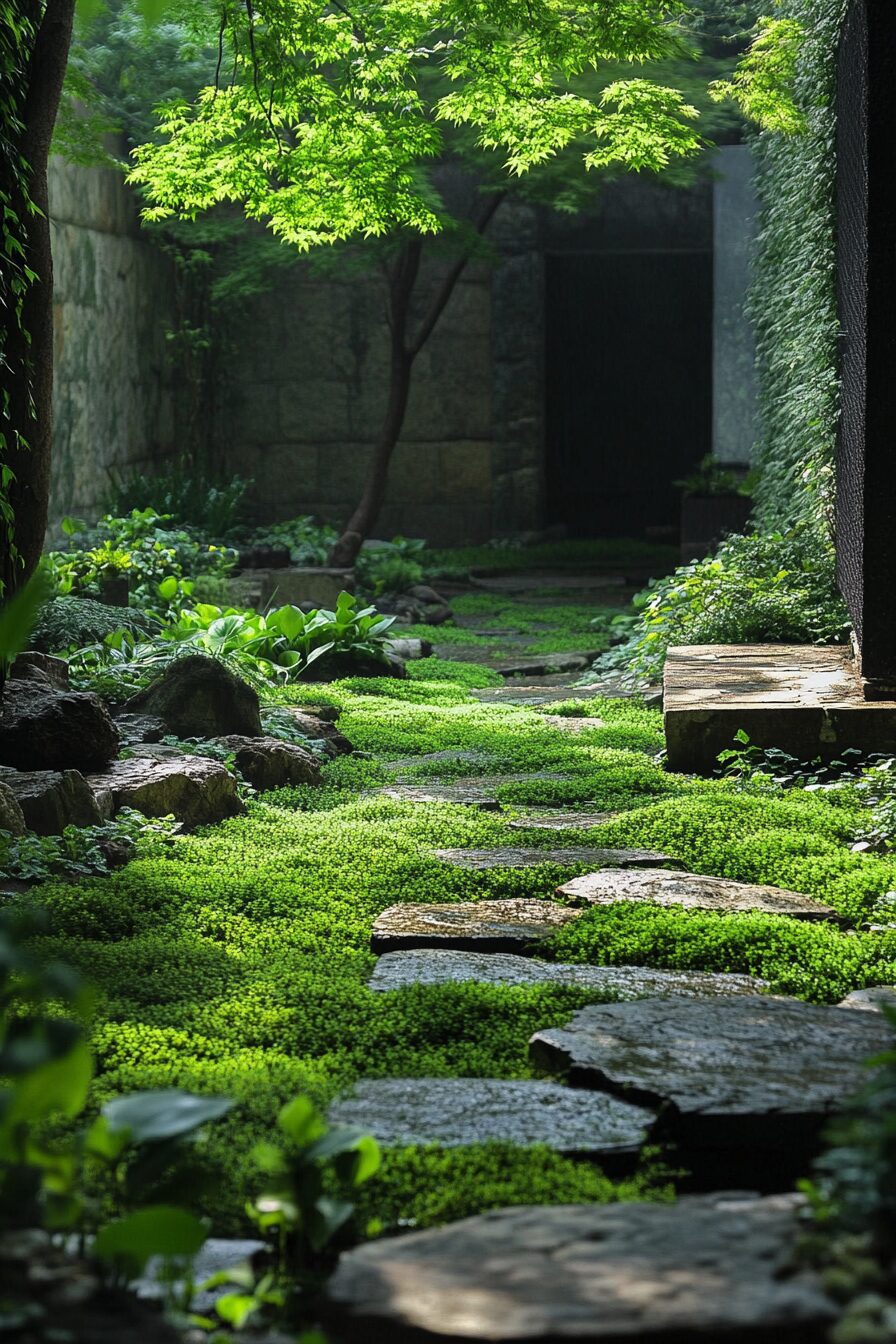
Green Echoes Wabi Sabi garden uses shades of green to build a soothing, monochromatic landscape. Varied textures and foliage create depth while maintaining harmony. This layered approach emphasizes serenity and natural balance.
★ Steal This Look
- Paint Color: Backdrop Cactus CODE
- Furniture: weathered teak bench with live edge, reclaimed wood potting table, rusted metal garden stool
- Lighting: oversized rattan pendant with Edison bulb, solar-powered paper lanterns
- Materials: raw linen cushions, unglazed terracotta planters, moss-covered stone, unfinished cedar decking
This is the garden you sink into after a frantic week—no demands, just the quiet rhythm of leaves. I’ve seen spaces like this turn coffee sippers into full-hour bench lingerers.
21. Lush Intertwine

Lush Intertwine Wabi Sabi garden lets plants overlap and grow freely, mimicking a wild ecosystem. The design encourages biodiversity while creating a vibrant, untamed look. It’s a celebration of nature’s abundance and spontaneity.
💡 Steal This Look
- Paint Color: Sherwin-Williams Ripe Olive SW 6209
- Furniture: weathered teak garden bench with organic live-edge armrests
- Lighting: solar-powered rattan globe stake lights
- Materials: raw cedar mulch paths, unpolished river stone borders, aged corten steel planters, hand-thrown terracotta pots with moss patina
There’s something deeply calming about watching a clematis tangle through a fence you meant to repaint three summers ago—it forgives your neglect and rewards it with beauty.
22. Soft Palette
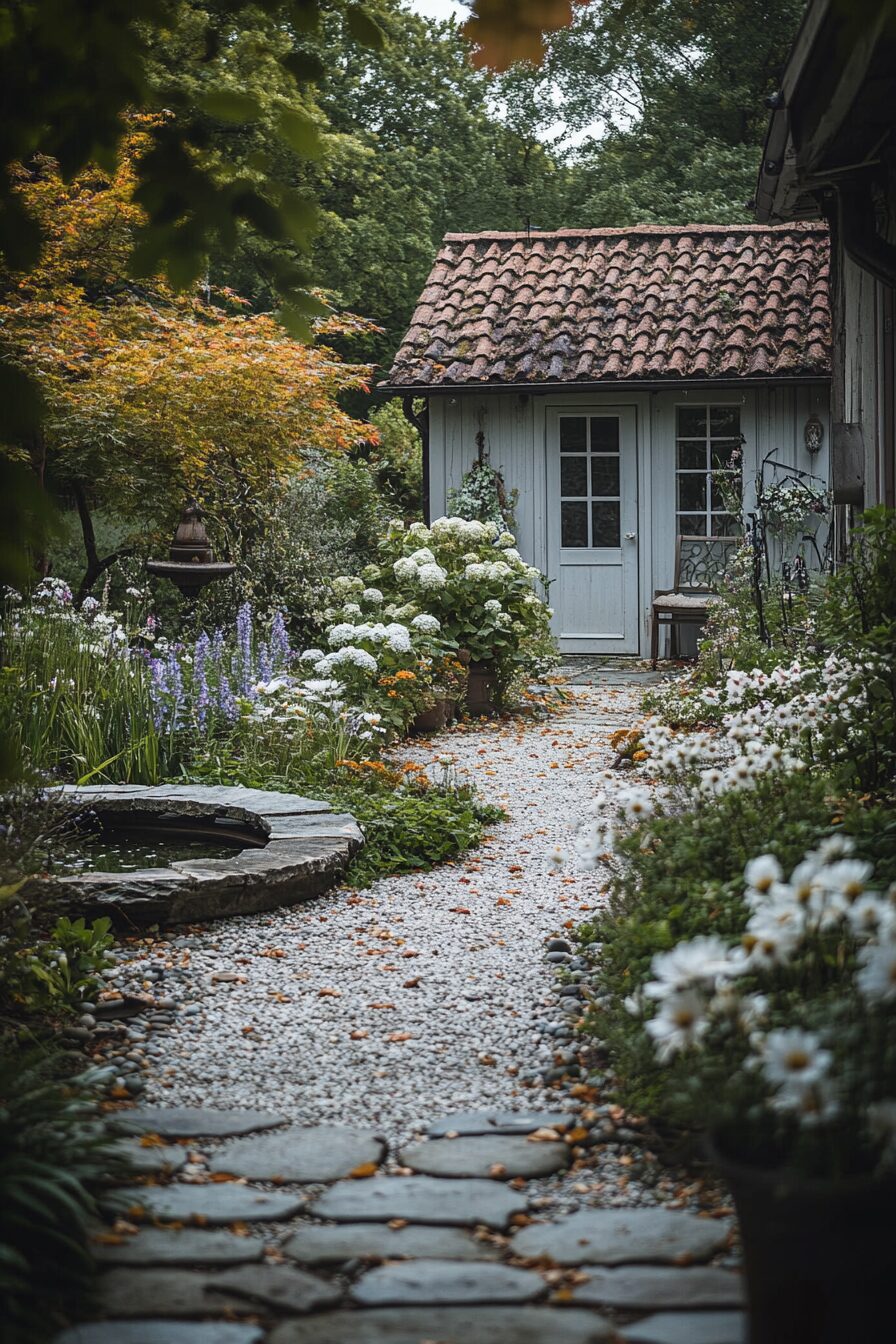
Soft Palette Wabi Sabi garden features muted tones like greys, blues, and soft yellows for a calming atmosphere. Subtle colors blend harmoniously with the natural landscape, creating a tranquil escape.
🎨 Steal This Look
- Paint Color: Benjamin Moore Gray Owl OC-52
- Furniture: weathered teak garden bench with natural patina
- Lighting: paper lantern string lights with warm LED bulbs
- Materials: unpolished river stone, raw linen cushions, aged terracotta, untreated cedar
This palette feels like morning light on weathered stone—there’s something deeply restorative about colors that refuse to compete for attention.
23. Living Patchwork
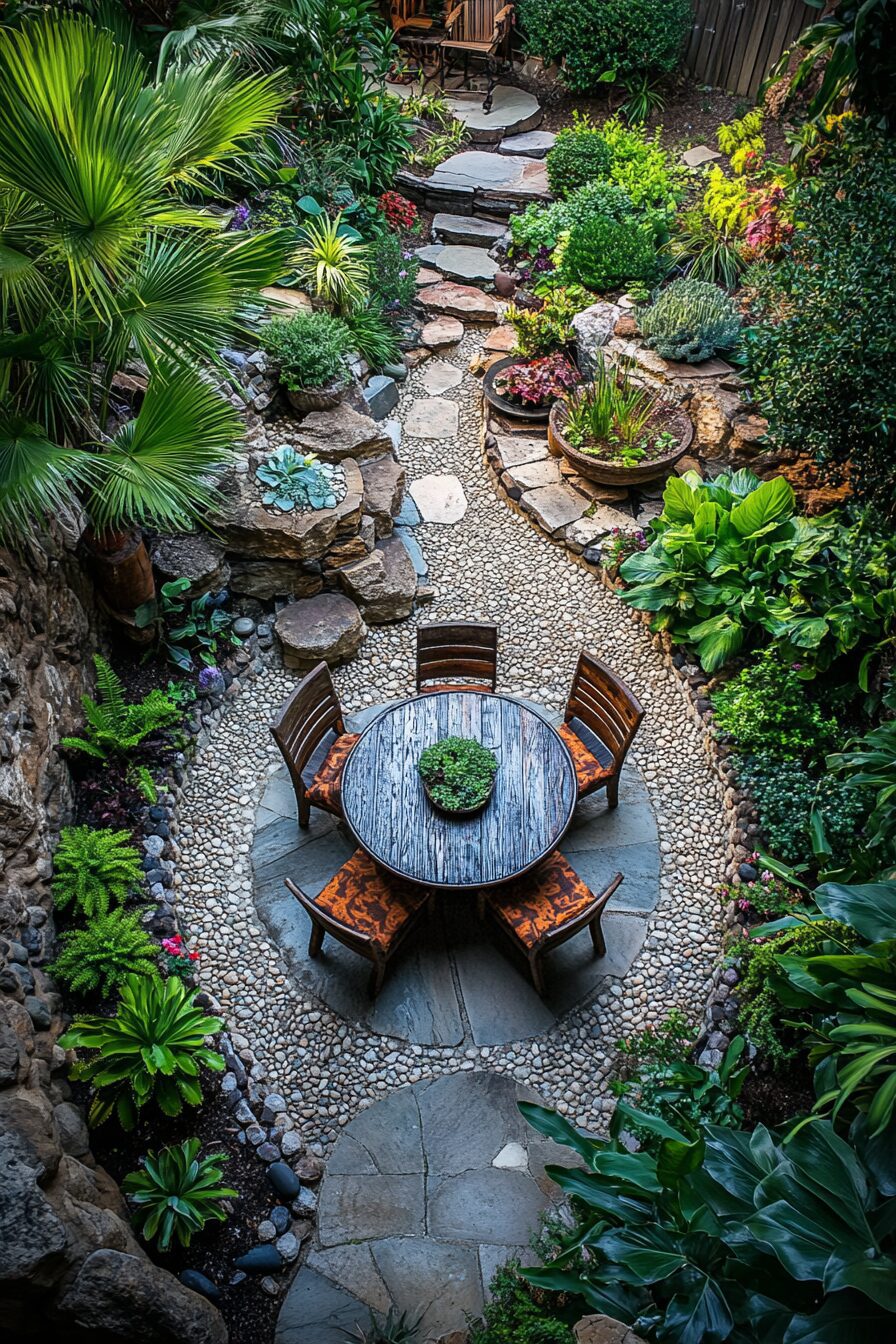
Living Patchwork Wabi Sabi garden showcases a variety of plants forming a rich mosaic of textures and colors. The design evolves naturally with the seasons, offering a dynamic, ever-changing space.
🏠 Steal This Look
- Paint Color: Farrow & Ball Green Smoke 47
- Furniture: weathered teak garden bench with visible grain, reclaimed wood potting table
- Lighting: solar-powered rattan lanterns, copper stake lights with aged patina
- Materials: raw terracotta, unglazed ceramic, moss-covered stone, untreated cedar
This is the garden that forgives you for forgetting to prune. The beauty lives in the overlap, the self-seeded volunteers, the way nothing quite matches—and everything belongs.
24. Barefoot Haven
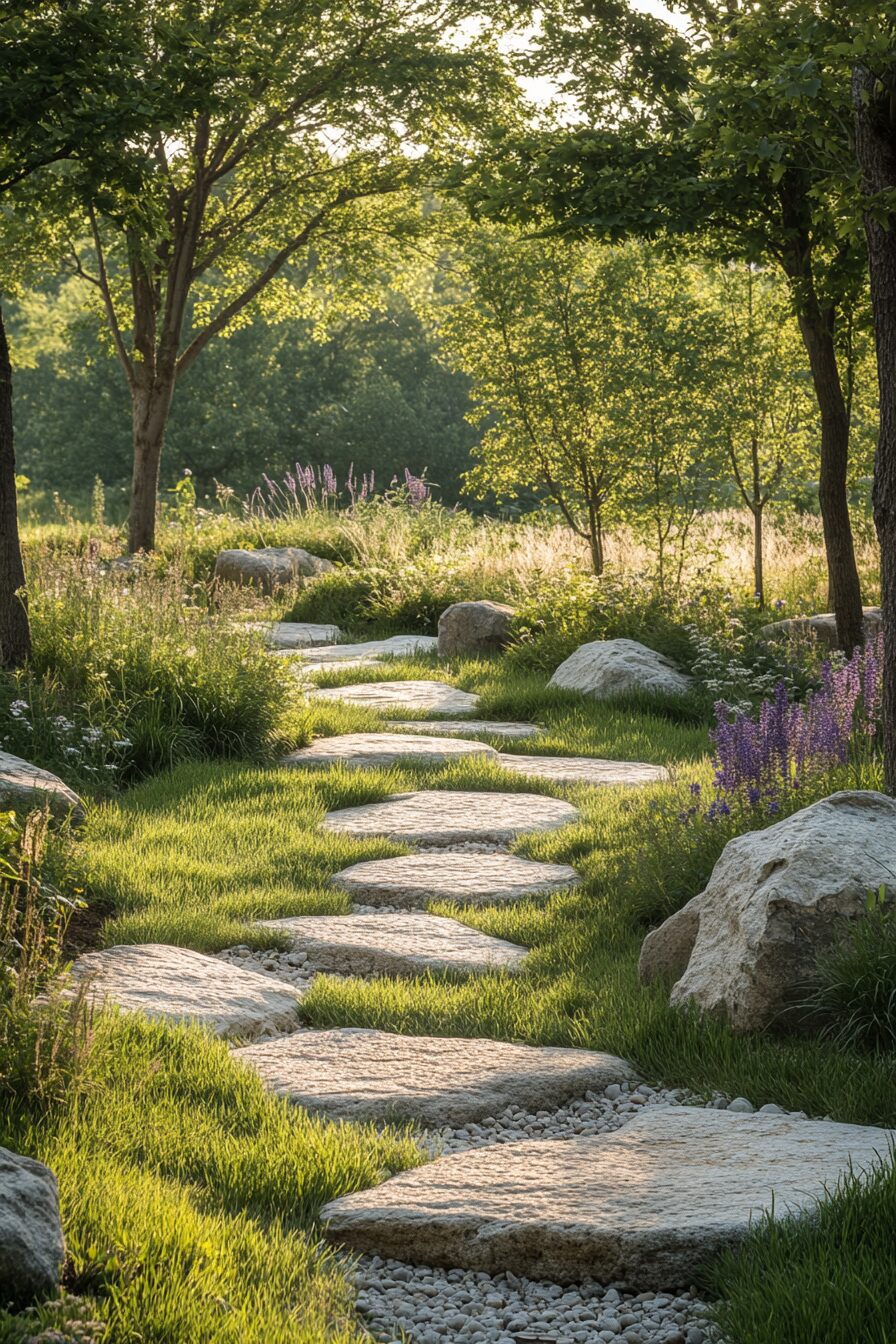
Barefoot Haven Wabi Sabi garden invites connection with nature through soft grasses and smooth pathways. Walking barefoot fosters a sensory bond with the earth, creating a grounding experience.
🌟 Steal This Look
- Paint Color: Behr Back to Nature S340-4
- Furniture: low-profile stone garden bench, weathered teak meditation stool, reclaimed wood side table
- Lighting: solar-powered pathway lights with frosted glass globes, paper lantern string lights
- Materials: decomposed granite pathways, native meadow grasses, river rock stepping stones, untreated cedar mulch
There’s something almost rebellious about designing a garden meant to be felt rather than just viewed—your feet become the measure of every choice.
25. Blended Borders
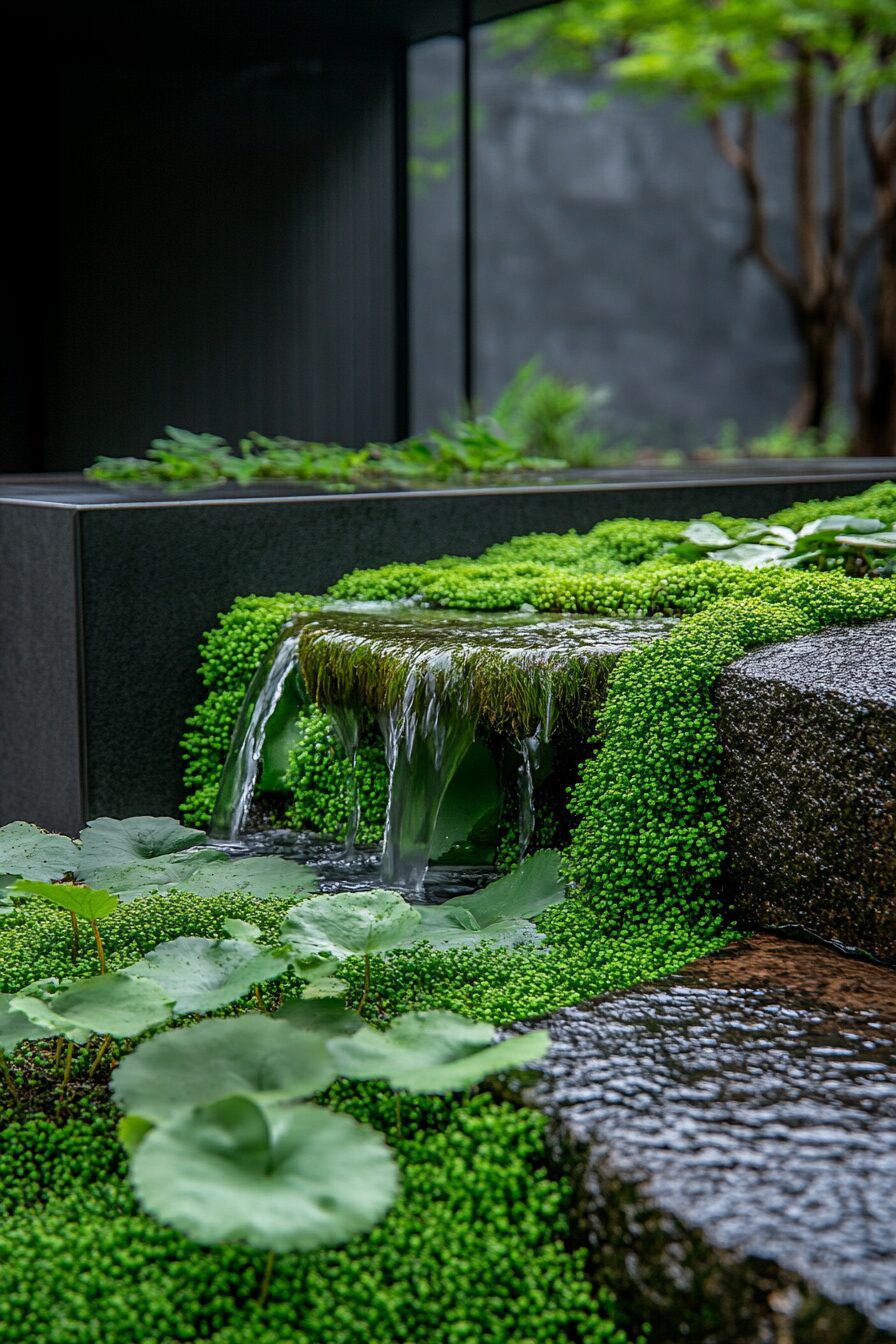
Blended Borders Wabi Sabi garden uses flowing plant arrangements to blur lines between garden areas. This seamless transition creates a harmonious connection with the surrounding environment.
💡 Steal This Look
- Paint Color: Valspar Garden Path 5007-3B
- Furniture: weathered teak garden bench with organic curves, low-slung stone seating
- Lighting: solar-powered rattan lanterns with amber glow
- Materials: unpolished river rock, aged corten steel edging, wild meadow grasses, moss-covered boulders
There’s something deeply calming about not knowing where the garden ends and the wild begins—it’s the visual equivalent of a deep exhale.
26. Wind’s Melody
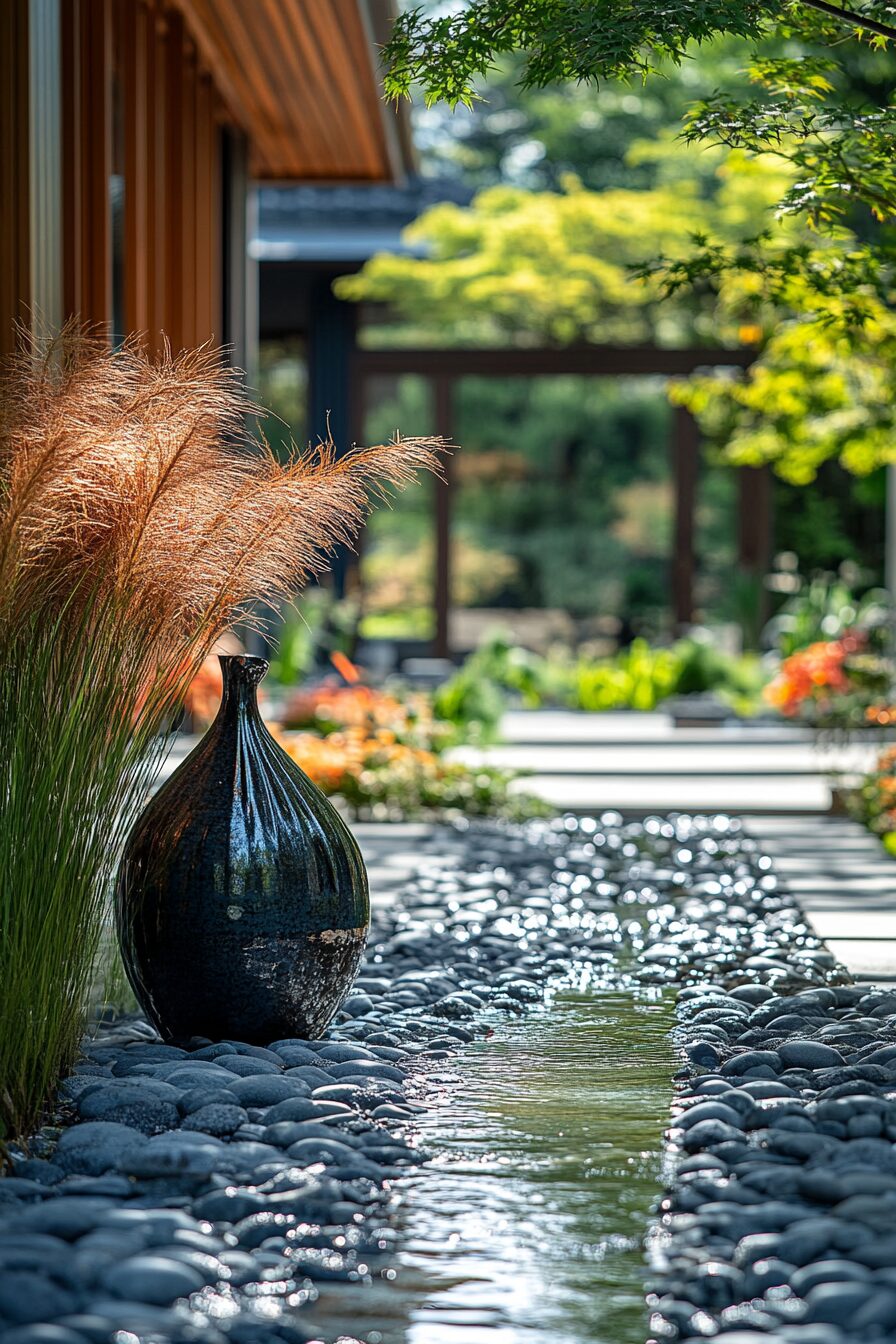
Wind’s Melody Wabi Sabi garden features tall grasses and wind-responsive elements like chimes. The movement and sound create a dynamic, sensory-rich atmosphere.
🖼 Steal This Look
- Paint Color: PPG Stonehenge Greige PPG1001-4
- Furniture: low-profile stone garden bench, weathered teak meditation stool, raw concrete side table
- Lighting: solar-powered paper lantern string lights, patinated brass pathway stake lights
- Materials: untreated corten steel wind sculptures, hand-forged bronze wind chimes, dried pampas grass, rough-hewn limestone pavers
There’s something deeply meditative about a garden that refuses to stay still; I find myself lingering longer in spaces where the wind does the decorating for me.
27. Shaded Solace
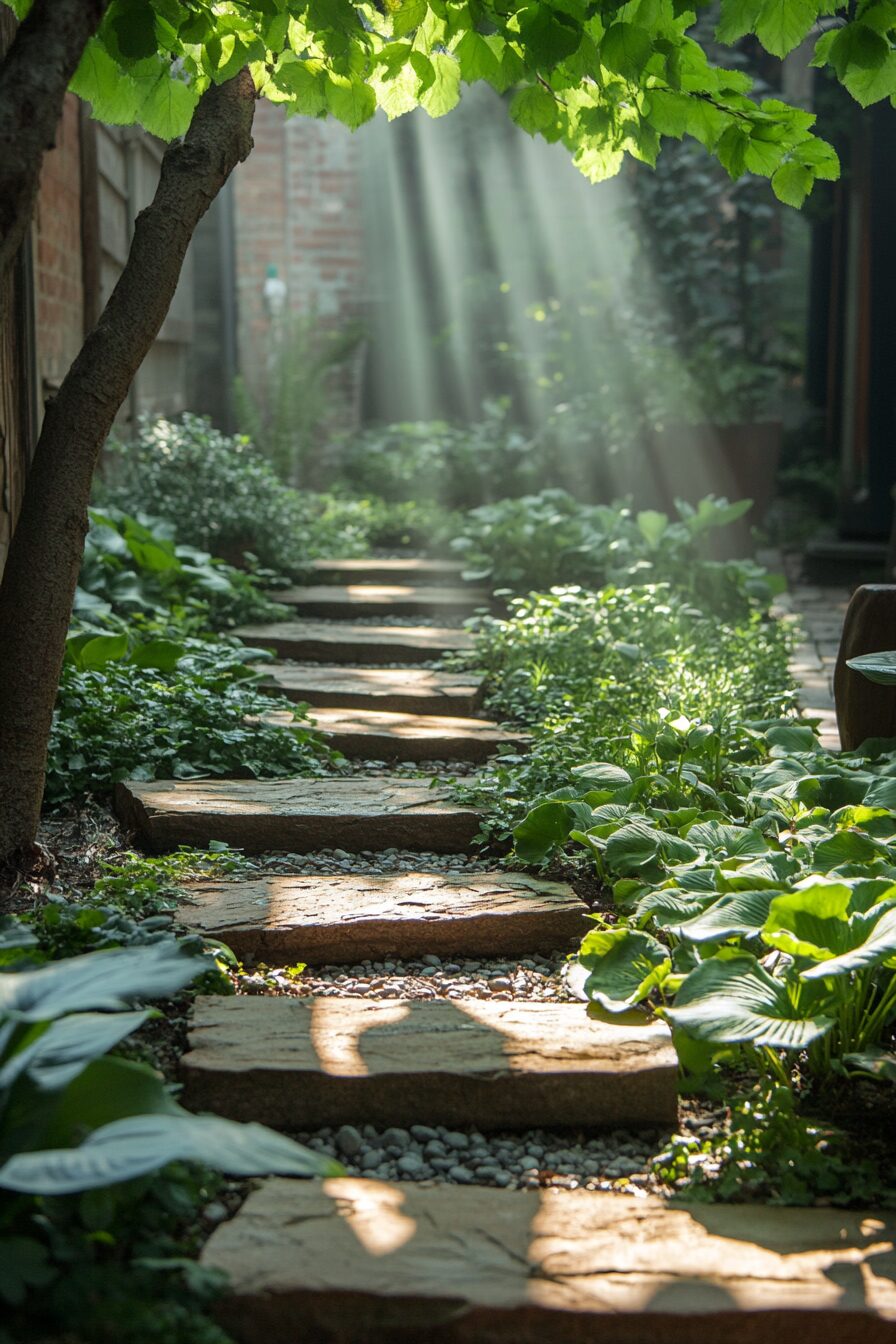
Shaded Solace in a Wabi Sabi garden offers serene retreats beneath tree canopies. This minimalist design focuses on shade-loving plants and natural textures for a quiet escape.
🖼 Steal This Look
- Paint Color: Dunn-Edwards Weathered Stone DET 629
- Furniture: low-profile wooden garden bench with raw, unfinished edges; stone side table with organic irregular surface
- Lighting: paper lantern string lights or simple solar-powered path lights with weathered metal stakes
- Materials: rough-hewn cedar, moss-covered stone, unglazed terracotta, weathered gravel, raw linen cushions in faded natural tones
There’s something deeply restorative about a corner that doesn’t try too hard—just a worn bench, some ferns that found their own way, and the quiet hush of leaves overhead.
28. Weathered Traces
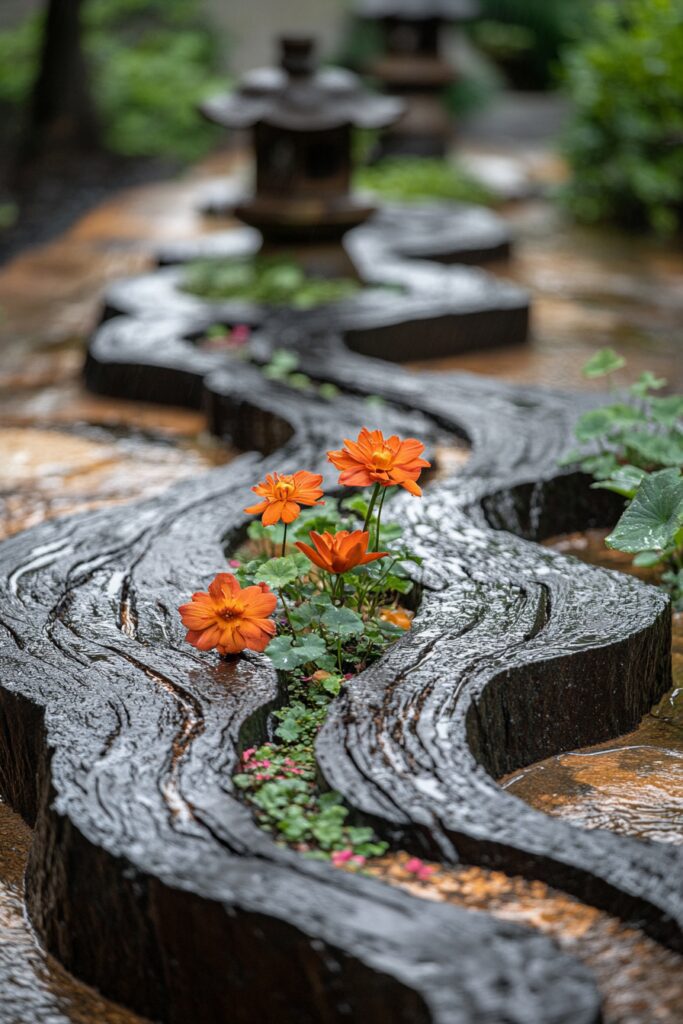
Weathered Traces Wabi Sabi garden honors the marks left by rain, sun, and wind. These changes tell a story of resilience and natural evolution.
✎ Steal This Look
- Paint Color: Clare Paint Current Mood CW-05
- Furniture: reclaimed teak garden bench with visible grain splits, rusted corten steel planter boxes, unfinished cedar Adirondack chairs
- Lighting: solar-powered amber glass pathway lights with weathered bronze patina
- Materials: raw linen cushion covers with natural slubs, unsealed limestone pavers with moss growth, hand-thrown terracotta with crazed glaze, untreated oak sleepers for raised beds
There’s something quietly moving about sitting on wood that has known twenty winters—the splits and soft gray surface hold more memory than any factory finish ever could.
29. Tranquil Canopy
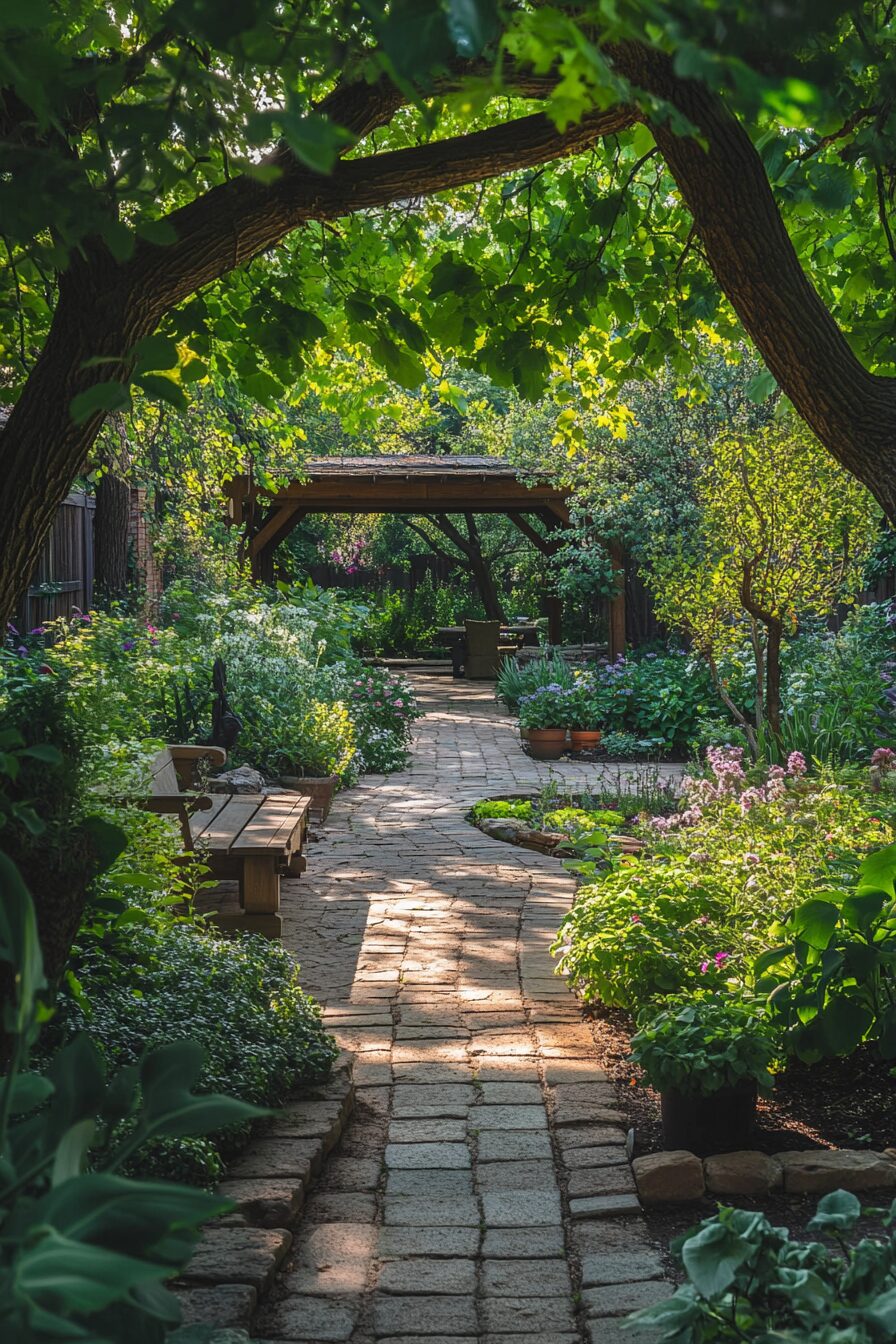
Tranquil Canopy in a Wabi Sabi garden celebrates leafy overhead shelters created by trees. Imperfect growth patterns enhance the garden’s serene, enclosed atmosphere.
✎ Steal This Look
- Paint Color: Fine Paints of Europe Hollandlac Brilliant Dutch Blue 4003
- Furniture: weathered teak garden bench with live-edge armrests, low-slung rope hammock between mature trunks
- Lighting: solar-powered paper lanterns suspended from branches, copper path lights with seeded glass
- Materials: raw linen cushions, unglazed terracotta planters, moss-covered stone pavers, untreated cedar mulch
There’s something deeply meditative about standing beneath an imperfect canopy where no two branches mirror each other—the light filtering through feels earned, not designed.
Conclusion
These 29 wabi sabi garden ideas offer the perfect inspiration to transform your yard into a haven of subtle elegance and natural beauty. By embracing imperfection, simplicity, and the organic flow of nature, a wabi sabi garden creates a tranquil and harmonious outdoor space. Whether you incorporate weathered materials, asymmetrical designs, or minimalist plantings, these ideas celebrate the beauty of authenticity and the passage of time. Let these wabi sabi garden concepts guide you in creating a yard that feels peaceful, grounded, and uniquely connected to its surroundings.


